Modern MBA · Video summary
Why Public Transit Sucks in America
American public transit sucks due to systemic corruption, inflated labor costs, and a lack of accountability, unlike efficient global counterparts.

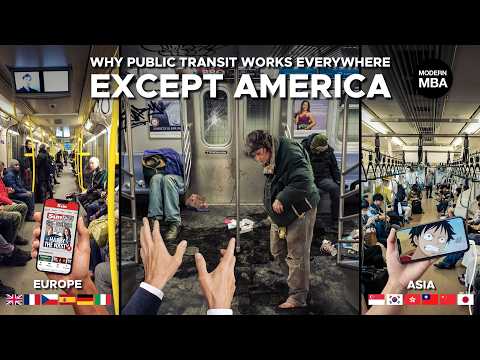 Watch on YouTube ↗
Key takeaways
- 📈The US deliberately prioritized car-centric development post-WWII, diverting investment from public transit and shaping a suburban, car-dependent landscape.00:23
- 🎯US public transit agencies are uniquely inefficient and costly, losing billions annually despite serving fewer riders than international systems.02:50
- 💡Profitability is the best measure of effectiveness and efficiency for public transit, acting as a crucial feedback mechanism for improvement.03:53
- 💡Shift the focus from simple funding to measuring efficiency and effectiveness through profitability metrics when evaluating public transit performance.03:53
- 📚Cultural differences significantly impact transit operations, with collective responsibility and a focus on public good in Asia and Europe contrasting with the US's individualistic pursuit of wealth.05:58
- 🔍Systemic corruption, including wage theft, overtime abuse, and inflated pensions, plagues US transit agencies, driving up costs without proportional service improvements.06:30
Chapters
- 0:00🚗 US Public Transit vs. The World
- 3:06💰 Financial Performance of Transit Agencies
- 10:48🏗️ Historical US Investment Priorities
- 13:18💸 US Transit Funding and Spending
- 14:59👷 Labor Costs and Union Influence in US Transit
- 17:30📈 Global Comparison of Transit Worker Compensation
- 19:27⚖️ Labor Productivity and Staffing Ratios
- 21:20💡 Sustainable Transit: The Asian Model
- 22:08🏢 Tokyo Metro's Business Model
- 26:15🚄 Japanese Rail Plus Property
- 28:40🇹🇼 Taipei Metro's Financial Strategy
- 31:24🇭🇰 Hong Kong MTR: The Profitable Giant
- 34:42🇸🇬 Singapore's SPS Transit Model
- 37:33🇬🇧 Transport for London (TfL) Reforms
- 41:06🇫🇷 Paris RATP's Subsidized Autonomy
- 44:39🇪🇸 Madrid Metro's Performance-Based Subsidies
- 46:07🇮🇹 Milan ATM's Contractual Stability
- 47:13🇩🇪 Berlin BVG's Austerity and Cooperation
- 48:08🇨🇿 Prague Metro: Worker-Friendly Market Dynamics
- 49:39🇺🇸 US Transit Agencies: Lack of Accountability
- 50:28🗽 New York MTA: A Case Study in Dysfunction
- 53:15⚖️ Union Power and Corruption in NYC Transit
- 1:03:22📉 Widespread US Transit Deficits
- 1:05:41🌍 Cultural Differences Driving Transit Success
The digest
The Systemic Failure of American Public Transit: A Deep Dive into Economics and Culture
This analysis explores the deeply entrenched issues plaguing public transit systems in the United States, contrasting them with more successful models in Europe and Asia. It argues that the current state of American public transit is not a result of underfunding alone, but rather a complex interplay of historical development, flawed economic incentives, and a pervasive culture of mismanagement and corruption, particularly driven by powerful unions and a lack of accountability. The findings are crucial for policymakers, transit operators, and anyone seeking to understand or improve urban mobility in the US.
Keep reading in The Digest
The full 6-minute article, 10 more sections, and every new episode from Modern MBA and the creators you follow.
- Post-War Suburbanization and the Car-Centric Design of America
- The Paradox of High Costs and Poor Performance in US Transit
- Profit as a Metric of Effectiveness in Public Transit
- Systemic Corruption and Mismanagement in US Transit Agencies
- The Dominance of Labor Costs and Union Influence
- International Models of Transit Financial Sustainability
- The American Disconnect: Lack of Accountability and Incentives for Waste
- The Root Cause: A Cultural Shift Towards Individualism and Profit
- Practical Implications and Takeaways
- Actionable Steps for Improvement
More from Modern MBA

The Extinction of the American Buffet
The American buffet, once a symbol of affordable prosperity, has largely gone extinct. This article explores the rise and fall of the all-you-can-eat restaurant model, from its golden age in the 1980s and 90s to its current niche existence.
The American College Cartel
Modern MBA breaks down the business model of elite American universities, revealing how they operate more like luxury brands and cartels than educational institutions.
How One Hedge Fund Killed Chipotle
In this video, Modern MBA explores how a single Wall Street hedge fund orchestrated the rise and fall of Chipotle, highlighting the tension between founder idealism and investor pragmatism, ultimately leading to a devastating food safety crisis that reshaped the brand's trajectory.

How the West Lost to China in EVs
In this video, Modern MBA explores how Chinese electric vehicles have outpaced their Western counterparts through aggressive government support and innovation, highlighting the structural advantages that allow them to produce superior products at lower prices, while Western automakers struggle to keep up. The discussion emphasizes the importance of nationalism in shaping competitive industries and the need for a reevaluation of the U.S. market approach to foster innovation.

The Rigged Economics of Movie Theaters
Movie theaters, like airlines, are capital-intensive businesses with perishable inventory and one-sided supply chains, forcing consolidation and a focus on maximizing per-customer spend.
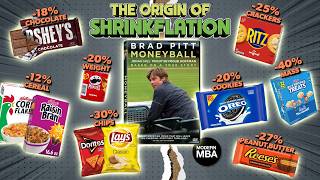
How Moneyball Ruined Your Favorite Snacks
The Moneyball effect in business has led companies to prioritize cost-cutting and optimization over product innovation, resulting in worse products and higher prices for consumers.