Modern MBA · Video summary
How One Hedge Fund Killed Chipotle
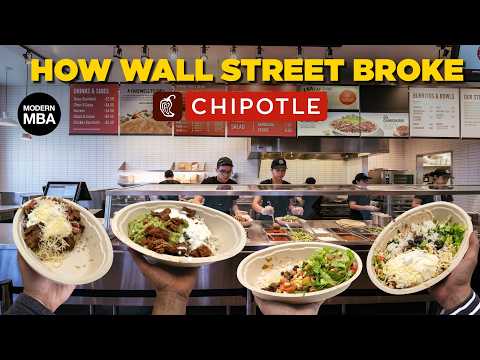
In this video, Modern MBA explores how a single Wall Street hedge fund orchestrated the rise and fall of Chipotle, highlighting the tension between founder idealism and investor pragmatism, ultimately leading to a devastating food safety crisis that reshaped the brand's trajectory.

 Watch on YouTube ↗
Key takeaways
- Chipotle's decline from a beloved staple to a struggling brand was largely due to a 10-year manipulation by a single Wall Street hedge fund, resulting in a $3 billion profit for the fund.
- The rise of Chipotle illustrated the shift towards quality ingredients in fast food, as consumers began prioritizing healthier options over traditional fast food offerings.
- McDonald's initially supported Chipotle's growth but later faced pressure from investors to spin off non-core brands, leading to Chipotle's independence and subsequent growth.
- During its golden age from 2010 to 2014, Chipotle's stock soared from $200 to $800, outperforming the S&P 500 by four times, showcasing the brand's unique value proposition.
- Steve Ells' leadership emphasized employee morale and quality over traditional profit metrics, proving that happy employees lead to better customer experiences and loyalty.
- Evaluate your business model to ensure it prioritizes quality and employee satisfaction over short-term profits, as seen in Chipotle's successful strategy.
Chapters
- 0:00📉 Chipotle's Decline
- 2:00🍔 The Fast Food Landscape
- 4:00🌮 McDonald's Investment in Chipotle
- 14:00📈 Chipotle's Growth Phase
- 16:00💰 Wall Street's Influence
- 2:30:00⚠️ Food Safety Crisis
- 3:30:00🔄 Supply Chain Overhaul
- 4:00:00📉 Stock Market Impact
- 4:40:00👥 Activist Investor's Role
- 5:10:00📊 Digital Transformation
- 5:50:00📈 Signs of Recovery
- 6:20:00⚠️ Recurring Food Safety Issues
The digest
High Level Overview
This analysis traces Chipotle’s transformation from a beloved fast-casual pioneer to a diminished brand grappling with operational and reputational crises. It reveals how McDonald’s strategic backing initially nurtured Chipotle’s growth, how founder Steve Ells’ values-driven leadership fueled its golden era, and ultimately how hedge fund Pershing Square and activist investor Bill Ackman engineered Chipotle’s rapid devaluation and overhaul. The story underscores the clash between founder idealism and investor pragmatism, showcasing the impact of activist investor intervention on corporate strategy, culture, and financial performance. It offers critical insights for business leaders, investors, and industry strategists on managing growth, governance, and stakeholder conflicts in consumer-facing chains.
Keep reading in The Digest
The full 7-minute article, 10 more sections, and every new episode from Modern MBA and the creators you follow.
- The Genesis of Chipotle and Fast Casual Mexican Cuisine (00:01–06:00)
- Chipotle’s Founder-Led Golden Age Under McDonald’s & Steve Ells (06:00–18:00)
- Bill Ackman and Pershing Square’s Initial Activism and McDonald’s Spin-Off (18:00–23:00)
- The Food Safety Crisis and Operational Fallout (23:00–28:00)
- Pershing Square’s Return and the Battle for Control (28:00–32:00)
- The Shift to Digital Ordering and Ruthless Profit Optimization (32:00–43:00)
- The Ongoing Decline and Leadership Shakeups (43:00–46:10)
- Key Framework: The Founders vs. Activists Corporate Cycle
- Practical Implications & Takeaways
- Action-Oriented Summary
More from Modern MBA

The Extinction of the American Buffet
The American buffet, once a symbol of affordable prosperity, has largely gone extinct. This article explores the rise and fall of the all-you-can-eat restaurant model, from its golden age in the 1980s and 90s to its current niche existence.
The American College Cartel
Modern MBA breaks down the business model of elite American universities, revealing how they operate more like luxury brands and cartels than educational institutions.

How the West Lost to China in EVs
In this video, Modern MBA explores how Chinese electric vehicles have outpaced their Western counterparts through aggressive government support and innovation, highlighting the structural advantages that allow them to produce superior products at lower prices, while Western automakers struggle to keep up. The discussion emphasizes the importance of nationalism in shaping competitive industries and the need for a reevaluation of the U.S. market approach to foster innovation.

The Rigged Economics of Movie Theaters
Movie theaters, like airlines, are capital-intensive businesses with perishable inventory and one-sided supply chains, forcing consolidation and a focus on maximizing per-customer spend.
How Moneyball Ruined Your Favorite Snacks
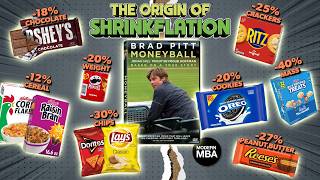
The Moneyball effect in business has led companies to prioritize cost-cutting and optimization over product innovation, resulting in worse products and higher prices for consumers.

Why AI is a Repeat of the 1990s Dot-Com Bubble
The AI boom mirrors the 1990s dot-com bubble, driven by hype and speculative investment rather than organic demand, with key players repeating historical mistakes.