Modern MBA · Video summary
The American College Cartel
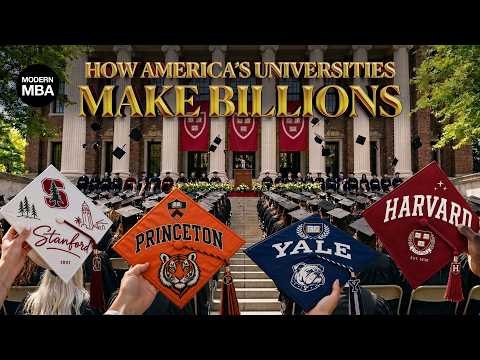
Modern MBA breaks down the business model of elite American universities, revealing how they operate more like luxury brands and cartels than educational institutions.

 Watch on YouTube ↗
The digest
America's elite universities, often perceived as bastions of education and innovation, operate under a business model that more closely resembles luxury brands and cartels. Far from fostering competition and lowering prices, privatization in the U.S. has led to market consolidation and increasingly expensive options across various sectors, including healthcare, utilities, and education. This trend is particularly evident in higher education, where the cost of college has skyrocketed, and access has become more restricted.
The Scarcity Model: Luxury Brands of Academia
Elite universities like Harvard, Stanford, and MIT charge six-figure annual fees, positioning themselves as luxury brands built on manufactured scarcity. They deliberately limit enrollment, even as demand explodes, creating an exclusive aura. Their campuses are designed as temples of prestige, history, and culture, much like high-end luxury stores. Admission is not based on merit alone but is often influenced by generational purchase history and significant donations from the wealthy and powerful. These institutions sell status, not just education, marketing admission as lifelong proof of superiority and intelligence, despite a lack of objective data to support claims of better teaching or job outcomes compared to other universities.
Keep reading in The Digest
The full 3-minute article, 4 more sections, and every new episode from Modern MBA and the creators you follow.
- The Macro-Economy of Elite Universities: Advancement, Endowment, and Administration
- The Micro-Economy of Student Life: Cultivating Loyalty and Future Donations
- The Tech Tree: Strategic Investment in Research and Faculty
- The Brand: Scarcity, Prestige, and the Pursuit of Yield
More from Modern MBA

The Extinction of the American Buffet
The American buffet, once a symbol of affordable prosperity, has largely gone extinct. This article explores the rise and fall of the all-you-can-eat restaurant model, from its golden age in the 1980s and 90s to its current niche existence.
How One Hedge Fund Killed Chipotle
In this video, Modern MBA explores how a single Wall Street hedge fund orchestrated the rise and fall of Chipotle, highlighting the tension between founder idealism and investor pragmatism, ultimately leading to a devastating food safety crisis that reshaped the brand's trajectory.

How the West Lost to China in EVs
In this video, Modern MBA explores how Chinese electric vehicles have outpaced their Western counterparts through aggressive government support and innovation, highlighting the structural advantages that allow them to produce superior products at lower prices, while Western automakers struggle to keep up. The discussion emphasizes the importance of nationalism in shaping competitive industries and the need for a reevaluation of the U.S. market approach to foster innovation.

The Rigged Economics of Movie Theaters
Movie theaters, like airlines, are capital-intensive businesses with perishable inventory and one-sided supply chains, forcing consolidation and a focus on maximizing per-customer spend.
How Moneyball Ruined Your Favorite Snacks
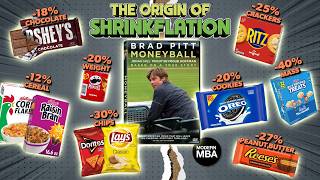
The Moneyball effect in business has led companies to prioritize cost-cutting and optimization over product innovation, resulting in worse products and higher prices for consumers.

Why AI is a Repeat of the 1990s Dot-Com Bubble
The AI boom mirrors the 1990s dot-com bubble, driven by hype and speculative investment rather than organic demand, with key players repeating historical mistakes.