Modern MBA · Video summary
How the West Lost to China in EVs
In this video, Modern MBA explores how Chinese electric vehicles have outpaced their Western counterparts through aggressive government support and innovation, highlighting the structural advantages that allow them to produce superior products at lower prices, while Western automakers struggle to keep up. The discussion emphasizes the importance of nationalism in shaping competitive industries and the need for a reevaluation of the U.S. market approach to foster innovation.

 Watch on YouTube ↗
Key takeaways
- Chinese electric vehicles are not only cheaper but also outperform Western models, with some offering features like massage chairs and self-driving technology.
- China's EV success is attributed to aggressive government support and a focus on innovation, enabling them to produce vehicles at a much faster pace than Western automakers.
- In markets where they can compete, Chinese EVs dominate, with 9 out of 10 EVs sold in countries like Australia and Thailand being from China.
- The narrative around nationalism in the auto industry reveals that both China and the West have historically used protectionist measures to build their automotive giants.
- Unlike traditional automakers, EV manufacturers are moving towards vertical integration, allowing for better control over production and innovation.
- Western automakers should reevaluate their market strategies to foster innovation and adapt to the rapid advancements in the EV sector.
Chapters
- 0:00🚗 Chinese EVs Outperform Competition
- 1:00📈 Rapid Innovation in China
- 2:00🔒 Barriers to Western Markets
- 3:00🏭 Historical Context of Nationalism
- 4:00💰 Government Support for Automakers
- 6:00⚙️ Shift to Vertical Integration
- 12:00🔌 The Role of Battery Technology
- 16:00🏗️ Building Charging Infrastructure
- 20:00🛠️ Tesla's Evolution
- 24:00📊 Government as Venture Capitalist
- 28:00🌍 China's Long-Term Strategy
- 32:00📉 Market Failures and Reforms
- 36:00⚖️ Balancing Public and Private Interests
- 40:00🚀 Future of EVs in the US
The digest
High Level Overview
This analysis explores how Chinese electric vehicle (EV) manufacturers have rapidly outpaced Western automakers in price, innovation, and market share. It explains that China’s dominance is not due to cheap labor alone but results from a deliberate, state-led strategy blending public investment, vertical integration, and aggressive ecosystem building. The discussion is crucial for policymakers, business leaders, and industry stakeholders seeking to understand the shifting dynamics of global automotive leadership and the broader implications for innovation and competitiveness.
Keep reading in The Digest
The full 7-minute article, 11 more sections, and every new episode from Modern MBA and the creators you follow.
- The Unmatched Rise of Chinese EVs
- Historical Context: Nationalism and the Auto Industry
- Structural Differences: Internal Combustion vs. Electric Vehicles
- Business Model: Wholesale Distribution vs. Direct-to-Consumer
- Nationalism, Government Support, and Market Shaping
- China’s Strategic Edge in Supply Chain Control
- Market Dynamics: Competition and Regulation in China
- Lessons for the West and the Future of EV Competition
- Key Framework: The EV Industry Evolution Model
- Practical Implications & Takeaways
- Action-Oriented Summary
More from Modern MBA

The Extinction of the American Buffet
The American buffet, once a symbol of affordable prosperity, has largely gone extinct. This article explores the rise and fall of the all-you-can-eat restaurant model, from its golden age in the 1980s and 90s to its current niche existence.
The American College Cartel
Modern MBA breaks down the business model of elite American universities, revealing how they operate more like luxury brands and cartels than educational institutions.
How One Hedge Fund Killed Chipotle
In this video, Modern MBA explores how a single Wall Street hedge fund orchestrated the rise and fall of Chipotle, highlighting the tension between founder idealism and investor pragmatism, ultimately leading to a devastating food safety crisis that reshaped the brand's trajectory.

The Rigged Economics of Movie Theaters
Movie theaters, like airlines, are capital-intensive businesses with perishable inventory and one-sided supply chains, forcing consolidation and a focus on maximizing per-customer spend.
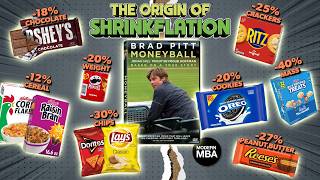
How Moneyball Ruined Your Favorite Snacks
The Moneyball effect in business has led companies to prioritize cost-cutting and optimization over product innovation, resulting in worse products and higher prices for consumers.

Why AI is a Repeat of the 1990s Dot-Com Bubble
The AI boom mirrors the 1990s dot-com bubble, driven by hype and speculative investment rather than organic demand, with key players repeating historical mistakes.