Modern MBA · Video summary
The Rigged Economics of Movie Theaters
Movie theaters, like airlines, are capital-intensive businesses with perishable inventory and one-sided supply chains, forcing consolidation and a focus on maximizing per-customer spend.

 Watch on YouTube ↗
Key takeaways
- 💡The movie theater industry operates like an igopoly, characterized by high capital intensity, perishable inventory, and supplier power imbalances, necessitating scale and equity for survival.00:10
- 🎯Unlike most industries where costs decrease with scale, movie theaters face linear costs; doubling capacity requires doubling the footprint and associated expenses, preventing traditional economies of scale.03:02
- 📈A lopsided revenue-sharing model heavily favors studios (taking 50-65% of ticket sales), leaving theaters with thin margins and forcing them to rely on high-markup concessions for profitability.04:12
- 🚀Recognize that concessions are the primary profit driver for movie theaters, influencing their strategy and the importance of maximizing spend in this area.07:47
- 🔍Historical overinvestment and saturation in the 1990s led to widespread bankruptcies and consolidation in the 2000s, shaping the current landscape of a few dominant chains.09:14
- 📊Profitability in the theater industry is increasingly driven by maximizing yield per passenger/customer through tiered pricing, premium formats, and aggressive concession sales, rather than simply filling seats.16:17
Chapters
- 0:00🎯 Introduction to Movie Theater Economics
- 0:21🎯 Market Structure and Industry Dynamics
- 3:02🎯 Cost Structure and Difficult Economics
- 4:10🎯 Revenue Share and Industry Power Imbalance
- 5:00🎯 Studio Control and Ticket Distributions
- 6:25🎯 Impact of Blockbusters and Market Dependence
- 6:39🎯 Major Chains and Market Power
- 9:44🎯 Post-2000s Industry Challenges
- 10:36🎯 Industry Cycles and Historical Overinvestment
- 13:03🎯 Historical Regulation and Vertical Integration
- 15:14🎯 Chain Strategies and Differentiation
- 17:04🎯 Shift to Premium Offerings and Price Strategies
- 21:10🎯 Financial Challenges and Industry Dependence on Debt
- 23:30🎯 Recent Industry Trends and Consolidation
- 24:14🎯 The Geographic and Market Strategies
- 28:06🎯 The Future and Modern Strategies
- 28:26🎯 Conclusion: The Industry as a Middleman
- 29:02🎯 Additional Notes and Business Strategies
The digest
High Level Overview
Movie theaters operate as highly capital-intensive, territorially locked oligopolies where a handful of corporate chains dominate. Similar to airlines, theaters manage perishable inventory and face intense fixed costs, but industry dynamics heavily favor film studios, which command the majority of ticket revenue. The film exhibition business relies more on territorial control and financial muscle than innovation or unit economics, squeezing customers for ancillary revenue like concessions. This detailed analysis explains why theater economics are fundamentally rigged, how consolidation and capital access shape the market, and why only the biggest chains survive.
Keep reading in The Digest
The full 7-minute article, 14 more sections, and every new episode from Modern MBA and the creators you follow.
- Structured Deep Dive
- Capital Intensity and Territorial Monopolies
- Revenue Sharing: Studios Hold the Power
- Fixed and Variable Costs Undermine Profitability
- Historical Boom, Bust, and Consolidation
- The Innovation and Commoditization Cycle
- Profiles of the Four Major Theater Chains
- Industry Challenges & Market Realities
- Legacy Impact of Regulation and Vertical Integration
- Key Frameworks & Mental Models
- The Movie Theater Oligopoly Model
- Revenue Split and “House Nut”
- Practical Implications & Takeaways
- Action-Oriented Summary: Key Strategic Moves for Theater Operators
More from Modern MBA

The Extinction of the American Buffet
The American buffet, once a symbol of affordable prosperity, has largely gone extinct. This article explores the rise and fall of the all-you-can-eat restaurant model, from its golden age in the 1980s and 90s to its current niche existence.
The American College Cartel
Modern MBA breaks down the business model of elite American universities, revealing how they operate more like luxury brands and cartels than educational institutions.
How One Hedge Fund Killed Chipotle
In this video, Modern MBA explores how a single Wall Street hedge fund orchestrated the rise and fall of Chipotle, highlighting the tension between founder idealism and investor pragmatism, ultimately leading to a devastating food safety crisis that reshaped the brand's trajectory.

How the West Lost to China in EVs
In this video, Modern MBA explores how Chinese electric vehicles have outpaced their Western counterparts through aggressive government support and innovation, highlighting the structural advantages that allow them to produce superior products at lower prices, while Western automakers struggle to keep up. The discussion emphasizes the importance of nationalism in shaping competitive industries and the need for a reevaluation of the U.S. market approach to foster innovation.
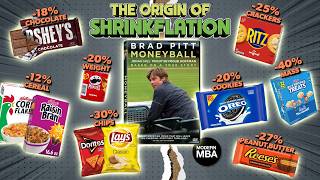
How Moneyball Ruined Your Favorite Snacks
The Moneyball effect in business has led companies to prioritize cost-cutting and optimization over product innovation, resulting in worse products and higher prices for consumers.

Why AI is a Repeat of the 1990s Dot-Com Bubble
The AI boom mirrors the 1990s dot-com bubble, driven by hype and speculative investment rather than organic demand, with key players repeating historical mistakes.