Modern MBA · Video summary
The Brutal Economics of Resource Wars
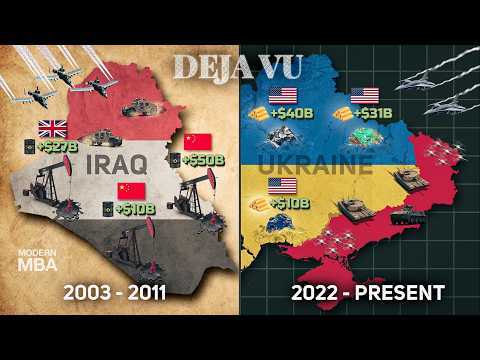
The Ukraine mineral deal's actual value is questionable due to unverified reserves and the high costs/risks of extraction, mirroring past resource conflicts where China often capitalizes where the US struggles.

 Watch on YouTube ↗
Key takeaways
- 💡The US faces significant geopolitical risk due to its heavy reliance on China for critical minerals, highlighting the need to diversify supply chains beyond adversaries.08:18
- 📈China's state-owned enterprises enable them to secure resource deals in developing nations by offering infrastructure and capital with long-term patience, outcompeting the US's transactional approach.11:16
- 🎯Ukraine's claimed $15 trillion in mineral wealth is largely based on unverified, decades-old Soviet surveys, with only titanium, graphite, and gallium showing proven potential and strategic value for the West.13:31
- 🔍Distinguishing between mineral deposits (potential) and reserves (economically and technologically viable) is crucial, as Ukraine's claims largely refer to unproven deposits.13:31
- 🔧Prioritize building domestic mining and processing capabilities for critical minerals to reduce reliance on potential adversaries like China.15:46
- 🚀Focus investment and strategic partnerships on minerals with proven reserves and strategic value, like titanium, graphite, and gallium from Ukraine, rather than speculative deposits.18:21
Chapters
- 0:00🌍 Introduction to the US-Ukraine Mineral Deal
- 0:33💡 Ukraine's Mineral Wealth Claims
- 2:50📉 Ukraine's Post-Soviet Economic Struggles
- 4:25🌱 Shift to Agriculture and Economic Reforms
- 5:29⚖️ Persistent Corruption and Underinvestment
- 7:51🔗 US Dependence on Foreign Minerals
- 9:57🇨🇳 China's Dominance in the Mineral Market
- 10:22🏭 Challenges of Domestic Mining in the US
- 11:52🤝 China's Global Resource Acquisition Strategy
- 13:31💎 Ukraine's Mineral Claims vs. Reality
- 17:03💡 Potentially Valuable Ukrainian Minerals
- 18:51💰 The Deal's Financial Structure
- 19:40⏳ Obstacles to Ukrainian Mining Development
- 21:44🇺🇸 Reluctance of US Companies to Invest
- 22:27📜 Outdated Soviet-Era Surveys
- 23:17🛢️ Historical Resource Wars: Oil
- 24:40💵 US Geopolitical Strategy: Economic Coercion
- 28:33🇦🇫 Lessons from Afghanistan's Mineral Potential
- 30:43🇮🇶 China's Capitalization in Iraq
- 32:14🔄 Conclusion: The Cycle of Resource Deals
The digest
The Brutal Economics of Resource Wars: Ukraine, Minerals, and Global Power Dynamics
This analysis examines the proposed mineral deal between the United States and Ukraine, dissecting the economic realities, historical precedents, and geopolitical implications of resource competition. It argues that while Ukraine possesses significant mineral wealth, the practicalities of extraction, the strategic value to the US, and the dominant role of China in the global mineral supply chain make the current deal more symbolic than substantively beneficial for the US in the short to medium term. The analysis is relevant for policymakers, investors, and business leaders seeking to understand the complex interplay of natural resources, international relations, and economic strategy in modern conflicts.
Keep reading in The Digest
The full 9-minute article, 8 more sections, and every new episode from Modern MBA and the creators you follow.
- Ukraine's Mineral Wealth: Claims vs. Reality
- The US Quest for Critical Minerals: Geopolitical Imperatives
- Debunking Ukraine's Mineral Claims
- The Economics of Mining and the Deal's Practicalities
- Historical Parallels: Resource Wars and Geopolitical Power
- Key Frameworks and Mental Maps
- Practical Implications & Takeaways
- Action-Oriented Summary
More from Modern MBA

The Extinction of the American Buffet
The American buffet, once a symbol of affordable prosperity, has largely gone extinct. This article explores the rise and fall of the all-you-can-eat restaurant model, from its golden age in the 1980s and 90s to its current niche existence.

The American College Cartel
Modern MBA breaks down the business model of elite American universities, revealing how they operate more like luxury brands and cartels than educational institutions.

How One Hedge Fund Killed Chipotle
In this video, Modern MBA explores how a single Wall Street hedge fund orchestrated the rise and fall of Chipotle, highlighting the tension between founder idealism and investor pragmatism, ultimately leading to a devastating food safety crisis that reshaped the brand's trajectory.

How the West Lost to China in EVs
In this video, Modern MBA explores how Chinese electric vehicles have outpaced their Western counterparts through aggressive government support and innovation, highlighting the structural advantages that allow them to produce superior products at lower prices, while Western automakers struggle to keep up. The discussion emphasizes the importance of nationalism in shaping competitive industries and the need for a reevaluation of the U.S. market approach to foster innovation.

The Rigged Economics of Movie Theaters
Movie theaters, like airlines, are capital-intensive businesses with perishable inventory and one-sided supply chains, forcing consolidation and a focus on maximizing per-customer spend.

How Moneyball Ruined Your Favorite Snacks
The Moneyball effect in business has led companies to prioritize cost-cutting and optimization over product innovation, resulting in worse products and higher prices for consumers.