Tasting History with Max Miller · Video summary
Making 2,000 Years Of Mustard
Mustard is one of history's most consumed condiments. This article explores the long history of mustard while making three versions of mustard separated by nearly 2,000 years of history: an ancient Roman mustard, a medieval French mustard, and the mustard of Victorian England.

 Watch on YouTube ↗
Key takeaways
- 🍯Ancient Roman mustard was a sweet and savory condiment, often made with honey, olive oil, and vinegar, and was used to flavor a wide variety of dishes, including meats and vegetables.01:39
- 🔥The pungency of mustard is activated when its seeds are crushed and combined with water, releasing an enzyme that creates the characteristic 'mustardy burn.'04:07
- 📜Mustard seeds were not only a food item but also served as a literary device in ancient parables and were used medicinally by various cultures, including the Egyptians and Greeks.05:45
- 🍇Medieval French mustard, known as 'moutarde,' was often prepared by grinding mustard seeds with unfermented grape juice, giving it a distinct flavor and a purple hue.09:04
- ⚕️Mustard gained immense popularity in medieval Europe due to its perceived medicinal benefits, aligning with the theory of the four humors, and its affordability compared to imported spices.09:34
- 👑Dijon mustard, though different from its modern counterpart, was highly regarded in the 14th century and its quality was protected by a guild of mustard makers.11:00
Chapters
- 0:00Introduction to Mustard's History
- 0:29The Versatility of Mustard
- 2:03Ancient Roman Mustard Recipe
- 4:00Historical Uses of Mustard in Rome
- 4:50Hungryroot Sponsorship
- 6:39Preparing the Ancient Roman Mustard
- 8:35Ancient History of Mustard
- 10:00Mustard in Alexander the Great's Wars
- 10:49Medicinal Uses of Mustard in Antiquity
- 13:57Mustard in Medieval France
- 15:29Popularity of Mustard in Medieval Europe
- 17:05Dijon Mustard's Origins
- 18:50The Grand Mustard Maker to the Pope
- 21:40Medieval French Mustard Recipe
- 25:00Victorian English Mustard
- 32:23Colman's Mustard and Its Legacy
- 36:32The Color of Mustard and Lead Chromate
- 38:32Victorian Colman's Mustard Recipe
- 38:57Tasting the Mustards
The digest
Mustard, a condiment celebrated for its versatility, has graced tables and enhanced flavors across millennia. From simple salad dressings to complex glazes, and even as a topping for hot dogs, its presence is ubiquitous. This exploration delves into the rich history of mustard, tracing its evolution through different cultures and eras, alongside the preparation of three distinct historical mustard recipes.
The Ancient Roman Mustard
The journey begins with an ancient Roman mustard, a recipe dating back to the late 4th century, as documented by Palladius. This early iteration of mustard was a substantial concoction, calling for one and a half sextarii of mustard seed, five pounds of honey, one pound of Spanish olive oil, and one sextarius of sharp vinegar. Given the generous quantities, a scaled-down version for modern preparation would require a quarter cup of black mustard seeds, a third cup of honey, two tablespoons of olive oil, and two tablespoons plus two teaspoons of wine vinegar.
Ancient Romans were familiar with all three types of mustard—white (or yellow), brown, and black. Black mustard seeds held a peculiar dual purpose, not only as a condiment but also as a counterfeit for pepper, a testament to its value and pungency. The preparation involves grinding the mustard seeds into a powder, a crucial step that releases myrosinase, an enzyme that, when combined with water, creates the characteristic mustard burn. The addition of vinegar in many recipes, including this one, serves to slow down this reaction, preserving the mustard's heat. The Roman mustard, with its honey-forward profile, offers a delightful sweetness that balances the mustard's inherent flavor without an overpowering burn, making it a versatile accompaniment for meats like pork or duck.
Keep reading in The Digest
The full 2-minute article, 2 more sections, and every new episode from Tasting History with Max Miller and the creators you follow.
- Mustard's Multifaceted Role in Antiquity
- The Medieval French Mustard
More from Tasting History with Max Miller

The History of Baklava - The King of Sweets
Tasting History with Max Miller explores the rich and complex history of baklava, the "king of sweets," tracing its origins and evolution through centuries of culinary tradition.

Rye Bread Kvass from the Reign of Tsar Ivan the Terrible
Tasting History with Max Miller explores kvass, a traditional Eastern European fermented beverage, delving into its historical significance, cultural impact, and a 16th-century recipe from the reign of Ivan the Terrible.

What Italian Soldiers Ate in World War II
Tasting History with Max Miller explores the daily rations of Italian soldiers during World War II, cooking two recipes from a 1932 military cookbook and delving into the logistical challenges and changing diets faced by the troops.

Potted Meat - How to Preserve Leftovers in the 18th Century
Tasting History with Max Miller explores the history of potted meat, a method of preserving cooked meat by pounding it into a paste, seasoning it, and sealing it under a layer of clarified butter or fat. This technique was a common way to extend the shelf life of leftovers before refrigeration.

History's Worst Copper Merchant & His 4000 Year Old Cake
Tasting History with Max Miller recreates a 4,000-year-old Sumerian cheesecake recipe, based on a cuneiform tablet from the Third Dynasty of Ur. The episode also delves into the infamous copper merchant Ea-nasir, whose ancient complaint letter has become a modern meme.
What Grocery Shopping Was Like in the Middle Ages
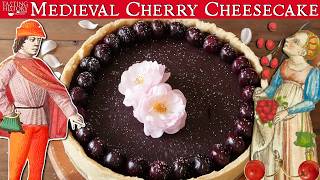
Tasting History with Max Miller explores medieval grocery shopping by recreating a 15th-century Italian cherry and rose cheesecake, delving into the fascinating history of markets, merchants, and food prices in the Middle Ages.