Tasting History with Max Miller · Video summary
History's Worst Copper Merchant & His 4000 Year Old Cake
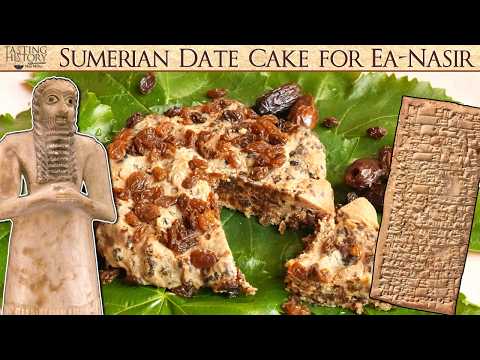
Tasting History with Max Miller recreates a 4,000-year-old Sumerian cheesecake recipe, based on a cuneiform tablet from the Third Dynasty of Ur. The episode also delves into the infamous copper merchant Ea-nasir, whose ancient complaint letter has become a modern meme.

 Watch on YouTube ↗
Key takeaways
- 📜The older a recipe is, the more vague it tends to be, sometimes providing only a list of ingredients without preparation instructions.00:38
- 📏The Sumerian unit of measurement 'sila' is roughly equivalent to a liter.01:27
- 🍞The Sumerian term 'gug' for cake implies the use of flour, even if it's not explicitly listed in the oldest known ingredient lists.01:53
- 🌿Wrapping baked goods in grape leaves can act as a natural parchment paper, preventing burning and steaming the food.04:36
- 😠Ea-nasir, a copper merchant from ancient Ur, is known today primarily because of a collection of customer complaint letters found in his excavated home.09:21
- 😡The most famous complaint letter to Ea-nasir, from Nanni, details receiving poor quality copper and being treated with contempt.12:19
Chapters
- 0:00📜 Introduction to Ea-nasir and the Sumerian Cheesecake
- 0:38🤔 The Challenge of Ancient Recipes
- 1:44📝 The Sumerian Recipe and Missing Ingredients
- 4:55✈️ Saily eSIM Sponsorship
- 6:49👨🍳 Sumerian Cheesecake Ingredients and Preparation
- 8:12🗣️ Sumerian Language Lesson
- 8:30🔥 Baking the Cheesecake
- 11:43🏛️ The History of Ur and Ea-nasir
- 12:10📖 Table of Gods Cookbook Promotion
- 13:48💰 Ea-nasir's Identity and Business
- 20:04😠 The Complaint Letters to Ea-nasir
- 23:38🤔 Theories on Ea-nasir's Actions
- 25:42📜 Ea-nasir's Later Life and Legacy
- 28:51🍰 Tasting and Review of the Sumerian Cheesecake
The digest
In an ambitious culinary endeavor, Tasting History with Max Miller attempts to recreate a dessert from the Third Dynasty of Ur, a period in Sumerian history dating back approximately 4,000 years. This isn't just any ancient recipe; it's based on a cuneiform tablet that predates the first known written recipes by two centuries, presenting a unique challenge for modern interpretation.
The Ancient Recipe: A List of Ingredients
The cuneiform tablet, found in a Sumerian palace, doesn't offer detailed instructions but rather a simple list of ingredients and their proportions for a "gug egala kura," or "cake sent to the palace." The specified components include one sila of butter, one-third sila of white cheese, three silas of first-quality dates, and one-third sila of Smyrna raisins. A "sila" is an ancient unit of measurement roughly equivalent to a liter. The lack of preparation methods and the possibility of missing ingredients, such as flour (which is inferred from the term "gug" for cake and later recipes), mean that any modern recreation is largely an educated guess.
Max Miller humorously acknowledges the inherent inaccuracies in such a recreation, noting that anyone who could correct him has been dead for millennia. He opts to use fine flour, likely from emmer or spelt, rather than the more common barley of Sumeria, to achieve a finer texture suitable for a palace cake.
Keep reading in The Digest
The full 4-minute article, 4 more sections, and every new episode from Tasting History with Max Miller and the creators you follow.
- The Recreation Process: A Modern Interpretation
- Ea-nasir: The Infamous Copper Merchant of Ur
- The World's Oldest Complaint Letter
- Tasting the Ancient Cake
More from Tasting History with Max Miller

The History of Baklava - The King of Sweets
Tasting History with Max Miller explores the rich and complex history of baklava, the "king of sweets," tracing its origins and evolution through centuries of culinary tradition.

Rye Bread Kvass from the Reign of Tsar Ivan the Terrible
Tasting History with Max Miller explores kvass, a traditional Eastern European fermented beverage, delving into its historical significance, cultural impact, and a 16th-century recipe from the reign of Ivan the Terrible.

What Italian Soldiers Ate in World War II
Tasting History with Max Miller explores the daily rations of Italian soldiers during World War II, cooking two recipes from a 1932 military cookbook and delving into the logistical challenges and changing diets faced by the troops.

Making 2,000 Years Of Mustard
Mustard is one of history's most consumed condiments. This article explores the long history of mustard while making three versions of mustard separated by nearly 2,000 years of history: an ancient Roman mustard, a medieval French mustard, and the mustard of Victorian England.

Potted Meat - How to Preserve Leftovers in the 18th Century
Tasting History with Max Miller explores the history of potted meat, a method of preserving cooked meat by pounding it into a paste, seasoning it, and sealing it under a layer of clarified butter or fat. This technique was a common way to extend the shelf life of leftovers before refrigeration.
What Grocery Shopping Was Like in the Middle Ages
Tasting History with Max Miller explores medieval grocery shopping by recreating a 15th-century Italian cherry and rose cheesecake, delving into the fascinating history of markets, merchants, and food prices in the Middle Ages.