Modern MBA · Video summary
How UNIQLO and Zara Really Make Money
Fast fashion giants UNIQLO, Zara, and H&M conquered the market by prioritizing speed, cost, and curation over traditional quality and originality, adapting to evolving consumer demands.

 Watch on YouTube ↗
Key takeaways
- 🎯The shift in the fashion industry from creativity and creation to speed and curation is a fundamental change in competitive strategy.00:49
- 💡Fast fashion brands profit from proven demand by rapidly creating products that match current trends, minimizing inventory risk with small production runs.01:00
- 🚀Analyze your business model for opportunities to prioritize speed and adaptability to capture proven demand, rather than solely relying on innovation.01:00
- 📈The consumer mindset has shifted; modern clothing is no longer made to last, with affordability and variety enabling easy replacement of worn-out items.01:28
- 🔍UNIQLO's initial success stemmed from identifying "latent consumer needs" for trending items, making them affordable through synthetic fibers and design tweaks that exceeded expectations.07:28
- 🚀UNIQLO's material innovation, particularly in synthetic fibers, created a competitive moat and allowed them to compete on quality and functionality, not just price.08:29
Chapters
- 0:00💡 Introduction to Fast Fashion Dominance
- 0:54🔄 The Fast Fashion Playbook
- 1:55📈 Evolution of the Fashion Industry
- 4:29🇨🇳 UNIQLO's Early Survival (1980s-2004)
- 7:04💡 UNIQLO's Fleece Success and Innovation
- 8:29🚀 UNIQLO's Scaling Phase (2005-2015)
- 10:37🇯🇵 UNIQLO's Domestic Strength and Diversification
- 12:59⚖️ UNIQLO's Sustaining Phase and Profit Optimization
- 14:44📉 UNIQLO's Acquisition Struggles
- 15:58🇸🇪 H&M's Early Scaling (1990s-2000s)
- 17:11🌍 H&M's Global Expansion
- 17:53👨👩👧👦 H&M's Sustaining Phase and Strategic Missteps
- 19:34♻️ H&M's Focus on Sustainability vs. Core Business
- 23:49🇪🇸 ZARA's Speed and Proximity Manufacturing
- 25:01✨ ZARA's Niche: High Fashion at Accessible Prices
- 26:01💰 ZARA's Premium Pricing and Profitability
- 26:25⚖️ ZARA's Legal Challenges and Customer Loyalty
- 27:03🧠 The Future of Mass-Market Fashion
The digest
High-Level Overview
This analysis deconstructs the distinct strategies that have propelled UNIQLO, Zara, and H&M to the forefront of the global mass-market fashion industry over the past three decades. Moving beyond the simplistic label of "fast fashion," it reveals how each brand has carved out a unique position by optimizing for different aspects of the value chain, from product development and manufacturing to supply chain speed and market positioning. The content is essential for business leaders, strategists, and anyone interested in understanding the dynamics of competitive advantage in a rapidly evolving consumer market.
Keep reading in The Digest
The full 7-minute article, 10 more sections, and every new episode from Modern MBA and the creators you follow.
- Structured Deep Dive
- The Rise of Fast Fashion and Industry Shift
- UNIQLO: The "By Japan, For Japan" Foundation to Global Basics 🇯🇵
- H&M: The Pioneer of Mass-Market Speed and Variety 🇸🇪
- Zara: Proximity Manufacturing and Monthly Trend Refresh 🇪🇸
- Key Frameworks, Models, or Mental Maps
- The Fashion Triangle
- Business Life Stages
- Practical Implications & Takeaways
- Action-Oriented Summary
More from Modern MBA

The Extinction of the American Buffet
The American buffet, once a symbol of affordable prosperity, has largely gone extinct. This article explores the rise and fall of the all-you-can-eat restaurant model, from its golden age in the 1980s and 90s to its current niche existence.
The American College Cartel
Modern MBA breaks down the business model of elite American universities, revealing how they operate more like luxury brands and cartels than educational institutions.
How One Hedge Fund Killed Chipotle
In this video, Modern MBA explores how a single Wall Street hedge fund orchestrated the rise and fall of Chipotle, highlighting the tension between founder idealism and investor pragmatism, ultimately leading to a devastating food safety crisis that reshaped the brand's trajectory.

How the West Lost to China in EVs
In this video, Modern MBA explores how Chinese electric vehicles have outpaced their Western counterparts through aggressive government support and innovation, highlighting the structural advantages that allow them to produce superior products at lower prices, while Western automakers struggle to keep up. The discussion emphasizes the importance of nationalism in shaping competitive industries and the need for a reevaluation of the U.S. market approach to foster innovation.

The Rigged Economics of Movie Theaters
Movie theaters, like airlines, are capital-intensive businesses with perishable inventory and one-sided supply chains, forcing consolidation and a focus on maximizing per-customer spend.
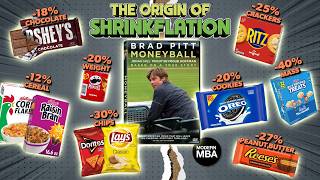
How Moneyball Ruined Your Favorite Snacks
The Moneyball effect in business has led companies to prioritize cost-cutting and optimization over product innovation, resulting in worse products and higher prices for consumers.