The Pragmatic Engineer · Video summary
Uber: Leading engineering through an agentic shift - The Pragmatic Summit
Uber's agentic AI shift leverages AI to augment engineers, moving from automating toil to enabling superhuman productivity and focusing on creative work.

 Watch on YouTube ↗
Key takeaways
- 💡The shift from human/early AI-powered to generative AI (or more fashionably, agentic AI) enables engineers to become superhumans, augmenting productivity for end-users by offloading toil.01:59
- 🚀Evaluate and adopt AI agents to automate toil tasks (e.g., migrations, bug fixes, documentation) freeing up engineers for higher-value, creative work.03:00
- 🚀The paradigm has shifted from pair programming (like GitHub Copilot's tab completion) to peer programming with AI agents, where developers redirect and course-correct AI models to execute tasks asynchronously.04:27
- 🎯AI agents are highly effective for toil tasks like upgrades, migrations, and bug fixes due to their straightforward start/end states and higher accuracy, freeing engineers for creative work.06:52
- 🔧Uber built a comprehensive agentic platform including an MCP gateway, agent SDKs/no-code solutions, a client management tool (AIFX), and a background agent platform (Minion) to enable autonomous agent execution.08:19
- 💻The developer workflow is evolving from an edit/run/build loop to running multiple background agents concurrently, requiring new tools like Minion for autonomous execution and Code Inbox for managing agent outputs.13:44
Chapters
- 0:00🎯 Introduction and Agenda
- 1:15🎯 Uber's AI History and Strategic Shift
- 3:06🎯 Impact of AI on Uber's Operations
- 3:37🎯 Technological Foundations: From Pair to Peer Programming
- 5:38🎯 Capabilities of AI Models and Industry Examples
- 6:40🎯 Uber's Agentic System Deployment
- 10:32🎯 Uber's Infrastructure for Agents and MCPs
- 11:41🎯 Infrastructure for Self-Serve and Reproducible Agents
- 13:07🎯 Shift in Developer Workflow with Agents
- 15:55🎯 Demo of Minion and Agent Workflows
- 21:34🎯 Code Review Optimization with U Review
- 24:22🎯 Automated Testing and Validation with Autocover
- 26:48🎯 Addressing Toil and Maintenance Tasks
- 26:50🎯 Handling Large-Scale Changes with Automigrate and Shephard
- 30:10🎯 Non-Technical Challenges: Business and People
- 34:15🎯 Measuring AI Impact and Costs
- 36:47🎯 Cost Management and Infrastructure Optimization
The digest
High-Level Overview
Uber has embarked on a strategic transformation to become an agentic AI-powered company, integrating generative AI deeply into engineering workflows and across the enterprise. This transition aims to augment human creativity by automating repetitive, toil-heavy tasks and enabling engineers to focus on high-impact innovation. Drawing on years of AI use in fare matching, Uber’s latest AI deployment leverages state-of-the-art agentic systems and internal platforms to boost developer velocity, code quality, and operational efficiency. The organization also addresses significant cultural and cost challenges to sustain this shift effectively. This summary is valuable for engineering leaders, AI practitioners, and organizational decision-makers interested in large-scale AI integration within software engineering.
Keep reading in The Digest
The full 8-minute article, 18 more sections, and every new episode from The Pragmatic Engineer and the creators you follow.
- Structured Deep Dive
- Motivations and Strategic Shift to Agentic AI (0:00–3:40)
- The Emergence of Asynchronous Autonomous Agents (3:40–7:00)
- Uber’s Agentic Infrastructure and Model Control Plane (MCP) (7:00–11:30)
- Platformizing Agent Clients and Developer Tooling: AIFX CLI (11:30–13:30)
- Transition from Traditional Developer Workflows to Agentic Workflows (13:30–16:30)
- Minion: Uber’s Background Agent Platform (16:30–18:30)
- Increased Code Generation Impacts on Developer Workflows (18:30–21:30)
- Enhancing Code Review Quality with U Review (21:30–24:00)
- Autocover: AI-Driven Unit Test Generation and Validation (24:00–26:30)
- Automate Large-Scale Code Maintenance with AutoMigrate and Shephard (26:30–29:30)
- Non-Technical Challenges: Organizational, Cultural, and Cost Issues (29:30–37:40)
- Key Frameworks and Models
- Developer Workflow Evolution Framework
- Agentic AI Toil Task Prioritization
- AutoMigrate Program Components
- Practical Implications & Takeaways
- Action-Oriented Summary
More from The Pragmatic Engineer

Scaling Uber with Thuan Pham (Uber’s first CTO)
Uber's former CTO Thuan Pham shares high-leverage lessons from scaling Uber, emphasizing necessity-driven engineering, the power of relationships, and the evolution of AI in software development.

Nicole Forsgren: Leading high-performing engineering teams in the age of AI - The Pragmatic Summit
AI accelerates coding but exposes systemic bottlenecks in reviews, deployments, and processes, requiring a focus on agent experience and human systems to maintain delivery speed and quality.
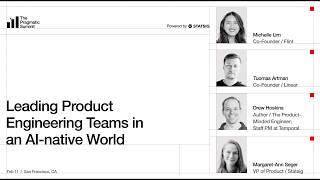
Product-minded engineers in an AI-native world
Product engineers focus on user impact and value, blending technical skills with product vision to build 10x better products.

Simon Willison: Engineering practices that make coding agents work - The Pragmatic Summit
Coding agents are transforming development. Focus on test-driven development (TDD), sandboxing, and template-driven development to leverage AI for higher quality, faster code.

Building WhatsApp with Jean Lee
WhatsApp's success stemmed from extreme focus, minimal process, and a grandma-first quality standard, enabling a small team to build a global product.

From IDEs to AI Agents with Steve Yegge
AI is rapidly changing software engineering, moving from code completion to agent orchestration. This shift necessitates adaptation, impacting job roles, company structures, and the very definition of productivity.