The Pragmatic Engineer · Video summary
Building WhatsApp with Jean Lee
WhatsApp's success stemmed from extreme focus, minimal process, and a grandma-first quality standard, enabling a small team to build a global product.

 Watch on YouTube ↗
Key takeaways
- 🎯Prioritize core functionality and quality over feature bloat, exemplified by WhatsApp's 'grandma in a remote town' usability goal, which led to saying 'no' to most feature requests for years.00:18
- 🚀Ruthlessly prioritize core features and user experience, rejecting non-essential additions that dilute focus and quality.00:18
- 💡A small, highly capable team with minimal process (no code reviews, stand-ups, or formal sprints) can achieve greater speed and impact than larger, process-heavy organizations.02:00
- 🔧Evaluate existing processes: eliminate unnecessary meetings, code reviews, and agile ceremonies if they don't directly contribute to speed and quality for your specific team size and context.02:00
- 🚀Supporting multiple, diverse platforms natively (including older phones like Nokia S40/S60) was key to WhatsApp's global reach, prioritizing accessibility over cross-platform convenience.15:34
- 🔍Erlang was chosen for the backend due to its robustness and concurrency, enabling 24/7 operation by treating the system like an airplane engine that must run continuously.16:19
Chapters
- 0:00🎯 Introduction and WhatsApp's Early Approach
- 1:48🎯 Gene Lee’s Background and Entry into Tech
- 7:40🎯 Joining WhatsApp and the Minimal Process
- 15:33🎯 Tech Stack and Platform Support
- 20:48🎯 Minimal Processes and Trust Culture
- 22:36🎯 Product Focus and Quality Over Features
- 26:48🎯 Engineering Impact and Focus
- 29:00🎯 The Acquisition by Facebook
- 35:32🎯 Post-Acquisition Changes and Growth
- 1:02:54🎯 Learning from WhatsApp’s Success Principles
- 1:09:08🎯 Final Lessons and Advice
- 1:10:17🎯 Reflections on Organizational Discipline
The digest
High-Level Overview
Jean Lee, WhatsApp’s 19th engineer, shares an in-depth account of how a tiny, highly focused team created one of the world’s largest messaging platforms serving hundreds of millions of users. The discussion spans WhatsApp’s unique engineering practices, unprecedented scalability on a lean team, intentional product minimalism, and cultural dynamics inside a startup that was acquired by Facebook for $19 billion. This episode offers valuable lessons on prioritization, simplicity, team structure, and leadership for startup founders, engineers, and engineering managers, especially relevant for today’s AI-native companies seeking efficiency and impact.
Keep reading in The Digest
The full 6-minute article, 15 more sections, and every new episode from The Pragmatic Engineer and the creators you follow.
- Structured Deep Dive
- 1. Jean Lee’s Path to WhatsApp and Early Experiences
- 2. The WhatsApp Hiring and Interview Process
- 3. Unconventional Tech Stack Across Eight Platforms
- 4. Minimalist Product Philosophy and Feature Prioritization
- 5. Operating Without Traditional Engineering Processes
- 6. Scaling After Facebook Acquisition
- 7. Leadership and Management Lessons
- 8. Reflections on Performance Reviews and Internal Visibility
- 9. Perspectives on AI’s Impact on Software Engineering and Management
- 10. Enduring Lessons for Startups and Professionals
- Key Frameworks and Mental Models
- WhatsApp’s Engineering Philosophy Framework
- Practical Implications & Takeaways
- Action-Oriented Summary
More from The Pragmatic Engineer

Scaling Uber with Thuan Pham (Uber’s first CTO)
Uber's former CTO Thuan Pham shares high-leverage lessons from scaling Uber, emphasizing necessity-driven engineering, the power of relationships, and the evolution of AI in software development.

Nicole Forsgren: Leading high-performing engineering teams in the age of AI - The Pragmatic Summit
AI accelerates coding but exposes systemic bottlenecks in reviews, deployments, and processes, requiring a focus on agent experience and human systems to maintain delivery speed and quality.
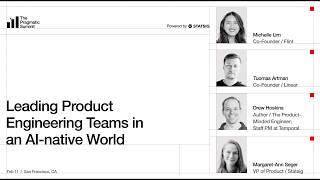
Product-minded engineers in an AI-native world
Product engineers focus on user impact and value, blending technical skills with product vision to build 10x better products.

Simon Willison: Engineering practices that make coding agents work - The Pragmatic Summit
Coding agents are transforming development. Focus on test-driven development (TDD), sandboxing, and template-driven development to leverage AI for higher quality, faster code.

From IDEs to AI Agents with Steve Yegge
AI is rapidly changing software engineering, moving from code completion to agent orchestration. This shift necessitates adaptation, impacting job roles, company structures, and the very definition of productivity.

Uber: Leading engineering through an agentic shift - The Pragmatic Summit
Uber's agentic AI shift leverages AI to augment engineers, moving from automating toil to enabling superhuman productivity and focusing on creative work.