Notes from the Edge · Podcast summary
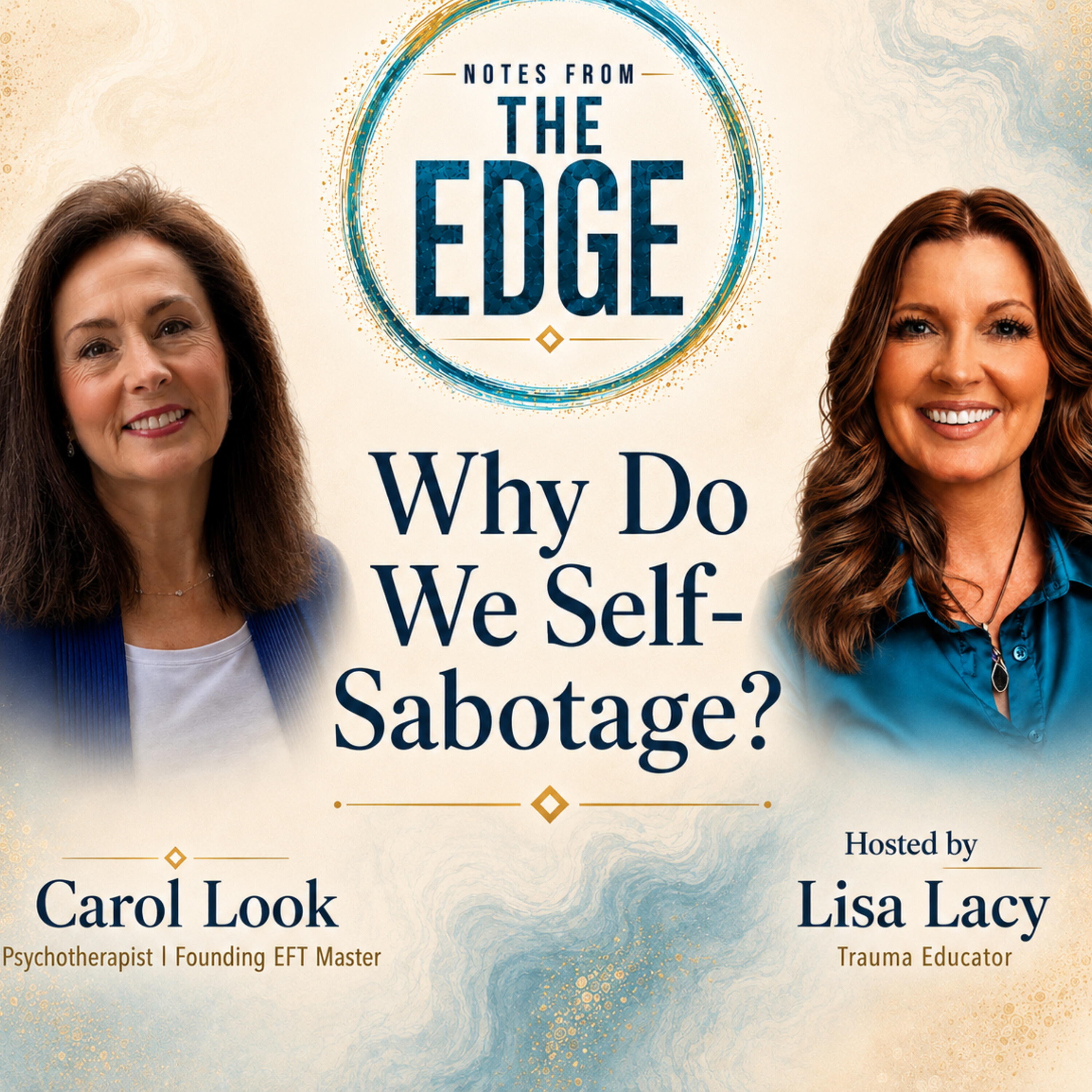
Why Do We Self-Sabotage? EFT, Nervous System Safety & Trauma Responses with Carol Look
Carol Look, a psychotherapist and EFT Master, joins Lisa Lacy to discuss why people self-sabotage, the importance of nervous system safety, and how to move forward from trauma responses.

 Listen on the show ↗
Key takeaways
- 🛡️Self-sabotaging behaviors often serve as a protective mechanism, and understanding what they protect us from is the first step towards change.03:00
- 🏃♀️Addictions and distractions 'work' to anesthetize feelings or keep us hidden from what we're trying to avoid, making it crucial to ask 'what are you running from?'03:50
- 🧠Our nervous system prioritizes safety above all else; if we don't feel safe, we will unconsciously pull back from success or growth.06:46
- ✨EFT (Emotional Freedom Techniques) can lead to profound and immediate shifts in emotional states, as evidenced by clients feeling 'completely different' after just a few minutes.09:47
- 🤔Both fear of failure and fear of success can manifest as similar behaviors like procrastination, but identifying the specific underlying fear is key to addressing it.11:00
- 💡Transformational coaching and tools like EFT can help 'rewire' the brain, enabling individuals to move forward and be different to themselves and others.16:36
Chapters
- 0:33Introduction to Notes from the Edge
- 4:59The Problem Was Once the Solution
- 9:57Wired for Safety, Not Success
- 14:07Carol Look's Journey into EFT
- 18:34Fear of Failure vs. Fear of Success
- 20:25Moving Beyond Survival Patterns
- 30:16Leadership and Unresolved Trauma
- 33:21The Power of Rewiring and Connection
- 42:29The Yes Code: Transforming Sabotage into Success
- 45:00How to Work with Carol Look
- 46:55Final Questions: Performance and Stillness
The digest
In a compelling conversation on "Notes from the Edge," host Lisa Lacy welcomes Carol Look, a distinguished psychotherapist and EFT (Emotional Freedom Techniques) Master. Together, they delve into the intricate reasons behind self-sabotage, the critical role of nervous system safety, and how individuals can navigate their trauma responses to achieve genuine progress.
The Problem Was Once the Solution
Lisa Lacy opens the discussion by introducing the powerful idea that "the problem was once the solution." She poses a crucial question: when we find ourselves stuck in addiction, procrastination, chronic people-pleasing, or self-sabotage, what is that behavior actually protecting us from? Carol Look immediately affirms this perspective, emphasizing that these behaviors are indeed protective, and therefore, we need to approach ourselves with compassion rather than criticism. Look advises listeners to pause and ask, "What's the upside of what am I doing? What is it protecting us from?" She notes that many people will admit to not wanting visibility or to feel deep emotions, especially with addictions. Lacy shares her own experience of running from emotions for 20 years through alcohol, only to discover that facing them wasn't as bad as she anticipated. Look reinforces that addictions "work" to anesthetize feelings or keep individuals hidden from what they're trying to escape. The key, she stresses, is to ask better questions, have compassion, forgive oneself, and stop self-criticism. The "why" question, Lacy adds, is often overlooked, with people instead focusing on "what's wrong with you?" or "what's wrong with me?" instead of understanding the underlying protective mechanisms.
Keep reading in The Digest
The full 9-minute article, 8 more sections, and every new episode from Notes from the Edge and the creators you follow.
- Wired for Safety, Not Success
- The Origins of EFT and Overcoming Skepticism
- Fear of Failure vs. Fear of Success
- Moving Beyond Survival Patterns
- Leadership and Unresolved Trauma
- The Power of Rewiring and Connection
- The Yes Code: Transforming Sabotage into Success
- Final Thoughts: Stillness, Space, and Changing the World
More from Notes from the Edge

Edge Note: What Happens When You Stop Searching Outside Yourself
Roseanne Anoni, psychotherapist and spiritual teacher, shares her journey of healing, self-forgiveness, and finding presence within.

What Stories Are You Waiting Too Long to Ask For? Preserving Family Stories with Brad Koch
Brad Cook, former Marine and business coach, launches Story Project to preserve family stories and deepen connections.
Can You Regulate a Craving Before It Becomes a Relapse? Addiction Recovery, Relapse Prevention & Nervous System Regulation with Dr. Deborah Rozman
Dr. Deborah Rozman, behavioral psychologist and co-CEO of HeartMath, reveals how heart-brain coherence and HRV biofeedback empower addiction recovery and relapse prevention.
Edge Note: What Did We Forget After Kindergarten?
Kindergarten teacher Tiffany Dennison shares insights from 22 years of teaching, revealing what adults can relearn from children about play, emotional intelligence, and navigating conflict.
What Happens When Success Stops Working? Male Isolation, Emotional Healing & Personal Accountability with Daniel Sterling
Daniel Sterling, author and former professional alpine ski racer, discusses male isolation, emotional healing, and personal accountability, sharing his journey from chasing external validation to finding inner peace.

What If Your Identity Was Built on a Secret? Late-Discovery Adoption, Family Secrets & Reclaiming Identity with Al Isaacs
Al Isaacs, author of "Finding Mary Smith," shares his incredible journey of discovering his adoption at age 52, unraveling decades of family secrets, and redefining his identity through unexpected twists and turns.