Notes from the Edge · Podcast summary
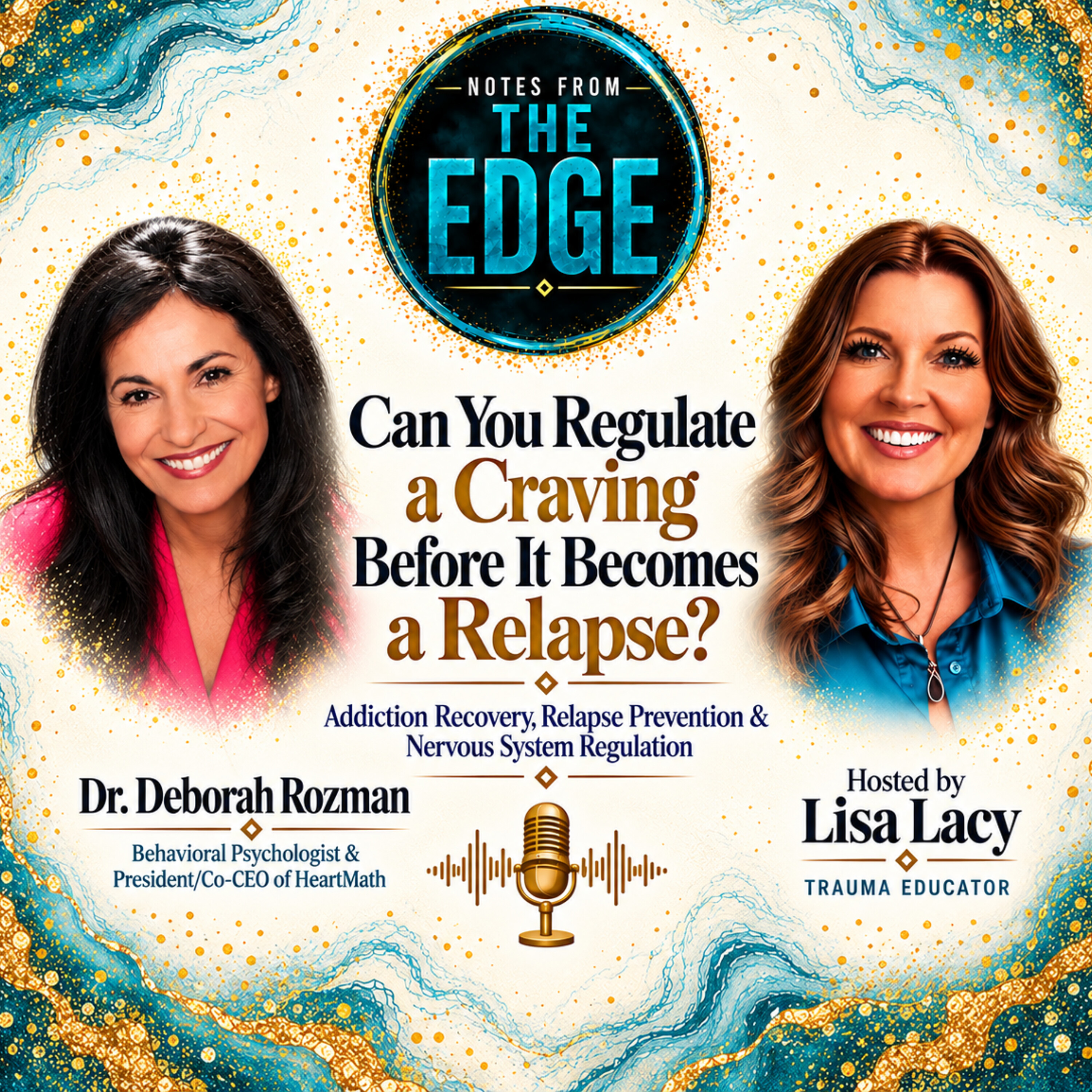
Can You Regulate a Craving Before It Becomes a Relapse? Addiction Recovery, Relapse Prevention & Nervous System Regulation with Dr. Deborah Rozman
Dr. Deborah Rozman, behavioral psychologist and co-CEO of HeartMath, reveals how heart-brain coherence and HRV biofeedback empower addiction recovery and relapse prevention.

 Listen on the show ↗
Key takeaways
- 🧠The amygdala scans for familiar emotional patterns and triggers cravings based on heart rate variability signals.3:52
- ❤️The heart contains its own nervous system with 40,000 neurons that communicate with the brain independently.7:16
- ⚡The heart’s electromagnetic field broadcasts emotional states and influences others’ nervous systems within several feet.13:27
- 💓Heart rate variability (HRV) coherence is a smooth, ordered waveform that synchronizes heart and brain rhythms.15:32
- 📱The Inner Balance Coherence Plus sensor provides real-time HRV biofeedback to help users shift from stress to calm.22:51
- 🌟Building a new baseline of coherence through daily practice can improve sleep, reduce anxiety, and increase emotional resilience.26:17
Chapters
- 3:20🧠 Physiology of Cravings and Addiction
- 7:00❤️ The Heart’s Nervous System
- 11:40💓 Feelings and the Heart’s Electromagnetic Field
- 19:10🔬 Understanding Coherence
- 22:10📱 Inner Balance Coherence Plus Tool
- 26:40🧘♂️ Coherence in Addiction Recovery
- 33:20🌟 Success Stories and Techniques
- 41:10🤝 Vulnerability and Healing
- 44:10💡 Final Reflections
The digest
Understanding the Physiology of Cravings and Addiction
Dr. Deborah Rozman, a behavioral psychologist with nearly 30 years of experience and co-CEO of HeartMath Incorporated, explains the physiological mechanisms behind cravings and relapse. When someone in recovery feels stressed or triggered, the amygdala—the brain’s emotional memory center—scans for familiar patterns to respond to. This includes addictive habits, which the amygdala finds comforting even if they are harmful. The heart communicates with the brain via the vagal nerve, sending heart rate variability (HRV) patterns that influence the amygdala’s response. When stressed, the HRV becomes irregular and incoherent, signaling the brain to enter survival mode, which can trigger cravings and relapse.
Keep reading in The Digest
The full 4-minute article, 8 more sections, and every new episode from Notes from the Edge and the creators you follow.
- The Heart’s Critical Role in Emotional Regulation
- Feelings, the Heart, and the Energetic Field
- What Is Coherence and Why Does It Matter?
- The Inner Balance Coherence Plus Tool: Real-Time Biofeedback
- Integrating Heart-Brain Coherence into Addiction Recovery
- Real-Life Success Stories and Practical Techniques
- The Power of Vulnerability and Heart Connection
- Final Thoughts: Embracing the Heart’s Wisdom
More from Notes from the Edge

Edge Note: What Happens When You Stop Searching Outside Yourself
Roseanne Anoni, psychotherapist and spiritual teacher, shares her journey of healing, self-forgiveness, and finding presence within.

What Stories Are You Waiting Too Long to Ask For? Preserving Family Stories with Brad Koch
Brad Cook, former Marine and business coach, launches Story Project to preserve family stories and deepen connections.

Edge Note: What Did We Forget After Kindergarten?
Kindergarten teacher Tiffany Dennison shares insights from 22 years of teaching, revealing what adults can relearn from children about play, emotional intelligence, and navigating conflict.

What Happens When Success Stops Working? Male Isolation, Emotional Healing & Personal Accountability with Daniel Sterling
Daniel Sterling, author and former professional alpine ski racer, discusses male isolation, emotional healing, and personal accountability, sharing his journey from chasing external validation to finding inner peace.

What If Your Identity Was Built on a Secret? Late-Discovery Adoption, Family Secrets & Reclaiming Identity with Al Isaacs
Al Isaacs, author of "Finding Mary Smith," shares his incredible journey of discovering his adoption at age 52, unraveling decades of family secrets, and redefining his identity through unexpected twists and turns.

Are you performing your worth? Trauma, Treatment-Resistant Depression & ECT with Simone Bowyer
Writer, trauma educator, and executive advisor Simone Bowyer shares her journey through childhood trauma, treatment-resistant depression, and the path to finding her worth beyond performance. She discusses the concept of "the language of survival" and how past coping mechanisms can become maladaptive in adulthood.