Steve Brunton · Video summary
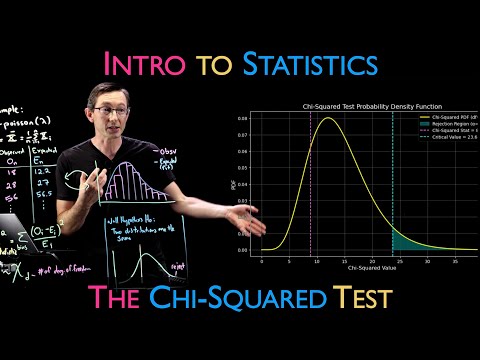
The Chi-Squared Test : Are Two Distributions the Same? (with Python Example)
The Chi-Squared Test is a powerful statistical method for assessing if two distributions are the same using a specified hypothesis and test statistic.

 Watch on YouTube ↗
Key takeaways
- 🚀Apply the Chi-Squared Test to evaluate the similarity of your own datasets in analysis.00:00
- 🎯The Chi-Squared Test checks if two distributions are statistically similar, emphasizing hypothesis testing principles.00:54
- 🎯Null hypothesis assesses if distributions are the same, and significance is derived from the P-value.01:53
- 🎯The K-Squared statistic measures the divergence between observed and expected values, crucial for hypothesis testing.10:00
- 🎯Degrees of freedom in the test is calculated as number of bins minus parameters fitted minus one, affecting outcome.12:17
- 🚀Familiarize yourself with concepts of degrees of freedom and their calculation to enhance your statistical analysis skills.12:43
Chapters
- 0:00🎯 Introduction to Goodness of Fit
- 0:43🔍 Hypothesis Testing Overview
- 1:44📊 Chi-Squared Distribution Introduction
- 3:33🧪 Alpha Particle Emission Example
- 4:00📝 Setting Up the Data
- 5:19📈 Data Representation
- 8:12🔨 Designing the Test Statistic
- 9:50📉 Degrees of Freedom Explanation
- 10:37❓ Null Hypothesis Setup
- 14:04🔗 Chi-Squared Test Implementation
- 16:33⚙️ Executing the Chi-Squared Test in Python
- 17:23📊 Results Interpretation
- 18:27✅ Conclusions from the Test
- 19:06🗂️ Future Content Overview
- 20:26🔄 Recap of Key Points
The digest
Understanding the Chi-Squared Test: Evaluating Distribution Similarity with Practical Python Application
Keep reading in The Digest
The full 3-minute article, 5 more sections, and every new episode from Steve Brunton and the creators you follow.
- High Level Overview
- Structured Deep Dive
- Key Frameworks, Models, or Mental Maps
- Practical Implications & Takeaways
- Action-Oriented Summary
More from Steve Brunton

Bayesian Inference: Overview
Bayesian inference balances prior beliefs with observed data to update probability models, offering a robust approach for uncertainty quantification and decision-making.

PyDMD: A Python Package for Dynamic Mode Decomposition (DMD)
Explore the PIDMD Python package for implementing Dynamic Mode Decomposition (DMD) to analyze time-varying data effectively.
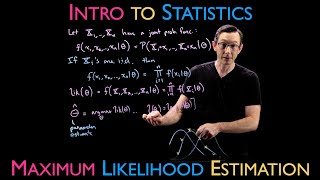
Maximum Likelihood Estimation (MLE) with Examples
This video introduces Maximum Likelihood Estimation (MLE), a powerful statistical method to estimate parameters from data, crucial in many ML algorithms.