Steve Brunton · Video summary
PyDMD: A Python Package for Dynamic Mode Decomposition (DMD)
Explore the PIDMD Python package for implementing Dynamic Mode Decomposition (DMD) to analyze time-varying data effectively.

 Watch on YouTube ↗
Key takeaways
- 🎯Dynamic Mode Decomposition (DMD) offers a straightforward way to extract governing equations from complex systems using snapshot data.05:00
- 🔍DMD can identify and visualize spatiotemporal modes, clarifying underlying dynamics in diverse datasets, crucial for predictive modeling.09:10
- ⚡PIDMD simplifies DMD implementation, with built-in methods for data preprocessing, model fitting, and visualization, increasing efficiency.11:20
- 🔧Use available data preprocessing tools within PIDMD to prepare your data for effective DMD analysis.11:45
- 🚀Explore the PIDMD GitHub repository for available tutorials and documentation to kickstart your analysis.13:00
- 💻The modular structure of PIDMD allows users to seamlessly integrate DMD into existing data analysis workflows, facilitating faster insights.25:10
Chapters
- 0:00🎯 Introduction to PIDMD and Video Overview
- 1:45🎯 Motivation for Data-Driven Modeling
- 3:49🎯 Building a Mathematical Model from Data
- 5:32🎯 Introduction to DMD Algorithm
- 10:20🎯 Linear System Assumption of DMD
- 11:30🎯 Applying PIDMD and Using the Python Package
- 14:20🎯 Synthetic Data Setup for DMD Demonstration
- 19:30🎯 Data Visualization
- 24:18🎯 Applying DMD to Synthetic Data
- 28:51🎯 Extracting and Interpreting DMD Results
The digest
High Level Overview
Dynamic Mode Decomposition (DMD) is a data-driven technique for extracting dynamic patterns from complex time-dependent systems without requiring explicit governing equations. PyDMD is a Python package that provides accessible, versatile implementations of DMD and its variants, enabling researchers and engineers to build linear dynamic models directly from snapshot data. This summary explains the motivation behind DMD, outlines its underlying mathematical framework, and illustrates PyDMD’s practical usage with a coding demonstration that recovers spatial-temporal modes from noisy synthetic data. The content is valuable for practitioners in fields where time-varying data is abundant but governing equations are unknown or intractable.
Keep reading in The Digest
The full 5-minute article, 9 more sections, and every new episode from Steve Brunton and the creators you follow.
- Motivation: Why Model via DMD? (00:40–04:55)
- Dynamic Mode Decomposition: Theoretical Framework (05:00–11:19)
- Practical Use of PyDMD (11:20–26:00)
- Coding Demonstration with Synthetic Data (26:00–38:30)
- Key Frameworks & Mental Models
- 1. Dynamic Mode Decomposition (DMD) Decomposition
- 2. PyDMD Modular Workflow
- Practical Implications & Takeaways
- Action-Oriented Summary
More from Steve Brunton

Bayesian Inference: Overview
Bayesian inference balances prior beliefs with observed data to update probability models, offering a robust approach for uncertainty quantification and decision-making.
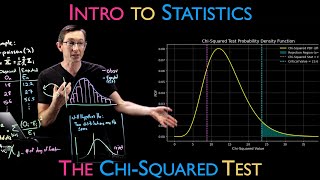
The Chi-Squared Test : Are Two Distributions the Same? (with Python Example)
The Chi-Squared Test is a powerful statistical method for assessing if two distributions are the same using a specified hypothesis and test statistic.
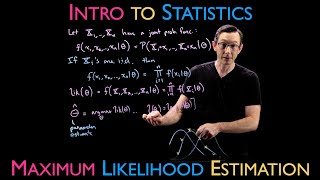
Maximum Likelihood Estimation (MLE) with Examples
This video introduces Maximum Likelihood Estimation (MLE), a powerful statistical method to estimate parameters from data, crucial in many ML algorithms.