Steve Brunton · Video summary
Maximum Likelihood Estimation (MLE) with Examples
This video introduces Maximum Likelihood Estimation (MLE), a powerful statistical method to estimate parameters from data, crucial in many ML algorithms.

 Watch on YouTube ↗
Key takeaways
- 🎯MLE reframes parameter estimation as an optimization problem, leveraging tools from optimization theory.00:20
- 🔍The likelihood function represents the probability of observing the data given parameters, allowing for straightforward optimization.06:16
- 📊Using the log-likelihood function simplifies optimization, as products convert to sums, facilitating calculations.10:12
- 💻Utilize log-likelihood optimization in your machine learning models to enhance fitting processes efficiently.10:12
- ⚡The MLE for the Poisson distribution results in parameter estimates equal to the sample mean, demonstrating a practical application of the technique.18:32
- 🌟MLE provides a general framework for estimating parameters across many distributions, making it widely applicable in statistics and machine learning.20:35
Chapters
- 0:00🎯 Introduction to Maximum Likelihood Estimation
- 1:09🎯 Setting up the data and joint distribution
- 3:12🎯 Joint probability function for IID data
- 6:11🎯 Constructing the likelihood function
- 9:22🎯 Maximizing likelihood and the log-likelihood
- 10:22🎯 Logarithm of the likelihood
- 12:41🎯 Example: Poisson distribution likelihood
- 15:22🎯 Finding the maximum likelihood estimator
- 18:47🎯 Result: lambda equals sample mean
- 19:03🎯 Summary of the MLE process
- 20:47🎯 Applicability to various distributions
- 22:01🎯 Practical steps for Maximum Likelihood
- 22:30🎯 Relation to Bayesian inference
- 23:10🎯 Conclusion and further applications
The digest
Maximum Likelihood Estimation (MLE) is a foundational statistical technique for estimating parameters of probability distributions based on observed data. It reframes parameter estimation as an optimization problem, making it a key tool in statistics and machine learning. This explanation uses the Poisson distribution as a concrete example to illustrate how MLE works, followed by a discussion on the connection between MLE and Bayesian estimation.
High-Level Overview
MLE is a method to estimate unknown parameters of a probability distribution by finding the parameter values that make the observed data most probable. By framing estimation as maximizing a likelihood function—essentially the probability of the observed data given parameters—MLE allows using optimization techniques to solve statistical problems. This method is widely applied in machine learning and statistical inference, where understanding and estimating parameters is crucial.
Keep reading in The Digest
The full 4-minute article, 9 more sections, and every new episode from Steve Brunton and the creators you follow.
- Understanding MLE through Joint Probability and IID Assumption
- Applying MLE to the Poisson Distribution Example
- Defining the Likelihood Function and Optimization Objective
- Using Log-Likelihood for Computational Simplicity
- Deriving the MLE Estimate for Poisson Parameter \(\lambda\)
- General Insights and Properties
- Connection Between MLE and Bayesian Estimation
- Practical Implications & Takeaways
- Action-Oriented Summary
More from Steve Brunton

Bayesian Inference: Overview
Bayesian inference balances prior beliefs with observed data to update probability models, offering a robust approach for uncertainty quantification and decision-making.
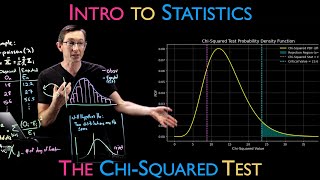
The Chi-Squared Test : Are Two Distributions the Same? (with Python Example)
The Chi-Squared Test is a powerful statistical method for assessing if two distributions are the same using a specified hypothesis and test statistic.

PyDMD: A Python Package for Dynamic Mode Decomposition (DMD)
Explore the PIDMD Python package for implementing Dynamic Mode Decomposition (DMD) to analyze time-varying data effectively.