Steve Brunton · Video summary
Bayesian Inference: Overview
Bayesian inference balances prior beliefs with observed data to update probability models, offering a robust approach for uncertainty quantification and decision-making.

 Watch on YouTube ↗
Key takeaways
- 🎯Bayesian inference fundamentally flips the traditional probabilistic approach by inferring model parameters (Theta) from data (X), rather than predicting data from parameters.01:46
- 💡The core of Bayesian inference lies in updating prior beliefs (P(Theta)) with observed data (X) via the likelihood (P(X|Theta)) to arrive at a posterior probability distribution (P(Theta|X)).03:07
- 💪Bayesian methods allow for balancing prior knowledge with empirical evidence, providing robustness against small sample sizes or noisy data, unlike purely frequentist approaches.06:45
- 🚀Consider incorporating prior knowledge into your statistical models, especially when dealing with limited data, to improve robustness and interpretation.06:45
- 📊Instead of point estimates, Bayesian inference yields a full probability distribution for model parameters, enabling direct quantification and propagation of uncertainty.09:50
- 🔄The Bayesian update is an iterative process where the posterior distribution from one step becomes the prior for the next, allowing sequential data incorporation.11:15
Chapters
- 0:00🎯 Introduction to Bayesian Inference
- 1:11🎯 Classic Probability vs. Bayesian Inference
- 1:53🎯 Bayesian Probability and the Inverse Problem
- 3:25🎯 Prior, Likelihood, and Posterior
- 11:21🎯 Bayesian Updating and Sequential Data
- 15:06🎯 Code Example: Coin Flip Hypothesis Testing
- 19:02🎯 Beta Distribution for Binomial Data
- 21:40🎯 Intuition and Visualization of Bayesian Updating
- 23:10🎯 Advantages of Bayesian Inference
- 23:33🎯 Disadvantages and Limitations
- 26:53🎯 Modern Solutions and Applications
- 28:41🎯 Practical Use Cases and Limitations
- 29:15🎯 Summary and Future Directions
- 30:12🎯 Closing Remarks
The digest
Bayesian inference is a fundamental probabilistic framework that reverses the classical approach to statistical modeling by estimating the likelihood of model parameters given observed data. This method integrates prior beliefs with new evidence to iteratively update parameter estimates, providing a powerful tool for robust statistical inference, uncertainty quantification, and decision-making under incomplete information. This course introduction outlines the conceptual basis of Bayesian inference, its main advantages and challenges, and practical coding examples illustrating how Bayesian updating works, particularly in typical machine learning and statistics applications.
High-Level Overview
Bayesian inference reframes classic probabilistic modeling by focusing on inferring the distribution of model parameters based on observed data, rather than the probability of data given fixed parameters. This inversion addresses a statistical inverse problem: given data, what can we infer about the parameters that generated it? The approach combines prior beliefs about the parameters with the likelihood of observed data, updating these beliefs into a posterior distribution after each new data point. This iterative process supports robust model estimation, especially useful in settings with limited or noisy data, and forms a cornerstone of modern machine learning and statistical reasoning.
Keep reading in The Digest
The full 6-minute article, 12 more sections, and every new episode from Steve Brunton and the creators you follow.
- Structured Deep Dive
- Classical vs Bayesian Probability Modeling
- Role of Priors and Updating Beliefs
- Advantages of Bayesian Inference
- Demonstrative Code Examples
- Conjugate Priors and Computational Efficiency
- Limitations and Challenges
- Key Frameworks and Mental Models
- Bayesian Update — Iterative Conjugate Updating
- Conjugate Priors
- Practical Implications & Takeaways
- Action-Oriented Summary: Applying Bayesian Inference
More from Steve Brunton
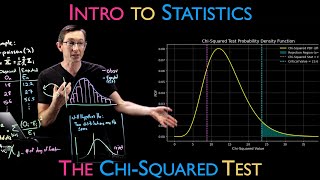
The Chi-Squared Test : Are Two Distributions the Same? (with Python Example)
The Chi-Squared Test is a powerful statistical method for assessing if two distributions are the same using a specified hypothesis and test statistic.

PyDMD: A Python Package for Dynamic Mode Decomposition (DMD)
Explore the PIDMD Python package for implementing Dynamic Mode Decomposition (DMD) to analyze time-varying data effectively.
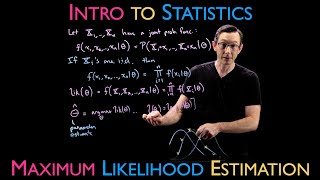
Maximum Likelihood Estimation (MLE) with Examples
This video introduces Maximum Likelihood Estimation (MLE), a powerful statistical method to estimate parameters from data, crucial in many ML algorithms.