The Daily · Podcast summary
Who Moves Up, and Who's Pushed Out, in Pete Hegseth's Military
New York Times reporter Greg Jaffe discusses the controversial changes made by Secretary of Defense Pete Hegseth to the US military's senior ranks, focusing on the firing of Admiral Lisa Franchetti and the hiring of Admiral Daryl Caudle.
 Listen on the show ↗
Key takeaways
- 🧹Secretary Hegseth's stated goal was to 'clean house' in the military, removing officers he believed were promoted due to DEI initiatives and replacing them with those aligned with his definition of merit.02:20
- 📉For the first time in at least a decade, there will be no women nominated to admiral rank under Hegseth's leadership, leading to a less diverse leadership in the Navy.03:02
- 🔥Within his first month, Hegseth fired a significant number of people, including the Vice Chief of Staff, and continued to dismiss or block promotions for over a dozen generals and admirals.03:08
- ⚓Admiral Lisa Franchetti's career was remarkable, rising through the Navy despite early combat exclusion bans for women, eventually commanding destroyers and naval forces in Korea.06:28
- 🇺🇸President Biden personally intervened to select Franchetti as Chief of Naval Operations, overruling his Secretary of Defense, partly to make history by appointing the first female to the role.10:49
- 🗣️Despite overwhelming Senate confirmation, Hegseth publicly criticized Franchetti, arguing she was unqualified and only got the job because she was a woman, aligning her with the 'Biden approach' he opposed.13:40
Chapters
- 0:46Hegseth's Military Transformation
- 3:21The Purge and the New Standard
- 8:21Admiral Lisa Franchetti's Career
- 17:22Biden's Choice and Franchetti's Confirmation
- 24:04Admiral Daryl Caudle's Ascent
- 37:18The Outcome: Merit vs. Ideology
The digest
For the past 18 months, Secretary of Defense Pete Hegseth has been systematically remaking the top ranks of the U.S. military. This process involves dismissing or sidelining many who, in his view, rose through the ranks due to their involvement in Diversity, Equity, and Inclusion (DEI) initiatives, and replacing them with officers who align with his definition of merit. Critics argue that Hegseth is prioritizing loyalty to himself and his ideology over loyalty to the military institution itself.
Greg Jaffe, a reporter for The New York Times, delves into the specifics of this transformation, focusing on a single job that has become a case study for Hegseth's approach: the Chief of Naval Operations. Jaffe's investigation highlights the stories of Admiral Lisa Franchetti, who was initially selected for the role, and Admiral Daryl Caudle, who ultimately secured the position.
Hegseth's Vision for a Transformed Military
Secretary Hegseth's desire to transform the senior ranks of the U.S. military was well-established even before he officially took office. Jaffe explains that Hegseth openly spoke about removing senior military officers, including the Chairman of the Joint Chiefs of Staff. This intention became even clearer in September of last year when Hegseth delivered a significant speech at the War Department. In this address, he emphasized the need to "clean house," to remove individuals he believed had been "inserted into the military by ideologues" and "manipulated into pursuing like diversity, equity, and inclusion programs." Hegseth's rhetoric was stark, declaring "No more identity months, DEI offices." He framed his campaign as an effort to "reclaim a military that he thinks has been taken over by leftist forces." Jaffe notes that Hegseth even blamed the losses in Iraq and Afghanistan on what he perceived as the "corruption of the officer corps of the United States military." He vowed to "fix that problem," stating, "We are clearing out the debris... ending the war on warriors."
This aggressive approach quickly translated into action. Within his first month, Hegseth fired a significant number of people, including the Vice Chief of Staff. Jaffe describes this as a "pretty significant purge of some of the top ranks of the military." This initial wave of firings included figures like C.Q. Brown, the Chairman of the Joint Chiefs of Staff. The dismissals continued, with Hegseth ultimately firing "more than a dozen generals and admirals." Beyond direct firings, Hegseth also blocked promotions for a large number of women and people of color who had earned their advancements at senior levels. Jaffe and his colleague Kate Kelly found that "upwards of 65 to 70 people" had either been fired or blocked from promotions they had earned, representing "about 10% of the entire general officer corps." Jaffe emphasizes the unprecedented nature of these actions, stating, "I cannot think of anything remotely close to this in the last 26 years."
Keep reading in The Digest
The full 9-minute article, 4 more sections, and every new episode from The Daily and the creators you follow.
- The Rise and Fall of Admiral Lisa Franchetti
- Biden's Intervention and Franchetti's Confirmation
- Caudle's Calculated Ascent
- The Outcome: Merit vs. Ideology
More from The Daily

Chris Rock Has Been Thinking About Forgiveness
Chris Rock discusses his new film Misty Green, reflections on Hollywood, comedy, forgiveness, and personal growth.
He Was Deported to a Country He’d Never Heard Of
Nicholas Casey reveals the Trump administration's controversial practice of deporting immigrants to unfamiliar third countries, spotlighting Roberto Mosquera's harrowing story in Eswatini.

The Best TV Shows of the 21st Century
Gilbert Cruz and James Poniewozik discuss the New York Times' list of the 100 best TV shows of the 21st century, exploring the evolution of television storytelling and culture.

The Trump Administration Defangs the Endangered Species Act
The Trump administration is rolling back environmental protections, specifically targeting the Endangered Species Act. Rachel Abrams speaks with New York Times colleague Catrin Einhorn about the history of the act, the recent changes, and the potential impact on vulnerable animals and ecosystems.
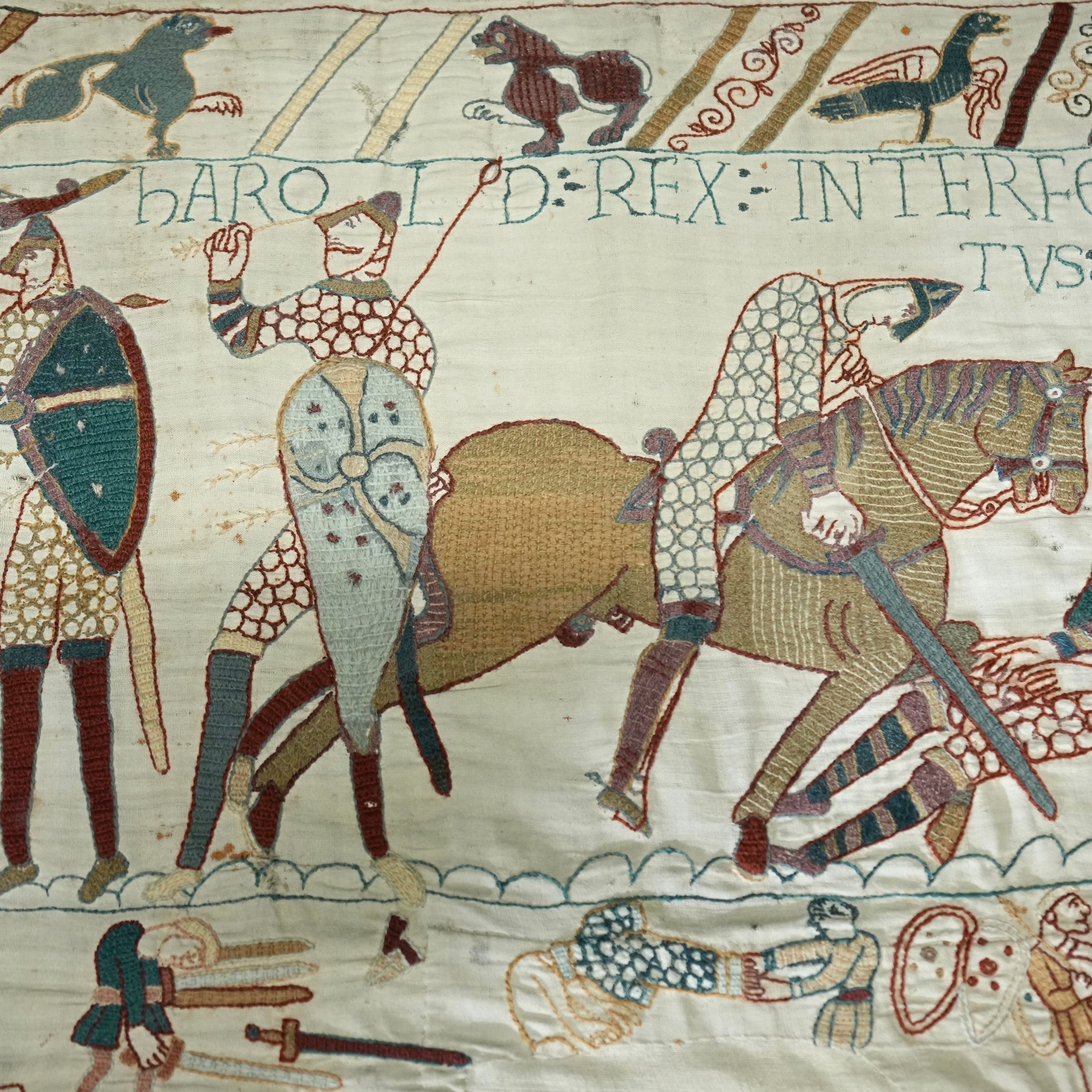
How a 1,000-Year-Old Tapestry Took London by Storm
Culture reporter Alex Marshall explains how the 1,000-year-old Bayeux Tapestry, a piece of fabric depicting the Norman Conquest, became the hottest ticket in London, and why its temporary return to the UK is such a big deal.

Aaron Sorkin Still Believes in American Institutions, Even If No One Else Does
Aaron Sorkin discusses his new film, "The Social Reckoning," a follow-up to "The Social Network," and delves into his writing process, his views on social media, and his enduring optimism for American institutions.