Static in the Attic · Video summary
Wait, Is THIS Where Oil Comes From?
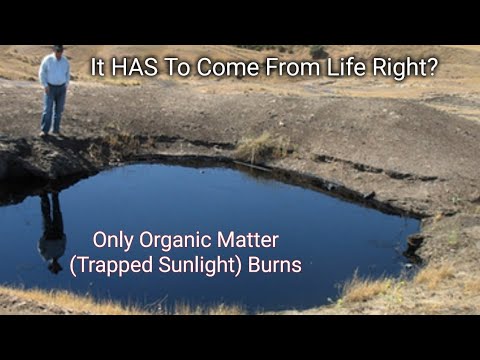
Everything that burns originates from organic matter that has captured solar energy. This trapped sunlight is released as heat when the organic material is ignited.
 Watch on YouTube ↗
Key takeaways
- 💡For something to burn in the traditional sense, it requires fuel, oxygen, and ignition, and the fuel must be organic material derived from life.00:10
- ⚡Matter is fundamentally energy in motion, with mass accounting for less than 1% and the rest being the energy of fields and motion.02:26
- 🌱Plants and other organisms directly use sunlight to convert inorganic matter into complex molecules, effectively trapping solar energy in their structure.05:26
- 💡Recognize that organic matter is a form of trapped solar energy, which explains its combustibility and its role in forming fossil fuels.06:39
- ☀️All energy that produces movement and heat on Earth originates from the sun, with organic matter acting as a medium to trap and re-release this solar energy.07:09
- 🚀Consider the sun's energy as the fundamental source powering all life and combustion on Earth, influencing how you view energy resources.07:09
Chapters
- 0:00🔥 The Nature of Fire and Organic Matter
- 1:46⚛️ Matter as Frozen Energy
- 3:26💫 The Mystery of Life and Organic Matter
- 4:00☀️ Trapped Sunlight as the Source of Burning
- 5:26🌿 Photosynthesis and the Food Chain
- 6:11⚡ Electrical Signals in Life
- 7:20🛢️ Origin of Oil: Organic Sources
- 7:49🌱 Plant and Seed Oils
- 8:16🧪 Lab-Produced Oil from Organic Matter
- 8:43⛏️ Finding Oil Reservoirs
- 10:48🌊 The Prevailing Theory of Oil Formation
- 11:04🌊🌲 Tsunami Deposits as a Source of Organic Matter
- 12:44📜 Ancient Traditions and the Origin of Oil
- 18:13☄️ Velikovsky's Comet Theory
- 22:47❓ Measuring Materials in Space
- 23:08🌌 Space 'Shenanigans' and False Imagery
- 24:24⛽ Hydrocarbons and the Spark of Life
- 24:38🪐 Methane on Titan
- 26:21🌳 Organic Origin of Solid Combustibles
- 27:00💨 Gaseous vs. Solid Combustibles
The digest
This summary explores the fundamental concept that materials capable of burning in the traditional sense must originate from organic matter, representing "trapped sunlight." It delves into the nature of matter, energy, and the unique properties of organic compounds, ultimately questioning the conventional scientific explanations for oil formation and drawing parallels with ancient cosmological narratives. This content is relevant for individuals interested in the physics of combustion, the origin of natural resources, and alternative perspectives on cosmic phenomena.
The Nature of Burning and Organic Matter
The core principle presented is that anything that burns in the traditional sense of fire requires fuel, oxygen, and ignition, and the fuel must be organic, meaning it originates from some form of life. Inorganic matter, such as rocks and minerals, lacks this inherent property and cannot burn. While chemical reactions can produce heat and light without oxygen, traditional fire is exclusively linked to organic origins. This is illustrated by examples like burning wood, leaves, and even dried animal waste, all of which are derived from living organisms.
- Organic matter: Materials that were once alive, containing the necessary components to combust.
- Inorganic matter: Materials like rocks, sand, and minerals, which do not possess the properties for traditional burning.
Keep reading in The Digest
The full 8-minute article, 11 more sections, and every new episode from Static in the Attic and the creators you follow.
- Matter as Frozen Energy and the Spark of Life
- Trapped Sunlight: The Energy Source of Organic Matter
- The Origin of Oil: An Organic Legacy
- Locating Oil Reserves
- Ancient Narratives and Cosmic Origins of Oil
- Velikovsky's Theory and Cometary Origins
- Skepticism Towards Space Exploration and the Uniqueness of Hydrocarbons on Earth
- Conclusion: The Indispensable Role of Life in Combustible Matter
- Key Frameworks, Models, or Mental Maps
- Practical Implications & Takeaways
- Action-Oriented Summary
More from Static in the Attic

The BEST Creation Myth I've Ever Heard (Slavic) Simulation Theory
A Slavic creation myth reveals the fundamental duality of existence and how conflict shapes reality, from the primordial sea to the structured cosmos.

Velikovsky - The Day the Earth Stood Still, How the "Red Sea" Got It's Name
Reinterpreting ancient myths as cosmic catastrophe accounts, this video links the "sun stood still" stories and the "Red Sea's" name to comet impacts, explaining geological formations and historical events through celestial impacts.
The Lost Tribes ?
Ancient Native American legends from the Cheyenne and Tolteks echo biblical narratives like the Tower of Babel and the Great Flood, suggesting shared ancient origins and advanced knowledge.
Shah Outed the Fake Oil Crisis & Was Replaced - Petrodollar System Rise & Fall (Now)
The petrodollar system's rise and fall is explored, revealing how political manipulation created oil scarcity and devalued currencies, impacting global power dynamics.