Linus Tech Tips · Video summary
The Steam Video you have been waiting for….
Linus Tech Tips attempts to cool a Steam Machine using a miniature steam engine, addressing the console's thermal throttling issues and Valve's design oversight.

 Watch on YouTube ↗
Key takeaways
- 🚂The project involved using a miniature, fully operational steam engine to drive a custom 3D-printed fan, literally putting 'steam' back into the Steam Machine.00:34
- 🌡️The Steam Machine suffered from thermal throttling due to a lack of user-controlled fan curves, causing performance issues when temperatures reached 100°C.00:57
- 🔥Initial temperature tests showed the Steam Machine's GPU at 85°C and CPU at 83°C under load with the stock fan.03:35
- 🖨️The custom fan was 3D printed from nylon using an SLS printer, and its design was inspired by Noctua's fan blade geometry, which was publicly released.04:50
- ⚙️Gears and pulleys were used to connect the steam engine's mechanical output to the fan, allowing for different gear ratios to optimize fan speed and engine efficiency.07:18
- ❄️After implementing the steam-powered cooling, the CPU temperature dropped significantly to 49°C and the GPU to 39°C, demonstrating the effectiveness of the unconventional cooling method.15:42
Chapters
- 0:00Introduction to the Steam Machine's Flaw
- 0:34The Steam-Cooling Concept
- 0:52Disassembly and Custom Fan Design
- 5:12Baseline Temperature Tests
- 10:45Gears and Pulleys for Fan Drive
- 15:41Preparing the Steam Engine
- 18:34First Fire-Up and Fan Integration
- 23:42Performance Testing with Steam Cooling
The digest
When Valve released the Steam Machine, it was met with a mix of anticipation and criticism. While the concept of a console-like PC for the living room was appealing, the execution had its flaws. One of the most glaring issues, as highlighted by Linus Tech Tips, was the lack of user control over the fan curve, leading to thermal throttling for some users. In a characteristically ambitious and somewhat absurd project, Linus and his team decided to tackle this problem head-on by literally putting the "steam" back into the Steam Machine.
The Critical Flaw: No User-Controlled Fan Curve
Valve's Steam Machine, despite its compact and quiet design, suffered from a significant design oversight: the inability for users to control the fan curve. This meant that when the system hit higher temperatures, particularly around 100°C, it would automatically reduce performance to prevent overheating. This thermal throttling, often indicated by a "red line of death" LED, was a major point of contention for users who expected more control over their gaming hardware. The lack of an adjustable fan curve meant that the Steam Machine, while aesthetically pleasing, wasn't always the coolest-running on the market.
Keep reading in The Digest
The full 3-minute article, 4 more sections, and every new episode from Linus Tech Tips and the creators you follow.
- A Silly Yet Purposeful Project: Steam-Cooling the Steam Machine
- Custom Fan Design and Disassembly
- Gearing Up for Steam-Powered Airflow
- The Moment of Truth: Testing the Steam-Cooled System
More from Linus Tech Tips

Finishing What we Started Seven Years Ago
Linus Tech Tips finally finishes a PC build seven years in the making, bringing back an old friend to rice out a top-of-the-line PC from 2004 with modern water cooling and a touch of automotive flair.

The All COSTCO Gaming Setup
Linus Tech Tips builds an entire gaming setup using only products found at Costco, testing the quality and value of the warehouse giant's offerings.

I Have Strong Feelings About Air Conditioning in the Tech House
Linus Tech Tips tackles the challenge of cooling the "Tech House" by installing a mini-split heat pump system, showcasing the process and highlighting its benefits over traditional HVAC.

The Steam Frame Changes Everything - Full Review
Linus Tech Tips reviews the Steam Frame, Valve's latest VR headset, evaluating its features, performance, and overall value in the current VR market.
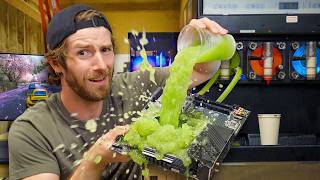
I Connected a Slushie Machine to my Computer
Linus Tech Tips attempts to cool a high-end gaming PC using a commercial-grade slushie machine, pushing the boundaries of unconventional cooling solutions.

We Should Have Hired Someone to do this…
Linus and Elijah tackle the daunting task of cabling the Tech House, facing unexpected challenges and making crucial decisions about network infrastructure and security camera placement.