Creative Planning · Video summary
The Fog of War | Signal or Noise Ep 69 | Charlie Bilello | Peter Mallouk | Creative Planning
The Fog of War introduces significant uncertainty, impacting markets, consumers, and Fed policy, with earnings as the ultimate market driver.

 Watch on YouTube ↗
Key takeaways
- 🎯The Fog of War is defined by a lack of clear objectives and endgame, leading to pervasive uncertainty that markets dislike.00:30
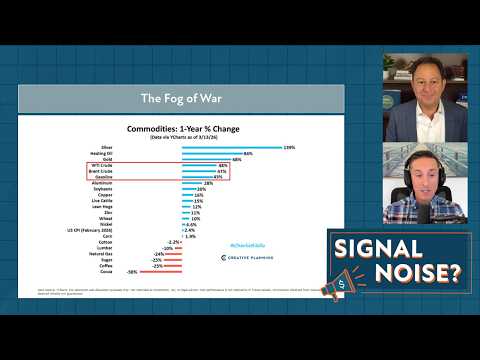
- 📈Oil price increases are not inherently bad for the stock market; modest increases can signal a strong economy, while rapid spikes are detrimental.09:43
- 🔍The impact of sustained high oil prices on consumers is a significant political risk, potentially influencing election outcomes and thus policy decisions.11:16
- 🚀The primary driver for a conflict's resolution may not be geopolitical or economic, but rather the proximity to re-election campaigns, creating an 'off-ramp' pressure.13:12
- 📝Consider the political calendar and upcoming elections as potential catalysts for conflict resolution or de-escalation.13:12
- 🔧Monitor consumer sentiment and spending as key indicators for economic health, especially concerning the impact of rising energy and goods prices.14:16
Chapters
- 0:07🎙️ Introduction and The Fog of War
- 1:32❓ Uncertainty and Market Resilience
- 2:30🎯 Defining the Endgame and Objectives
- 3:03🇺🇸 US Involvement and Political Considerations
- 4:02🗺️ Three Conflict Scenarios
- 5:13📈 Escalation and Hope for Resolution
- 6:58🗳️ Public Opinion and Political Pressure
- 8:05🏛️ Congressional Involvement and War Authorization
- 9:23🛢️ Oil Prices and Stock Market Correlation
- 10:47⛽ Consumer Impact of Rising Gas Prices
- 13:33📉 Sector Performance and Economic Indicators
- 15:12🤖 AI's Influence on Market Rotation
- 15:53🤯 Market Resilience Amidst Multiple Factors
- 16:40🔮 Market Expectations for the Future
- 17:45📈 Inflation, Interest Rates, and Fed Policy
- 20:31💰 Cost of War and Deficit Spending
- 22:47📜 Historical Conflict and Market Returns
- 24:25🚀 Long-Term Investor Perspective
- 24:53💼 The Primacy of Earnings
The digest
Navigating Geopolitical Uncertainty: War's Impact on Markets and the Economy
This discussion analyzes the profound uncertainty introduced by geopolitical conflicts, particularly focusing on the "fog of war" and its cascading effects on global markets, consumer prices, inflation, and Federal Reserve policy. It aims to provide a clear-eyed assessment for investors, business leaders, and policymakers grappling with unpredictable global events.
Keep reading in The Digest
The full 6-minute article, 9 more sections, and every new episode from Creative Planning and the creators you follow.
- The "Fog of War" and Unanswered Questions
- Potential Conflict Scenarios and Escalation Risks
- Public Sentiment and Political Pressures
- Economic Ramifications: Oil, Consumers, and the Stock Market
- Market Performance and Sectoral Shifts
- Inflation, Interest Rates, and Fed Policy
- The Growing Deficit and War Costs
- Short-Term vs. Long-Term Investment Perspectives
- Key Takeaways for Professionals
More from Creative Planning

What Happens When Volatility Spikes? | The Week in Charts (4/2/26) | Charlie Bilello
High volatility presents opportunity for long-term investors, as elevated VIX levels historically precede better forward returns, despite current market corrections and geopolitical risks.
10 Ways to Save on Your Taxes | Signal or Noise Ep 70 | Charlie Bilello | Peter Mallouk
Maximize tax savings with strategic planning by leveraging retirement accounts, HSAs, optimal asset placement, and proactive tax strategies.

Oil Spikes and Recessions | The Week in Charts (3/23/26) | Charlie Bilello | Creative Planning
The return of risk due to geopolitical events and oil spikes is impacting markets, with investors weighing potential recessionary impacts against historical data and Fed policy shifts.

An Inflationary Correction | The Week in Charts (3/13/26) | Charlie Bilello | Creative Planning
Markets face an inflationary correction driven by rising oil prices and geopolitical uncertainty. The Fed is unlikely to cut rates soon, but housing affordability is improving.

Schwab CEO Rick Wurster: Crypto, AI and the Shifts Impacting How We Invest
Schwab CEO Rick Wurster discusses key themes like convenience, the young investor, AI, and digital assets, emphasizing a client-first approach and disruptive innovation.