Forgotten Weapons · Video summary
"Picric Acid Leaking Everywhere" - Clearing Bannerman's Castle
Clearing Bannerman's Island of hazardous ordnance funded the start of Navy Arms, showcasing a unique entrepreneurial origin story.
 Watch on YouTube ↗
Key takeaways
- 🎯The cost of clearing hazardous ordnance from Bannerman's Island was creatively leveraged to secure $5,000 in seed funding for Navy Arms, demonstrating an unconventional path to entrepreneurship.02:33
- 💰Explore unconventional funding sources by identifying unique assets or liabilities that can be leveraged for business capital, similar to how ordnance clearing funded Navy Arms.02:33
- 📚The value of historical ephemera, such as catalogs, customer lists, and even seemingly mundane items like tin cups or fuse wrenches, is immense for understanding past businesses and historical context.03:05
- ⚡The inherent instability of explosives, like picric acid, and the catastrophic potential of even seemingly small amounts (e.g., 200 lbs of powder causing massive damage) underscore the extreme risks associated with ordnance storage.06:51
- 💡Bannerman's business model evolved from salvaging scrap value (e.g., lead from belt buckles) to acquiring vast quantities of surplus military equipment, highlighting adaptability in a changing market.08:05
- 📈The scale of Bannerman's inventory, particularly post-Spanish-American War, was immense, including millions of cartridges and vast amounts of captured equipment, indicating significant market disruption.11:55
Chapters
- 0:03🎯 Introduction and Context
- 0:14🎯 The Mission to Clear Bannerman's Island
- 1:27🎯 Dangers and Challenges Encountered
- 3:25🎯 The Origins of Navy Arms Reproduction Work
- 4:51🎯 Details of the Clearance Operation
- 7:03🎯 Historical Artifacts and Notable Discoveries
- 39:09🎯 The Burned Castle and Present State
- 41:31🎯 Final Memories and Reflection
The digest
High Level Overview
This presentation recounts the extraordinary and perilous process of clearing explosive ordnance from Bannerman's Island, a former military storage site on the Hudson River. Conducted in the late 1950s by Valforjet, whose expertise in explosives and Civil War memorabilia uniquely qualified him for the task, the clearance operation was not only critical for transferring the island to the State of New York but also instrumental in financing the foundation of Navy Arms, a renowned firearms reproduction company. The detailed narrative covers technical challenges, historical context, and the vast quantity of hazardous materials encountered, providing valuable insight into both ordnance disposal and the legacy of Bannerman's Island.
Keep reading in The Digest
The full 5-minute article, 8 more sections, and every new episode from Forgotten Weapons and the creators you follow.
- Background and Context of Bannerman's Island
- The Challenge of Clearing the Island
- Historical Insights from the Bannerman Operation
- The Ordnance and Memorabilia Uncovered
- Disposal and Legacy of the Cleanup
- Key Historical and Operational Insights
- Practical Implications and Takeaways
- Action-Oriented Summary
More from Forgotten Weapons

America's Do-It-All Naval Gun: The 5 Inch Mk12 on the USS New Jersey
Forgotten Weapons explores the Mk12 5" 38-caliber naval guns on the USS New Jersey, detailing their operation, ammunition handling, fire control, and the ship's overall design philosophy.

1789 Girardoni Air Rifle: A Generation Ahead of Its Time
The Girandoni Air Rifle was a revolutionary piece of military technology in the 1780s, adopted and used by the Austrian Army. This video explores its design, history, and why it ultimately failed to have a lasting impact.
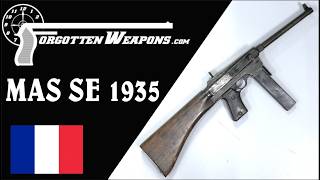
MAS SE 1935 SMG: Emblematic of French Interwar Gun Development
Forgotten Weapons visits the French National Forensics Police Department to examine an early MAS Model 1935 submachine gun, a prototype that led to the MAS-38.

FN's New ARKA: Revamping the SCAR for Military Tenders
In this video, Forgotten Weapons explores FN's new Arca rifle, a modernized version of the SCAR designed to meet military tender requirements by incorporating AR-15-style controls while maintaining the SCAR's internal reliability features. Ian McCullum highlights the rifle's modularity, user-friendly design, and adaptability for various military needs.

Explaining the Yugoslav / Zastava M70 Series of Rifles
The Yugoslav M70 AK series evolved from Soviet designs with distinct features like rifle grenade capability and unique furniture, leading to milled and stamped receiver variants with specific nomenclature.

NFA Taxes, More M7 Ranting, and Rimless 12ga: Q&A May 2026
In this Q&A video, Forgotten Weapons' Ian McCollum discusses various firearm topics, including the potential of rimless 12-gauge shotgun shells and the evolution of military cartridges, while addressing historical firearm innovations hindered by metallurgy limitations.