Forgotten Weapons · Video summary
America's Do-It-All Naval Gun: The 5 Inch Mk12 on the USS New Jersey
Forgotten Weapons explores the Mk12 5" 38-caliber naval guns on the USS New Jersey, detailing their operation, ammunition handling, fire control, and the ship's overall design philosophy.
 Watch on YouTube ↗
The digest
The USS New Jersey, an Iowa-class battleship, stands as a testament to American naval engineering. Commissioned in 1943 and serving intermittently until 1991, it was the largest, longest, and fastest battleship built by the United States. Among its formidable arsenal, the Mk12 5-inch 38-caliber gun system played a crucial, multi-purpose role, designed for engaging surface targets, shore bombardment, and anti-aircraft defense. This weapon system, a marvel of its time, showcases a fascinating blend of mechanical ingenuity and strategic foresight.
The 5-inch 38-caliber Gun: A Universal Solution
The designation "5-inch 38-caliber" refers to the gun's bore diameter of 5 inches and a barrel length equivalent to 38 times that diameter, resulting in a barrel approximately 190 inches long. This measurement system, common in artillery, highlights the gun's substantial size. What makes this particular gun noteworthy is its multi-purpose design. Unlike earlier naval strategies that employed separate 5-inch guns for surface engagement (longer barrel) and anti-aircraft work (shorter barrel with lighter shells), the 38-caliber model was a universal solution. This shift mirrored a similar trend in small arms development, where military forces moved from specialized carbines and rifles to a single, universal short rifle. The 5-inch 38-caliber gun proved to be an exceptionally effective weapon system, becoming the most potent anti-aircraft platform on US Navy vessels by the end of World War II. Developed in 1938, over 8,000 units were mounted on various US Navy platforms by 1945, serving for decades thereafter.
Keep reading in The Digest
The full 4-minute article, 4 more sections, and every new episode from Forgotten Weapons and the creators you follow.
- Ammunition Handling: A Logistical Challenge
- Inside the Turret: The Gun House and Ready Service Ammunition
- The Firing Mechanism and Crew
- Fire Control: The Brains of the Operation
More from Forgotten Weapons

1789 Girardoni Air Rifle: A Generation Ahead of Its Time
The Girandoni Air Rifle was a revolutionary piece of military technology in the 1780s, adopted and used by the Austrian Army. This video explores its design, history, and why it ultimately failed to have a lasting impact.
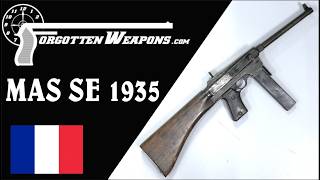
MAS SE 1935 SMG: Emblematic of French Interwar Gun Development
Forgotten Weapons visits the French National Forensics Police Department to examine an early MAS Model 1935 submachine gun, a prototype that led to the MAS-38.

FN's New ARKA: Revamping the SCAR for Military Tenders
In this video, Forgotten Weapons explores FN's new Arca rifle, a modernized version of the SCAR designed to meet military tender requirements by incorporating AR-15-style controls while maintaining the SCAR's internal reliability features. Ian McCullum highlights the rifle's modularity, user-friendly design, and adaptability for various military needs.

Explaining the Yugoslav / Zastava M70 Series of Rifles
The Yugoslav M70 AK series evolved from Soviet designs with distinct features like rifle grenade capability and unique furniture, leading to milled and stamped receiver variants with specific nomenclature.

NFA Taxes, More M7 Ranting, and Rimless 12ga: Q&A May 2026
In this Q&A video, Forgotten Weapons' Ian McCollum discusses various firearm topics, including the potential of rimless 12-gauge shotgun shells and the evolution of military cartridges, while addressing historical firearm innovations hindered by metallurgy limitations.

Q&A April 2026: The Good, the Bad, and the Really Dumb
In this Q&A video, Forgotten Weapons' Ian McCullum discusses various firearms topics, including the controversial experimental Thompson SMG chambered in .3006, which he deems a "complete dumpster fire," and explores the complexities of self-loading magazine designs in rifles versus handguns.