Graduate Mathematics · Video summary
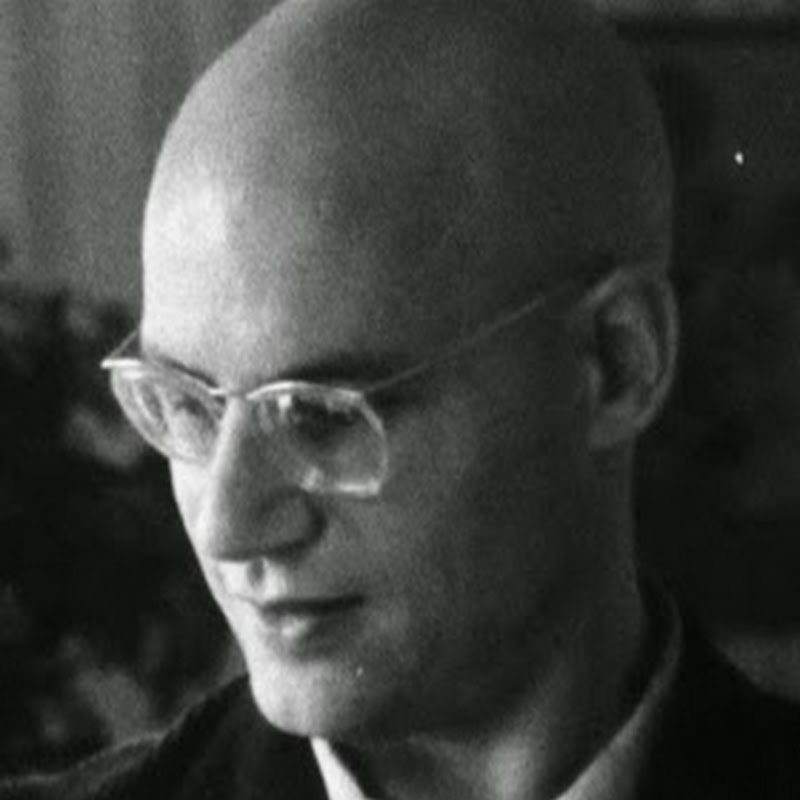
Peter Sarnak, Summation formulae in spectral theory and number theory [2021]
Peter Sarnak discusses spectral theory and number theory, focusing on summation formulas like Poisson, Selberg trace, and explicit formulas that connect spectral data with primes and zeros.
![Peter Sarnak, Summation formulae in spectral theory and number theory [2021]](https://i.ytimg.com/vi/4l56nTwt-F4/hqdefault.jpg) Watch on YouTube ↗
Watch on YouTube ↗Key takeaways
- 🚀Leverage summation formulas to explore spectral data and primes, especially in automorphic forms and quantum chaos.00:00
- 🎯Poisson summation formula relates sums over lattice points to Fourier transforms, foundational in understanding discrete groups in spectral theory.02:34
- 🔧Apply trace formulas to study spectral statistics of eigenvalues in various geometric and quantum systems.04:55
- 💡Selberg trace formula links spectral eigenvalues of Laplacians on hyperbolic surfaces to lengths of closed geodesics, bridging geometry and number theory.05:14
- 📈The explicit formula expresses zeros of the zeta function in terms of primes and prime powers, revealing deep spectral-arithmetic connections.06:06
- 📝Use explicit formulas to relate zeros of L-functions with arithmetic objects, aiming to approach or understand the Riemann Hypothesis.06:06
Chapters
- 0:00🎉 Introduction and Personal Remarks
- 0:37📚 Overview of Summation Formulae in Spectral Theory and Number Theory
- 1:26✨ Poisson Summation Formula
- 3:12🔍 Selberg Trace Formula
- 6:06♟️ Riemann-Guinand Explicit Formula
- 10:46🔬 Zur's Work and Trace Formulas
- 12:49📈 Statistics of Zeros and Eigenvalues
- 20:40🌐 Function Field Analogs
- 23:10🏰 Remarks on Motivations and Unmotivated Problems
- 24:10🔧 Correlations and the Hardy-Littlewood Conjecture in Function Fields
- 26:40🌍 Spectral Statistics in Finite Fields and Fixed q
- 28:33🔚 Conclusion and Transition to Example with Pavel Kurasov
- 29:05🏞️ Spectral Problems on Quantum Graphs
- 33:24🎶 Eigenvalues of the Laplacian on Periodic Graphs
The digest
High Level Overview
This lecture by Peter Sarnak provides an advanced exploration of summation formulae that bridge spectral theory and number theory, highlighting their foundational roles and applications. Sarnak focuses on three principal summation formulae—the Poisson summation formula, the Selberg trace formula, and the Riemann–Guinand explicit formula—and explores their significance in understanding eigenvalues, zeros of L-functions, and arithmetic structures. The lecture also reviews the influential contributions of mathematician Zeév Rudnick, particularly in spectral statistics and applications in both number fields and function fields. This content is highly relevant for researchers and advanced mathematicians interested in analytic number theory, automorphic forms, quantum chaos, and spectral analysis.
Keep reading in The Digest
The full 6-minute article, 12 more sections, and every new episode from Graduate Mathematics and the creators you follow.
- Structured Deep Dive
- 1. The Poisson Summation Formula
- 2. The Selberg Trace Formula
- 3. The Riemann–Guinand Explicit Formula
- 4. Zeév Rudnick’s Contributions and Applications
- 5. Quantum Graphs and Singular One-Dimensional Manifolds
- Key Frameworks and Mental Models
- Summation Formula Triad
- Spectral Normalization and Correlation Statistics
- Quantum Graph Boundary Conditions
- Practical Implications & Takeaways
- Action-Oriented Summary: Concrete Applications
More from Graduate Mathematics

Tangles, Bangles and Knots with John Conway [2012]
John Conway explores the mathematical concepts of tangles, bangles, and knots, revealing their complex structures and relationships.
Fractran: A Ridiculous Logical Language with John Conway [2012]
John Conway explores Fractran, a logical language illustrating the power of simple fraction-based programs to simulate computation and undecidability theories.

Peter Scholze (Universität Bonn) - Condensed Mathematics (2019)
Condensed Mathematics by Peter Scholze explores complex mathematical structures through simplified frameworks that yield profound insights.
Thin groups as monodromy groups, Part II - Jordan Ellenberg (University of Wisconsin-Madison)
This video on thin groups as monodromy groups explores the dichotomy between finite index and thin cases, emphasizing deformation dynamics.

Thin groups as monodromy groups, Part I - Jordan Ellenberg (University of Wisconsin-Madison)
In this talk on thin groups, Jordan Ellenberg discusses their relevance in algebraic geometry and monodromy groups, highlighting their applications and implications.
Apollonian circle packings via spectral methods - Hee Oh (Yale University)
Apollonian circle packings use advanced spectral methods to explore geometric configurations through modern proofs and transformations.