Deconstructed · Video summary
How Medieval Sieges Actually Worked
In this video, Deconstructed explores the intricate methods and siege engines used in medieval warfare, detailing how attackers would isolate and assault fortified castles through a combination of tactical negotiations, prolonged pressure, and specialized machinery. The evolution of these siege tactics highlights the significant costs and strategies involved in breaching formidable defenses during the 13th and 14th centuries.

 Watch on YouTube ↗
Key takeaways
- Medieval sieges were complex operations that involved tactical negotiations and prolonged pressure before any physical assault began.
- The siege engines, such as the battering ram and siege tower, were crucial in breaching castle defenses and were often built on-site using local materials.
- Conducting a siege was immensely costly, requiring significant time, money, and manpower, often lasting months or even years.
- The evolution of siege tactics and machines, like the counterweight trebuchet, marked significant advancements in medieval warfare, capable of launching projectiles over 300 meters.
- Defenders had a significant advantage, as they could repel attackers from the walls, making assaults particularly dangerous for advancing troops.
- Research and model historical siege engines to understand their design and mechanics, enhancing knowledge of medieval warfare.
Chapters
- 0:00⚔️ Introduction to Medieval Warfare
- 0:37🏰 The Role of Castles
- 1:55🛡️ Understanding Sieges
- 3:43🏕️ Initial Siege Tactics
- 4:25⏳ The Duration of Sieges
- 5:29🔨 Assembling Siege Engines
- 6:25⚡ Escalation of Attacks
- 10:34🌊 Crossing the Moat
- 12:28🚪 Breaching the Gates
- 15:19🏗️ Siege Towers Explained
- 16:43🗡️ Direct Assault Techniques
- 18:49🎯 The Role of Catapults
- 20:30⚖️ Ballista and Onager
- 27:15🔄 Trebuchets Evolution
- 33:49🕳️ Undermining Tactics
- 35:12💣 Introduction of Bombards
- 36:57🏰 Challenges of Castle Defense
- 37:21🔍 Conclusion and Further Learning
The digest
Medieval sieges were complex military operations designed to capture fortified castles, which were dominant centers of power across Europe from the 11th to the 15th century. This summary explains how sieges unfolded—from the strategic encirclement and psychological warfare to the deployment of specialized siege engines—highlighting the progression and mechanics of medieval siegecraft. Understanding these methods sheds light on the logistical challenges, technological evolution, and brutal realities of medieval warfare, offering valuable insights for historians, military enthusiasts, and scholars of medieval studies.
Understanding the Context: Castles and Their Strategic Importance
Castles were more than just defensive structures; they controlled territories, protected rulers, stored wealth, and symbolized authority. From the 11th century onwards, castle design evolved from wooden fortifications into imposing stone fortresses featuring thick curtain walls, heavily fortified gateways, and projecting towers for flanking — making them formidable obstacles.
Because castles became ever stronger, directly attacking them required equally specialized and multi-faceted methods. Successful sieges demanded extensive time, resources, and manpower, fundamentally shaping medieval warfare and territorial control.
Keep reading in The Digest
The full 6-minute article, 15 more sections, and every new episode from Deconstructed and the creators you follow.
- The Siege Process: From Encirclement to Assault
- Initial Negotiations and Encirclement ([00:20]–[03:06])
- Assault Phase: Overcoming Defenses Step by Step
- Advancing Under Fire ([05:23]–[06:17])
- Crossing the Moat: Filling and Protection ([06:31]–[07:26])
- Breaching the Gate and Walls: Battering Rams, Ladders, and Siege Towers ([07:44]–[10:41])
- Long-range Siege Engines: From Ballista to Trebuchet
- Key Energy Types and Machines ([11:28]–[20:07])
- Undermining: Breaching Walls from Below ([20:10]–[21:09])
- The Rise of Gunpowder: Bombards and Cannons ([21:12]–[22:17])
- Defense Complexity Beyond Walls ([22:19]–[22:46])
- Summary
- Key Siege Warfare Frameworks and Concepts
- Practical Implications & Takeaways
- Action-Oriented Summary: Applying Siege Warfare Insights
More from Deconstructed
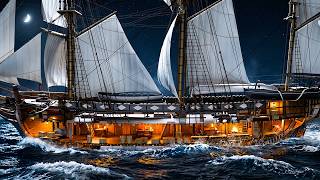
How an Explorer’s Sailing Ship Actually Worked | HMS Beagle
The HMS Beagle was a versatile warship repurposed for global exploration, featuring advanced navigation tools and a robust hull design that enabled Darwin's groundbreaking discoveries.

Inside a Nuclear Missile Silo | The Titan II ICBM
The Titan II ICBM's underground complex showcases advanced security, rapid launch capabilities, and resilient engineering designed for Cold War deterrence.