Deconstructed · Video summary
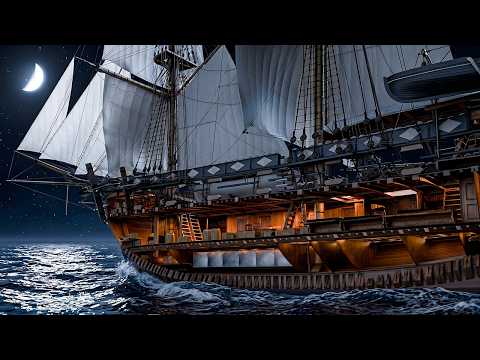
How an Explorer’s Sailing Ship Actually Worked | HMS Beagle
The HMS Beagle was a versatile warship repurposed for global exploration, featuring advanced navigation tools and a robust hull design that enabled Darwin's groundbreaking discoveries.

 Watch on YouTube ↗
Key takeaways
- 🚀Consider how existing assets or skills in your domain can be repurposed for new strategic goals, rather than solely relying on new acquisitions.01:42
- 💡The HMS Beagle's transition from a Cherokee class brig sloop to a more maneuverable bark with a third mast highlights how repurposing existing assets can unlock new strategic capabilities, shifting from combat to exploration.01:56
- 🔧The frame-first construction method, where the internal timber framework was erected before outer planking, provided exceptional rigidity and durability, crucial for long voyages and exploration.05:34
- ⚡Copper sheathing on the underwater hull was a critical upgrade, preventing marine growth and preserving speed and performance on extended expeditions.06:45
- 🔧Evaluate the long-term value of investing in durable, high-quality construction or systems (like copper sheathing or robust hull design) that maintain performance over time, rather than opting for cheaper, less resilient solutions.06:45
- 🧭The combination of an azimuth compass for precise directional measurement, a sextant for latitude calculation, and a chronometer for longitude determination enabled accurate position fixing in the 19th century.11:42
Chapters
- 0:00🎯 Introduction and Purpose of the Video
- 0:51🚢 Overview of HMS Beagle's Origins and Design
- 1:56🌊 Changes in the Ship's Role and Modifications
- 2:20🔬 Voyages and Scientific Missions
- 2:54📏 Ship Dimensions and Layout
- 3:53🤒 Life at Sea and Medical Care
- 5:34🛠️ Ship Construction and Materials
- 6:59⛵ Mast and Rigging Systems
- 9:10🚶♂️ Small Boats and Shore Access
- 10:01⚓ External Components and Hull Design
- 13:10📝 Chart Room and Navigation Precision
- 13:37🌍 Calculating Latitude and Longitude
- 13:50🧭 Navigation Instruments and Techniques
- 20:54🔚 End of Service and Legacy
- 21:29🎨 Darwin's Observations and Impact
The digest
This summary explains the construction, sailing mechanisms, and navigational tools of HMS Beagle during its famous second voyage (1831–1836) with Charles Darwin aboard. It highlights how a small Royal Navy warship was adapted into a pioneering survey vessel whose hydrographic work advanced maritime exploration and scientific discovery. The content is valuable for historians, maritime enthusiasts, and those interested in early scientific expeditions.
High-Level Overview
HMS Beagle, launched in 1820 as a Cherokee class 10-gun brig sloop, started as a compact warship designed for independent naval operations. After the Napoleonic Wars, her purpose shifted toward exploration to support Britain’s expanding maritime trade by producing accurate nautical charts. She was refitted for survey work, including a significant conversion before her second voyage, which gained fame for carrying Charles Darwin and facilitating observations that shaped evolutionary theory. The ship’s design, sail plan, rigging, and navigational instruments exemplify early 19th-century technology enabling long oceanic voyages into partially uncharted waters.
Keep reading in The Digest
The full 6-minute article, 17 more sections, and every new episode from Deconstructed and the creators you follow.
- Construction and Design of HMS Beagle
- Initial Build and Naval Role
- Conversion for Survey and Exploration Work (c. 1825)
- Sailing and Rigging Systems
- Masts and Sails
- Small Boats for Surveying
- Crew Accommodation and Internal Arrangement
- Navigational Instruments and Techniques
- Latitude Determination: The Sextant
- Longitude Determination: The Chronometer
- Compass and Direction: The Azimuth Compass
- Steering Mechanics
- Operational Challenges and Support Systems
- Historical Impact and Legacy
- Key Frameworks and Models
- Practical Implications and Takeaways
- Action-Oriented Summary: Application of Insights
More from Deconstructed

How Medieval Sieges Actually Worked
In this video, Deconstructed explores the intricate methods and siege engines used in medieval warfare, detailing how attackers would isolate and assault fortified castles through a combination of tactical negotiations, prolonged pressure, and specialized machinery. The evolution of these siege tactics highlights the significant costs and strategies involved in breaching formidable defenses during the 13th and 14th centuries.

Inside a Nuclear Missile Silo | The Titan II ICBM
The Titan II ICBM's underground complex showcases advanced security, rapid launch capabilities, and resilient engineering designed for Cold War deterrence.