Founders Podcast · Video summary
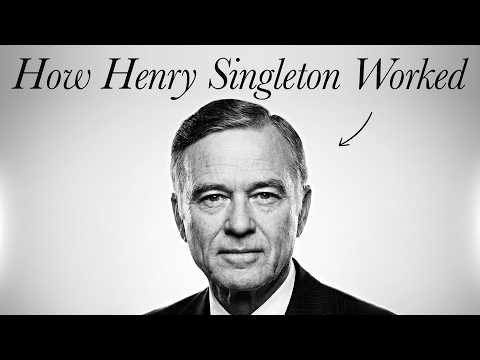
How Henry Singleton Worked
Henry Singleton, a world-class mathematician and engineer, founded Teledyne in the 1960s and became one of history's greatest CEOs, achieving extraordinary returns through unconventional strategies.
 Watch on YouTube ↗
Key takeaways
- 📈Henry Singleton, a world-class mathematician and engineer, achieved extraordinary returns as CEO of Teledyne, with Charlie Munger calling his financial returns "utterly ridiculous."01:26
- 💰Singleton believed a CEO's most important job was capital allocation, a task many leaders are unprepared for, as noted by Warren Buffett.01:43
- 🏢He ran a famously decentralized organization with a thin corporate staff, empowering general managers and focusing on cash flow over reported earnings.02:50
- 🔄Singleton was a master of adaptation, abruptly halting acquisitions when market conditions changed and pivoting to unprecedented share repurchases, buying back over 90% of Teledyne's stock.07:50
- ⚾He was known as the "Babe Ruth of repurchases," ignoring conventional wisdom that buybacks signaled weakness and generating exceptional returns for shareholders.10:46
- 🎯Singleton's investment strategy was highly concentrated, with over 70% of equity portfolios in just five companies, reflecting his comfort with concentration and deep understanding of his holdings.13:21
Chapters
- 0:00Introduction to Henry Singleton: The Unconventional CEO
- 0:17Singleton's Extraordinary Returns and Capital Allocation Philosophy
- 0:28Singleton's Core Beliefs and Management Principles
- 0:45Teledyne's Acquisition Strategy and Decentralized Structure
- 1:30The Shift to Cash Flow Optimization and Share Repurchases
- 2:17Singleton's Investment Approach and Time Management
- 2:36Similarities Between Singleton and Warren Buffett
- 3:00Singleton's Background and Founding of Teledyne
- 4:03Teledyne's Growth Through Acquisition and Diversification
- 4:40Talent Management and Frugality at Teledyne
- 5:10Knowing Your Business and Breaking Down Units
The digest
Henry Singleton was a truly remarkable figure, a world-class mathematician and electrical engineer who, after a distinguished career in defense technology, founded the conglomerate Teledyne in the early 1960s. His approach to business was so unconventional that it earned him the moniker "The Sphinx" due to his reluctance to engage with analysts or journalists. Yet, his long-term results speak for themselves: an extraordinary 20.4% annual compound return to investors over nearly 30 years, a record that Charlie Munger famously described as "a mile higher than anyone else's" and "utterly ridiculous."
Capital Allocation: The CEO's Most Important Job
Singleton's success stemmed from his profound understanding that a CEO's primary role isn't just to run operations efficiently, but to master the deployment of cash generated by those operations. While most CEOs focus on day-to-day management, Singleton dedicated the majority of his attention to capital allocation. As Warren Buffett observed, many business leaders rise through the ranks by excelling in areas like marketing or production, only to find themselves ill-equipped for the critical, and often unmastered, task of allocating capital. Singleton, in stark contrast, was a master capital allocator, and his decisions consistently diverged from his peers, leading to enormous positive impacts for his shareholders.
Keep reading in The Digest
The full 3-minute article, 5 more sections, and every new episode from Founders Podcast and the creators you follow.
- Core Beliefs and a Decentralized Empire
- The Acquisition Spree and the Pivot to Buybacks
- The Babe Ruth of Share Repurchases
- A Student of Business History and Talent Management
- Frugality, Focus, and Flexibility
More from Founders Podcast

Ari Emanuel's Autobiography
Ari Emanuel's autobiography, "Roll the Calls," reveals his unconventional philosophy of "rage first, ask questions later" and his relentless drive to dominate the Hollywood agency world, fueled by his dyslexia and a near-fatal accident.

Mark Zuckerberg's Empire
Mark Zuckerberg's empire, Meta, has faced numerous challenges and criticisms, yet he continues to lead with an unwavering vision, drawing parallels to ancient Roman emperors and demonstrating a relentless pursuit of control and innovation.
How Sam Walton Worked
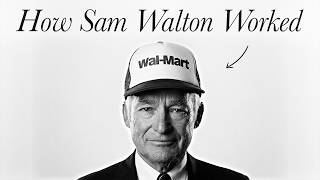
Sam Walton, the unglamorous Arkansan who became America's richest man, built Walmart on a foundation of simple, yet fiercely executed principles: relentless work ethic, customer obsession, and a genius for cost control.

How Michael Bloomberg Works
Michael Bloomberg's autobiography, "Bloomberg by Bloomberg," reveals his journey from being fired at 39 to building a multi-billion dollar financial information empire, emphasizing hard work, adaptability, and an unwavering focus on customer needs.

The Mind of Napoleon
Napoleon's mind is explored through his own words, revealing his relentless ambition, strategic thinking, and unique perspectives on life, destiny, and leadership.

How Obsession Built Christopher Nolan
Christopher Nolan's career, from micro-budget shorts to billion-dollar blockbusters, is a testament to unwavering obsession, discipline, and a unique vision that challenges conventional storytelling.