BRIGHT SIDE · Video summary
Your Body Is Hiding a Secret, And It's Kinda Creepy
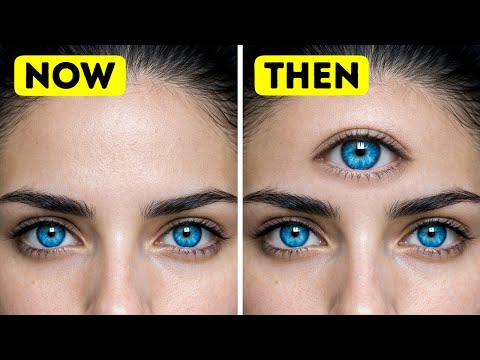
Our bodies are a testament to evolutionary trade-offs, shedding unnecessary traits like the parietal eye and vitamin C synthesis for new adaptations like larger brains and complex social behaviors.

 Watch on YouTube ↗
Key takeaways
- 💡Evolutionary trade-offs occur when adapting to new environments or needs; for instance, humans lost the ability to synthesize vitamin C because dietary sources became abundant.01:08
- 📝Consider how evolutionary trade-offs might explain current human limitations or inefficiencies in your own life or work.01:08
- 📈The human body is a product of efficient energy allocation, deactivating or diminishing traits that are no longer essential for survival in the current environment, like electroreception or the palmaris longus muscle.01:41
- 🚀The human brain's growth over the last 3 million years was driven by the need to adapt to climate changes, predators, and complex food acquisition, prioritizing cognitive abilities over specialized sensory organs.02:32
- 🔍Our bodies retain 'leftover' reflexes and structures from aquatic or arboreal ancestors, such as the hiccup reflex from gill-breathing ancestors or the tendency to climb when anxious.05:51
- 🧠The gut-brain axis highlights a significant connection between our digestive system and brain, where stress can impact digestion and vice versa, indicating a complex bio-feedback loop.12:22
Chapters
- 0:01🎯 Introduction to the Third Eye and Evolution
- 0:56🎯 Vitamin C Gene and Evolution
- 1:49🎯 Electroreception and Jacobson's Organ
- 2:32🎯 Brain Size and Evolutionary Changes
- 3:02🎯 Taste Receptors and Dietary Adaptations
- 3:48🎯 Jaw and Dental Evolution
- 4:23🎯 Body Hair and Fur Loss
- 5:34🎯 Ear and Toe Vestigial Muscles
- 5:51🎯 Reflexes and Features from Our Ancestors
- 7:05🎯 DNA and Evolutionary Remnants
- 20:12🎯 Sleep Patterns and the First Night Effect
- 21:21🎯 Anticipatory Heart Response and Hysterical Strength
- 23:35🎯 Facial and Body Development in Babies
- 31:41🎯 Vestigial Structures in Animals
- 32:11🎯 Bioluminescence and Human Glow
- 33:11🎯 Unique Human Traits: Blushing and the Second Brain
The digest
This overview presents fascinating insights into various evolutionary remnants, unique physiological traits, and surprising capabilities embedded in the human body. These “hidden” biological features—ranging from vestigial organs and muscles to biochemical processes and reflexes—tell a story of how humans evolved over millions of years, adapting and sometimes losing traits once crucial for survival. The content is valuable for anyone interested in human biology, evolutionary science, and the intricate workings of our anatomy.
Evolutionary Leftovers: Lost and Vestigial Features
Keep reading in The Digest
The full 5-minute article, 14 more sections, and every new episode from BRIGHT SIDE and the creators you follow.
- The Parietal (Third) Eye and Melatonin Production
- Lost Vitamin C Synthesis – The gulak Gene
- Abandoned Sensory Abilities
- Changes Driven by Diet and Lifestyle
- Vestigial Muscles and Reflexes
- Human Body’s Extraordinary and Curious Features
- Hair and Temperature Regulation
- Unique Anatomy and Reflexes
- Fascinating Biological Processes and Phenomena
- Developmental and Genetic Insights
- Vestigial Organs and Their Stories
- Comparisons Beyond Humans
- Practical Evolutionary Implications and Takeaways
- Actionable Insights and Self-Tests
More from BRIGHT SIDE

Scientists Spot Giant Hole in the Sun - Here's Why You Should Care
Coronal holes on the sun can disrupt Earth's technology, and understanding cosmic voids and quasi-moons enhances our knowledge of the universe.

They Said It Was Impossible: The Tunnel That Finally Connects Two Continents
This video explores ambitious mega-projects like the Gibraltar tunnel and Hyperloop, showcasing human ingenuity in overcoming immense engineering challenges and reshaping global connectivity.

A New Ocean Is Forming in Africa - And It’s Happening Fast
Earth's tectonic plates are constantly moving, causing new oceans to form and continents to shift over millions of years, with Zealandia being a prime example of a newly recognized sunken continent.

This Moon Location Is Terrifying But NASA Wants It
The Moon's polar craters hold vast water ice reserves, crucial for deep space exploration and Helium-3 mining for clean energy, despite significant exploration challenges.

Whatever Is Inside This Australian Site Is ACTIVATING
Earth's crust is dynamic, shaped by asteroid impacts and tectonic plate movement, with Australia experiencing unique internal stresses and Africa slowly splitting apart.

Titanic Truth EXPOSED || This Was Kept Secret
The Titanic's enduring mystery is explored, detailing its construction, sinking, the impact of its iceberg collision, the heroic and tragic stories of its passengers and crew, and the ongoing efforts to preserve its legacy.