Paul Chek · Video summary
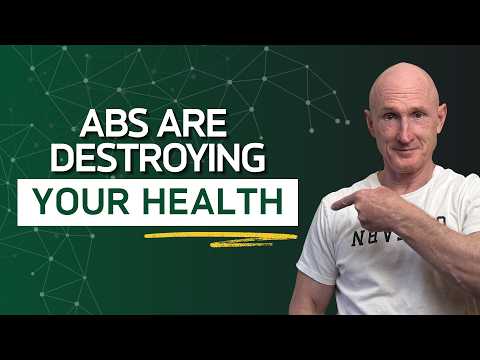
Why Your Abs Are Actually Making You Weaker
In this video, Paul Chek discusses how improper abdominal tone can weaken the body by disrupting breathing, organ function, and overall stability, emphasizing the importance of relaxing the abs to enhance health and performance. He encourages viewers to focus on proper breathing techniques and to question societal pressures regarding body image that lead to dysfunctional core engagement.
 Watch on YouTube ↗
Key takeaways
- Improper abdominal tone can lead to dysfunctional breathing, impacting overall health and performance. Relaxing the abs is crucial for optimal body function.
- Breathing is essential for physiological stability; the first two-thirds of your breath should come from the abdomen. Holding your abs tight disrupts this natural process.
- Cultural pressures to maintain a certain aesthetic can lead to psychological and physiological issues, including chronic fatigue and digestive disorders.
- Tight abdominals can restrict organ motility and circulation, leading to long-term health problems. Healthy organ function relies on the natural movement and relaxation of the abdominal area.
- Posture is affected by abdominal tension; flexing the abs can lead to a forward head position, which disrupts overall body alignment and stability.
- Practice deep breathing techniques focusing on abdominal expansion to enhance oxygen flow and overall well-being. Aim for 25,900 breaths a day!
Chapters
- 0:00🗣️ Introduction to Abdominal Tone
- 0:24💨 Breathing Dysfunction
- 0:41🌀 Role of Abdominal Muscles
- 2:15⚖️ Yin and Yang in Breathing
- 3:21🏋️♂️ Cultural Impact on Breathing
- 8:41🔄 Organ Function and Motility
- 12:06💓 Circulation and Abdominal Tone
- 14:30🧘♂️ Posture and Abdominal Flexing
- 17:15⚙️ Static vs. Dynamic Posture
- 19:40🏃♂️ Dynamic Adjustment of Tone
- 23:20🔄 Gradation of Abdominal Tone
- 26:00🔍 Conclusion and Further Learning
- 26:20🧗♂️ Practical Exercises
The digest
High Level Overview
This analysis explores the often-overlooked relationship between abdominal muscle tone, breathing mechanics, organ health, posture, and movement efficiency. It challenges the widespread cultural habit of permanently tightening the abs for aesthetic reasons, demonstrating how this behavior impairs breathing, reduces circulation, disrupts organ function, and limits physical performance. The discussion is critical for fitness professionals, therapists, athletes, and individuals seeking holistic health and functional strength beyond superficial looks.
Keep reading in The Digest
The full 5-minute article, 12 more sections, and every new episode from Paul Chek and the creators you follow.
- Understanding Abdominal Tone and Its Importance
- The Role of Abdominal Muscles in Breathing and Stabilization (00:23–03:11)
- Cultural Conditioning and Its Consequences (01:33–04:45)
- The Feminine and Masculine Energy of Breathing: Yin and Yang Principles (05:31–07:44)
- Organ Motility and Abdominal Tone (08:21–11:19)
- Abdominal Tightness and Postural Dysfunction (11:20–15:50)
- Static vs. Dynamic Abdominal Function in Movement (15:51–18:45)
- The Importance of Graduated Abdominal Tone and Controlled Breathing (18:46–25:14)
- Broader Implications of Abdominal Tone Dysfunction
- Key Framework: Graduated Abdominal Tone Model
- Practical Implications & Takeaways
- Action-Oriented Summary
More from Paul Chek

The Well-Rounded Woman | Natasha Kingsbury
Natasha Kingsbury, artist, rancher, farmer, mother, and wife to Kyle Kingsbury, shares her journey of overcoming childhood trauma, finding her spiritual path, and embracing a well-rounded life.

Forget Little Green Men: Consider the Sentient Theory of UFOs/UAPs | Michael Jawer
Paul Chek and Michael Jawer discuss the nature of emotions, the subconscious, and the phenomenon of UFOs, exploring how these concepts intertwine with human consciousness and our understanding of reality.

The Take on Evil That Made My Guest Get Death Threats
In this podcast episode, Paul Chek interviews a guest who shares his transformative journey from a troubled childhood marked by dyslexia and adversity to becoming a successful educator and speaker, emphasizing the profound impact of inspirational figures like Paul Bragg on his life. The conversation explores themes of self-discovery, resilience, and the interconnectedness of human experiences.

Shadow, Ego, and What Real Healing Looks Like
In this video, Paul Chek explores shadow work as a vital process for inner healing, emphasizing that the shadow is not a defect to be eliminated but a necessary aspect of the psyche that fosters spiritual growth and self-realization. He provides insights on effectively engaging with the shadow to enhance personal development and collective consciousness.

The Truth About Spiritual Awakening No One Talks About
In this video, Paul Chek discusses the symptoms of rising consciousness and the importance of becoming aware of our choices, emphasizing how societal structures and corporate interests contribute to our unconsciousness and health crises. He encourages reflection and mindful living to foster genuine spiritual awakening and personal growth.

272 Emotions and You Probably Only Know 28 of Them | D. Earl Johnston
In this episode, Paul Chek interviews D. Earl Johnston, author of Choosing Emotions, who discusses the importance of understanding a wide range of emotions—beyond the commonly recognized few—to improve self-awareness and communication. He emphasizes that emotions are not sporadic but continuously influence our actions and decisions, serving as an operating system for navigating life.