Passion Struck with John R. Miles · Podcast summary
Why What Matters Most Is Almost Never the Loudest | John R. Miles - EP 825
Alex Edmonds, London Business School professor, reveals how human attention mistakes visibility for value and why quiet fundamentals build lasting success.

 Listen on the show ↗
Key takeaways
- 🎻Joshua Bell’s $3.5 million violin went unnoticed by commuters, showing how context shapes perceived value.4:26
- 🏢In workplaces, dramatic crisis management often gets more recognition than quiet, preventive work.7:11
- 📉Isaac Newton lost millions by succumbing to market hype despite his scientific genius.8:15
- 📱Dell’s leadership abandoned a promising Android mobile strategy due to pressure to protect legacy revenue.10:22
- 📊Companies with high trust and dignity outperform peers by up to 3.8% annually over 28 years.14:30
- 📚"Mattering" is the foundation of enduring value, not just a workplace perk.15:34
Chapters
- 4:26🎻 Joshua Bell’s Subway Performance
- 7:11🏢 Salience in the Workplace
- 8:15📉 Newton’s Market Mistake
- 10:22📱 Dell’s Mobile Strategy Failure
- 14:30📊 28 Years of Trust Outperformance
- 15:34📚 The Mattering Effect
- 18:37🔍 The Signal Audit
- 19:40🧠 Courage to See the Other Side
- 20:10🎯 Reflection and Next Steps
The digest
In a world obsessed with spectacle and immediate impact, Alex Edmonds, a professor at London Business School, challenges us to rethink how we perceive value and success. His insights reveal a fundamental flaw in human attention: we often mistake what is loud and visible for what is truly valuable. This episode of PassionStruck, hosted by John R. Miles, explores how this cognitive bias shapes our work, leadership, and personal lives—and how we can cultivate the courage to focus on what endures.
The Illusion of Visibility: The Joshua Bell Experiment
The episode opens with the remarkable story of Joshua Bell, a world-renowned violinist who played incognito in a Washington, D.C. metro station in 2007. Despite performing six classical masterpieces on a $3.5 million Stradivarius violin, Bell earned only $32.17 from over a thousand commuters who mostly hurried past without stopping. This stark contrast to his sold-out Boston Symphony Hall performance just days earlier illustrates a powerful psychological phenomenon: salience.
Salience is our brain’s tendency to focus on what is flashy and immediately noticeable, ignoring the quiet, essential realities beneath the surface. The music, Bell’s skill, and the priceless instrument were unchanged, but without the stage and context, people simply failed to perceive their value. This experiment sets the stage for understanding how we often overlook foundational qualities in favor of spectacle.
Keep reading in The Digest
The full 4-minute article, 8 more sections, and every new episode from Passion Struck with John R. Miles and the creators you follow.
- Salience in the Workplace: The Tale of Two Employees
- The Newton Lesson: Even Geniuses Fall for Salience
- The Dell Mobile Debacle: When Loud Legacy Blocks Quiet Innovation
- The 28-Year Study: Why Trust and Dignity Outperform Spreadsheets
- The Mattering Effect: Reclaiming Human Value in Work and Life
- The Signal Audit: A Practical Tool to See Beyond the Noise
- The Courage to Stand Still and See the Other Side
- Looking Ahead: Integrating Lessons and Restoring Autonomy
More from Passion Struck with John R. Miles

The One Question You’re Avoiding Could Change Your Life | Scott Simon & Gregory Stock – EP 824
Scott Simon and Gregory Stock explore how asking courageous questions can unlock deeper self-understanding and connection.

What If the Proof You're Waiting For Never Comes? | John R. Miles - EP 822
This week, John R. Miles sits down with sailor Cole Brauer and psychologist Dr. Marissa Franco to discuss how we can thrive in a changing world by understanding the psychology behind self-worth and external validation.

Why Nothing You Achieve Will Ever Make You Feel Worthy | Marisa G. Franco – EP 821
Dr. Marisa G. Franco, a New York Times best-selling author and psychologist, discusses why external achievements and even positive affirmations can fail to make us feel worthy, and how to cultivate genuine self-worth.

The Agency Paradox: Why Real Adaptability Starts Inside the Box | John R. Miles - EP 819
In this episode, John R. Miles explores the concept of "agency" with insights from positive psychology founder Marty Seligman and best-selling author David Epstein, revealing how embracing constraints and fostering collective trust are crucial for adaptability and sustained progress in an unpredictable world.

You Don't Need More Freedom. You Need Better Constraints | David Epstein - EP 818
David Epstein, New York Times bestselling author of "Range" and "The Sports Gene," discusses how constraints, rather than unlimited freedom, often lead to breakthroughs and how to effectively navigate an unpredictable world by focusing on the problems directly in front of us.
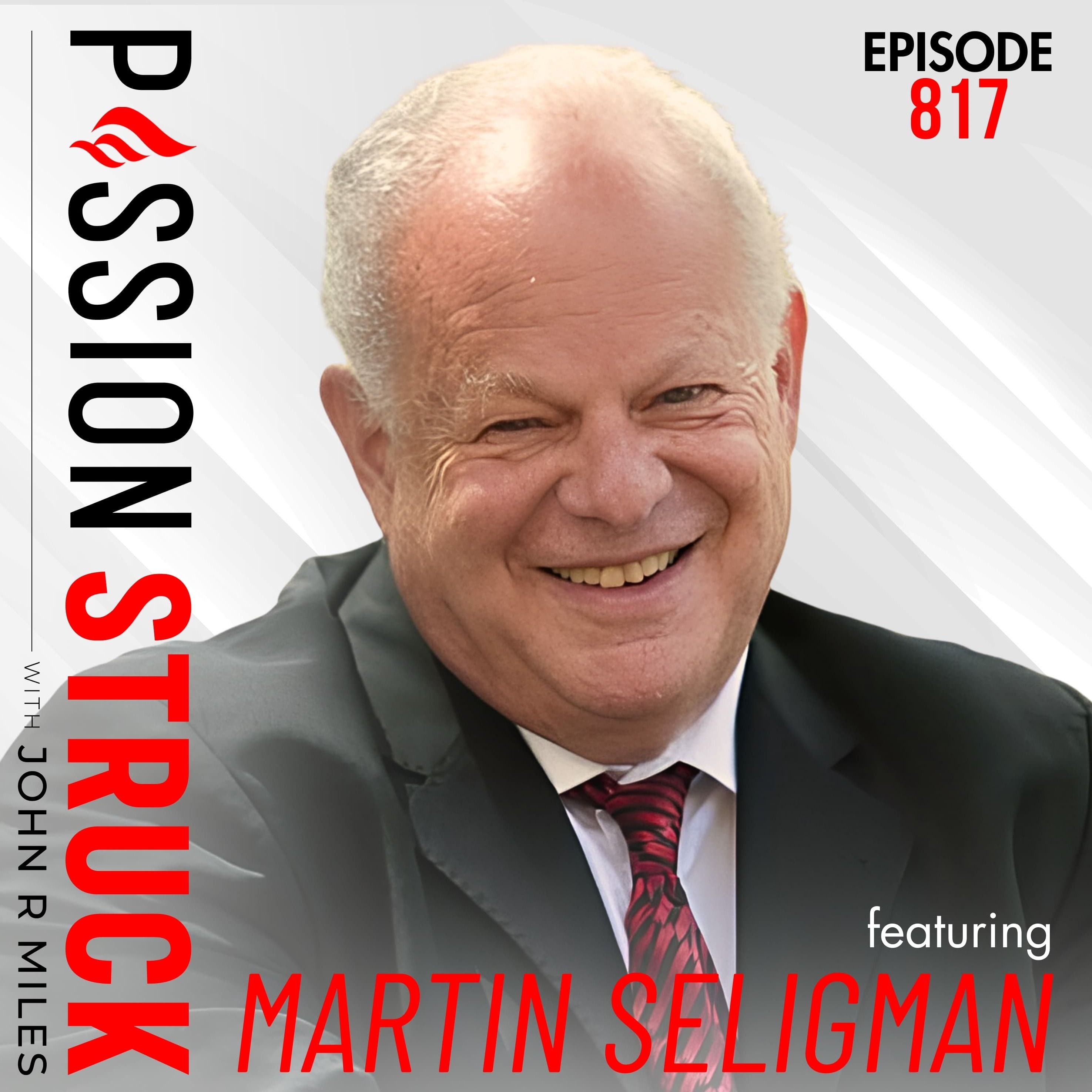
World’s Most Influential Psychologist: The Hidden Force That Drives Human Progress | Dr. Martin Seligman – EP 817
Dr. Martin Seligman, the world's most influential psychologist, discusses his new book, "Agency," and the hidden force that drives human progress.