Imtinan Ahmad · Video summary
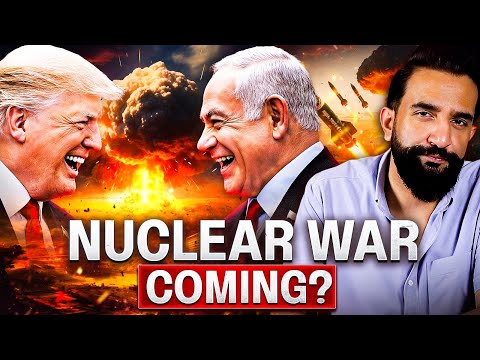
What will happen in Iran? | The Plan Written 30 Years Ago |
A 30-year-old plan, Project for the New American Century (PNAC), outlines US strategy for Middle East dominance, potentially involving Israel's Greater Israel expansion, with current events aligning with these historical blueprints.
 Watch on YouTube ↗
Key takeaways
- 🎯US foreign policy, as outlined in the 1997 Project for the New American Century (PNAC), aimed for permanent military presence in the Middle East to establish regional hegemony.04:02
- 🔑Analyze geopolitical events through the lens of historical strategic documents like PNAC and Greater Israel plans to understand underlying motives.04:02
- 💡A former Pentagon document allegedly detailed plans to target seven Middle Eastern countries (Iraq, Syria, Lebanon, Libya, Somalia, Sudan, Iran) for regime change within five years post-9/11.04:41
- 📈The Greater Israel plan, originating in 1982, proposes invading Muslim countries and dividing them into smaller states (Balkanization) to ensure Jewish regional dominance.05:09
- 🔍US foreign policy may be subtly orchestrating events, like Iran attacking US bases, to force US troop withdrawal and create an opportunity for Israel to establish regional hegemony.07:50
- 🤔Consider that seemingly spontaneous conflicts may be part of a long-term strategy for regional power shifts, particularly concerning Israel's strategic objectives.07:50
Chapters
- 0:00🎯 Intro: Iran Conflict and Recent Developments
- 0:21🎯 Iran's Internal Celebrations and External Reactions
- 0:54🎯 US-Pakistan Oil Price Increase
- 1:37🎯 US Internal Politics and Religious Devotions
- 2:27🎯 Social Media Focus: Potential Nuclear Attacks
- 3:08🎯 Historical Context of US and Iran
- 3:59🎯 US Strategic Goals and Military Presence
- 5:42🎯 Plans for Dividing Middle Eastern Countries
- 6:32🎯 US Military Bases and Hegemony in Middle East
- 6:51🎯 US and Israel's Expansionist Strategies
- 7:30🎯 US Anti-Base Operations and Iranian Resistance
- 9:50🎯 Iran's Military and Nuclear Capabilities
- 10:17🎯 Possibility of Nuclear War and Historical Examples
- 10:20🎯 Prophecies and Eschatological Beliefs
- 14:07🎯 Role of Global Elites and Masonic Plans
- 16:03🎯 Jewish and Christian Prophecies about Iran and Russia
- 16:12🎯 Russia-Iran Strategic Alliance and World Power Dynamics
- 18:02🎯 Nuclear Threats and Escalation Possibilities
- 19:12🎯 Potential for Regional and Global Nuclear Conflict
- 21:22🎯 Implications for Pakistan, Sects, and World Order
- 23:15🎯 Final Predictions and End Times Scenario
The digest
This analysis explores the ongoing conflict involving Iran through the lens of long-term geopolitical strategies dating back to the late 1990s. It unpacks how a strategic blueprint formulated decades ago continues to influence military, political, and ideological developments in the Middle East today. The discussion is significant for policymakers, analysts, and observers seeking a deeper understanding of the regional power struggles, the role of external actors, and the potential future of Iran and its neighbors amid global and ideological contestations.
Overview of the Current Situation in Iran and Regional Reactions
At the heart of recent developments, Iran has appointed Sayyid Mujtaba Khamenei, the son of Supreme Leader Ayatollah Khamenei, as the new Supreme Leader, marking a moment of national celebration domestically. This event sharply contrasts with the expectations of the United States and Israel, who had hoped for regime change through popular uprisings. Instead, public demonstrations favored the regime, signaling sustained domestic support. This scenario also unsettles Pakistan, which faces economic pressure partly due to increased oil prices reflecting broader geopolitical tensions.
Simultaneously, the United States exhibits paradoxical behavior—while symbolizing modernity and capitalism, Washington is engaged in symbolic religious prayers linked to Abrahamic traditions inside the White House. These prayers, though unusual for a secular state, emphasize the deep intertwining of ideological and geopolitical narratives shaping U.S. policy toward Iran.
Social media discussions heighten anxieties around a potential nuclear attack on Iran by the United States or Israel, though the conflict’s outcomes remain contested. Notably, while much attention centers on Iran and U.S. actions, significant military operations escalate in Lebanon, where Hezbollah plays a pivotal role.
Keep reading in The Digest
The full 7-minute article, 11 more sections, and every new episode from Imtinan Ahmad and the creators you follow.
- The Long-Term Strategic Blueprint: The Project for a New American Century (PNAC) and Greater Israel Plan
- U.S. Military Presence vs. Regional Hegemony Shift
- Lebanon’s Pivotal Role and Hezbollah’s Diminishing Control
- Religious and Ideological Dimensions: Jewish Prophecies and Their Geopolitical Implications
- The Russia-Iran Nexus: Strategic Partnership and Military Cooperation
- Nuclear Threats and the Reality of Military Escalation
- Pakistan’s Position and Misconceptions About Its Role
- Conclusion: Navigating the Complex Geopolitical and Ideological Landscape Ahead
- Key Frameworks and Concepts
- Practical Implications & Takeaways
- Action-Oriented Summary
More from Imtinan Ahmad

Inside Pakistan’s Secret Elite Parties… | Exposed |
Elite party culture in Pakistan, rooted in colonial history, involves lavish spending, moral disengagement, and a system that silences dissent, fueled by existential void.

Petrol Bomb | The System Is Collapsing
Pakistan faces an unprecedented energy crisis driven by geopolitical conflict, leading to massive price hikes and economic instability.

Pakistan on Alert | Could Israel Sabotage Peace Talks? |
Pakistan is hosting Iran-US peace talks amidst market manipulation concerns and potential Israeli sabotage, highlighting complex geopolitical strategies and economic stakes.
The Family That Secretly Controls the World’s Money
The Rothschild family's historical rise to financial power through banking, war financing, and controlling key industries is explored. Key insights focus on leveraging crises and solving elite problems for wealth accumulation.

The Hidden System Behind Governments, Banks & Media
The video explains the "New World Order" not as a conspiracy, but as a multi-layered system of global governance, finance, and technology that subtly controls daily life, challenging traditional notions of democracy and individual autonomy.