Alex O'Connor · Video summary
What an Astronaut Learned About Fate, Duty, and Meaning
Colonel Chris Hadfield, a former astronaut, discusses the public's perception of space travel, the scientific and sociological reasons for exploration, and the psychological demands of being an astronaut.

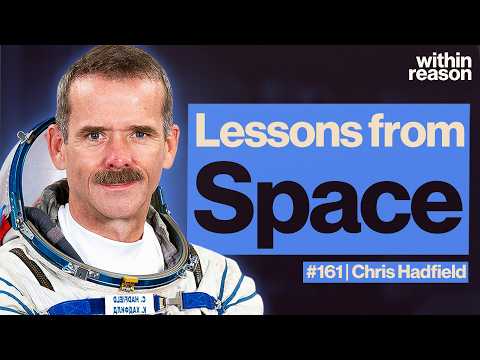 Watch on YouTube ↗
Key takeaways
- 📉Public interest in space travel, even during the Apollo era, was not consistently high, with only major milestones like Apollo 11 capturing widespread attention.01:19
- 📸The iconic 'Earthrise' photograph from Apollo 8, taken after the mission, significantly impacted public perception of Earth as a single, fragile entity.01:50
- 🔭Space exploration is distinct from space entertainment; its primary purpose is scientific discovery and pushing the boundaries of human capability, not just spectacle.02:40
- 🚀Space exploration is a manifestation of human struggle, giving ourselves impossible tasks and developing new capabilities to achieve them, reflecting the fundamental nature of life itself.06:24
- 🔬The International Space Station serves as a unique laboratory for studying fundamental physics and biology in the absence of gravity, offering insights into fluid dynamics, combustion, and human physiology.08:26
- 🫡The concept of 'service' for professionals like astronauts, military personnel, or firefighters entails a willingness to face extreme danger, even death, on behalf of society.25:16
Chapters
- 0:03The Public's Excitement for Space Travel
- 0:26The International Space Station as a Laboratory
- 0:33The Purpose of Space Missions
- 1:55The Evolution of Space Travel Accessibility
- 1:58The Global Nature of Space Exploration
- 3:55The Psychology of Astronauts
- 4:22Dispelling Astronaut Stereotypes
- 5:32The Role of Fiction in Communicating Space Experiences
The digest
Colonel Chris Hadfield, a seasoned astronaut, offers a compelling perspective on humanity's ongoing fascination with space, challenging common misconceptions and highlighting the profound significance of our ventures beyond Earth. From the initial moon landing to contemporary missions like Artemis 2, Hadfield argues that while public attention may ebb and flow, the underlying drive for exploration remains as potent as ever.
The Shifting Tides of Public Interest
Hadfield quickly dispels the notion that the Apollo program consistently captivated global attention. He points out that only Apollo 11, with its unprecedented moon landing, truly held the world spellbound. Missions like Apollo 8, which first photographed the entire Earth, gained significant traction only after the images were processed and shared, revealing our planet as a 'beautiful little jewel hanging in an eternal blackness.' Subsequent Apollo missions, however, saw a rapid decline in public interest, with many questioning the continued expense and purpose. This historical context suggests that the more measured response to Artemis 2 is not a sign of waning excitement, but rather a return to a historical norm. Hadfield asserts that Artemis 2 has, in fact, had a 'resounding impact,' reigniting inspiration and refocusing attention on the amazing endeavors in space, as evidenced by the enthusiastic reception of the Artemis crew on their world tour.
Keep reading in The Digest
The full 3-minute article, 3 more sections, and every new episode from Alex O'Connor and the creators you follow.
- The Multifaceted Purpose of Space Exploration
- The International Space Station: A Laboratory for Life Beyond Earth
- Astronauts: Self-Control, Service, and Dispelling Stereotypes
More from Alex O'Connor

I Don't Care About the Reaction - The Chosen Creator Dallas Jenkins
Dallas Jenkins, creator of "The Chosen," discusses the show's purpose, the challenges of adapting the Gospels, and his approach to storytelling.

Religion is an Obligation - NYT Columnist Ross Douthat
Ross Douthat, a New York Times columnist, argues that religious belief is not merely an option but an obligation, presenting a cumulative case for the existence of God based on the universe's design and human consciousness.
Why I Got Angry in a Recent Debate - 2 Million QnA
Alex O'Connor answers questions from his nearly 2 million subscribers, discussing his philosophical aspirations, daily life, and favorite debates.

Aristotle: The World's Greatest Philosopher?
Aristotle, arguably the most celebrated and influential philosopher of all time, is explored in depth, examining his profound contributions across various disciplines and his enduring legacy.

How a Blind Man Sees the World - Tommy Edison
Tommy Edison, a blind YouTuber, shares his unique perspective on navigating a sighted world, from his early experiences with blindness to his innovative career as a blind film critic and radio personality.

William Lane Craig vs Alex O'Connor: God and Suffering
William Lane Craig and Alex O'Connor discuss the existence of God, focusing on philosophical and scientific arguments for and against a divine creator.