Y Combinator · Video summary
We're All Addicted To Claude Code
Coding agents like Claude Code are transforming development by enabling faster iteration and complex debugging, shifting focus from low-level coding to higher-level direction.

 Watch on YouTube ↗
Key takeaways
- 🚀The CLI-based approach for coding agents (like Claude Code) offers a cleaner, more composable development experience compared to IDEs, allowing for faster execution and less context-switching.04:21
- 🚀Experiment with CLI-based coding agents (like Claude Code or CodeX) to leverage their composability and speed.04:21
- 💡Coding agents excel at complex, multi-level debugging (e.g., nested delayed jobs) and can even automatically write tests to prevent recurrence, significantly accelerating problem resolution.06:12
- 🎯The distribution model of coding agents is shifting from top-down enterprise adoption to bottoms-up engineer adoption, driven by ease of download and immediate utility, bypassing traditional gatekeepers.07:10
- 📚Open-source projects with excellent documentation and community presence are disproportionately benefiting from LLM recommendations, effectively 'winning the internet' for developer tools.09:10
- 📈The effectiveness of coding agents is heavily reliant on context engineering, with techniques like structured exploration and efficient data retrieval (e.g., using grep over semantic search) proving crucial.10:26
Chapters
- 0:00🚀 Introduction to Coding Agents
- 0:44🎤 Guest Introduction and Personal Anecdote
- 2:07💡 Origins of Codeex and Future of Coding
- 2:44💻 The Rise of CLI Coding Tools
- 3:41🧩 Claude Code's Context Splitting
- 4:21✨ CLI vs. IDE Experience
- 5:52🐞 Debugging Nested Jobs with CLIs
- 6:22⬇️ Bottom-Up Distribution Advantage
- 8:30🌐 Generative Optimization and Social Proof
- 9:52📚 Leveraging Open Source with AI
- 10:26🧠 Building Coding Agents: Context Management
- 11:15🔍 Context Retrieval Strategies (Grep vs. Semantic Search)
- 12:40📈 Tips for Top 1% Coding Agent Users
- 14:54🐛 Handling Agent Limitations: Context Poisoning
- 17:17🔄 Architectural Differences: Cloud Code vs. Codeex
- 20:04🏢 Impact on Small vs. Large Companies
- 21:35🧑🏫 The Next Generation of Developers
- 26:26🧠 Developing Taste and Prolificacy
- 28:00🕹️ Coding Agents as a 'Video Game'
- 28:14⏳ The Future of Software Development (40 Years Hence)
- 29:18🤖 Personal Cloud Computers and Agents
- 31:00🗄️ Agentic-First Data Models
- 31:38🔌 Rebuilding Segment with Modern Tools
- 33:20🤯 The Power and Limitations of Context
- 35:24🛠️ Integration and Orchestration Challenges
- 38:30💬 Agent Memory and Collaboration
- 39:41👽 Codeex Personality and Superhuman Debugging
- 41:10🤔 The Future of Tinkering and Direction
- 41:59🧐 Model Data Mix and Runtime Support
- 43:54🔒 Sandboxing and Security Concerns
The digest
High Level Overview
This conversation explores the revolutionary impact of AI-powered coding agents, particularly focusing on Claude Code and related tools like Codeex and Cloud Code, on software development workflows. It features Kelvin French Owen, an early creator of Codeex at OpenAI and founder of Segment, sharing deep insights into how these agents boost developer productivity, overcome traditional bottlenecks, and promise to reshape the future of coding—from individual workflows to enterprise-scale software management. The discussion is essential for software engineers, technical leaders, and startup founders seeking to understand how AI coding agents can accelerate development while navigating emerging challenges like context management, agent orchestration, and software architecture.
Keep reading in The Digest
The full 6-minute article, 17 more sections, and every new episode from Y Combinator and the creators you follow.
- The Emergence and Evolution of Coding Agents
- Claude Code’s Unique Approach
- Managing Context and Orchestration in AI Coding Agents
- Context Engineering as the Core Challenge
- Limitations of Context Windows
- Maximizing Productivity with Coding Agents: Tips and Mental Models
- Stack Choices and Deployment Practices
- Understanding Agents’ Strengths and Weaknesses
- Becoming a Top 1% User
- The Broader Impact on Teams and Software Architecture
- Shifting Corporate and Startup Dynamics
- Collaboration and Sharing Knowledge
- AI Coding Agents and the Future of Software Work
- Long-Term Vision
- Key Framework: AI Coding Agent Operational Model
- Practical Implications & Takeaways
- Action-Oriented Summary: Leveraging Coding Agents Effectively
More from Y Combinator

How Jeetu Patel Runs Cisco Like the World’s Largest Startup
Jeetu Patel, Cisco's president and chief product officer, discusses how he's instilling a founder's mindset at the company, going all-in on AI, and the massive data center buildout currently underway.

What If We Stopped Using GPUs? | YC Paper Club
YC Paper Club explores the future of computing beyond GPUs, delving into alternative architectures like optical and neuromorphic computing, and discussing novel optimization methods inspired by the human brain.

Startups Are Moving From Bits to Atoms
Y Combinator partners discuss the latest trends in startups, highlighting the resurgence of hard tech, the accelerated growth of companies, and the increasing number of experienced and solo founders.

Self-Improving Harnesses, Local Personal AI And YC's Agent For Work | YC Paper Club
YC Paper Club explores the evolution of AI harnesses, from simple wrappers to complex, self-improving systems, and showcases how these advancements are transforming AI research and practical applications.
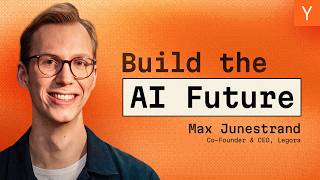
Max Junestrand: You Need The Willingness To Learn Faster Than Anyone Else
Max Junestrand, co-founder and CEO of Legora, shares the company's journey from a rejected Y Combinator application to a global legal tech leader, emphasizing the importance of perseverance, customer focus, and a strong company culture.

Going In Deep On Data | YC Paper Club
The YC Paper Club's "Data Edition" explores the critical role of data in AI development, highlighting how expert data is the bottleneck to AI progress and the shift from model-centric to data-centric approaches.