Acquired · Podcast summary
Vanguard
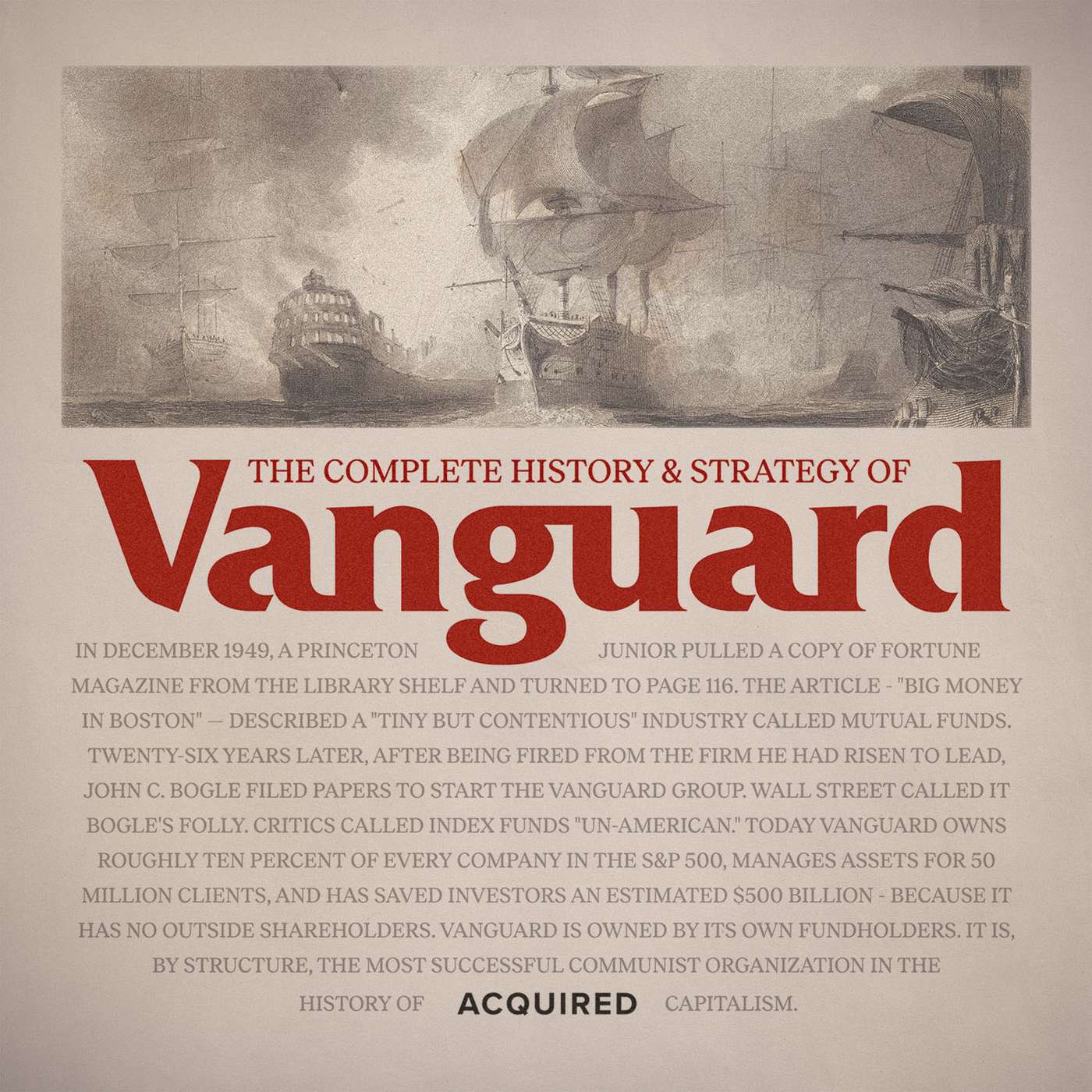
Ben Gilbert and David Rosenthal trace the history of Vanguard, from its unlikely founding to its current status as a titan of passive investing, and explore the unique corporate structure that underpins its success.

 Listen on the show ↗
Key takeaways
- 🏦The financial crisis of 2008 proved to be a pivotal moment for Vanguard, as its passive index funds demonstrated resilience and attracted massive inflows of capital.01:00
- 🎓Bogle's senior thesis at Princeton proposed the radical idea of an index fund, a concept initially met with skepticism but eventually revolutionized the financial industry.01:08
- 📉John Bogle, Vanguard's founder, was driven by his personal experience of financial hardship during the Great Depression, fostering a deep commitment to the average investor.02:00
- 📈The rise of index funds, championed by Vanguard, has democratized investing, allowing millions of Americans to build wealth and achieve financial security.02:00
- 🤔The ongoing debate about the 'crisis of passive investing' highlights concerns about market efficiency and corporate governance as index funds gain increasing dominance.02:00
- 🤝Vanguard's unique mutual ownership structure means it is owned by its funds, which are owned by its investors, eliminating conflicts of interest and prioritizing client benefit.02:10
The digest
In a special episode of Acquired, Ben Gilbert and David Rosenthal delve into the remarkable story of Vanguard, the investment giant that revolutionized the financial industry. From its unconventional origins to its current dominance, Vanguard's journey is a testament to the power of a unique corporate structure and an unwavering commitment to the average investor.
The Genesis of a Revolution
The story begins not with grand ambition, but with a crisis. In the mid-1970s, the financial world was in turmoil. The stock market had just experienced a brutal downturn, and public trust in financial institutions was at an all-time low. It was against this backdrop that John Bogle, a visionary and iconoclast, conceived of Vanguard. His idea was simple yet radical: an index fund for individual investors, offering broad market exposure at minimal cost. This concept, born from Bogle's Princeton senior thesis, was met with skepticism and even derision from the established financial industry. At the time, active management and high fees were the norm, and the idea of simply tracking the market seemed almost heretical. Yet, Bogle persevered, driven by a deep-seated belief that the average investor deserved a fair shake.
Bogle's personal journey was as compelling as his professional one. Born in 1929 on the eve of the Great Depression, he experienced firsthand the devastating impact of financial collapse. His family lost everything, and Bogle and his brothers worked multiple jobs to support themselves and their mother. This early hardship instilled in him a strong sense of frugality and a deep empathy for the struggles of ordinary people. These values would later become the bedrock of Vanguard's philosophy.
Keep reading in The Digest
The full 2-minute article, 1 more section, and every new episode from Acquired and the creators you follow.
- A Unique Corporate Structure: Mutual Ownership
More from Acquired
Ferrari
Ben Gilbert and David Rosenthal delve into the storied history and paradoxical business model of Ferrari, exploring how the iconic brand built an empire on exclusivity, passion, and a relentless pursuit of racing glory.
Rolex
Rolex's journey from precision timekeeping to a global luxury powerhouse, exploring its unique brand strategy, market dominance, and enduring legacy.