OverSimplified · Video summary
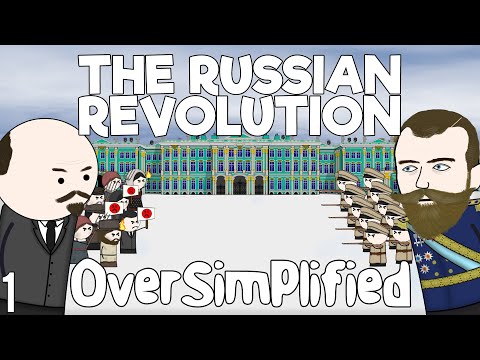
The Russian Revolution - OverSimplified (Part 1)
Russia's autocratic Tsarist regime failed to modernize, leading to widespread discontent among serfs, workers, and liberals, culminating in the 1905 Revolution and setting the stage for future upheaval.

 Watch on YouTube ↗
Key takeaways
- 🎯The Tsarist regime in 19th-century Russia was characterized by feudalism, lack of modernization, and extreme power concentration, contrasting sharply with the industrial and social progress in the rest of Europe.01:20
- 🚀Analyze historical examples of autocratic regimes and understand how their resistance to modernization and reform inevitably leads to internal conflict and instability.01:20
- 📈The autocratic nature of the Tsarist rule meant that any societal unhappiness was ultimately directed at the Tsar, creating a feedback loop where reforms were resisted and repression was common.01:47
- 💡Tsar Alexander II's emancipation of serfs was undermined by burdensome redemption payments, leaving their economic conditions largely unchanged and fueling resentment.02:31
- 📚Consider how ideological purity and uncompromising leadership, as exemplified by Lenin, can lead to both internal party splits and a determined, albeit narrow, revolutionary focus.08:30
- 🔑Lenin's Bolshevik faction emerged from a split in the socialist party due to his uncompromising stance, highlighting ideological divisions and his focus on a disciplined, revolutionary vanguard.08:34
Chapters
- 0:00🎯 Introduction and Setting the Stage
- 1:22🎯 Russia in the 19th Century
- 2:20🎯 Serfdom Reforms under Tsar Alexander II
- 4:03🎯 Repression and Increasing Discontent
- 5:04🎯 Reform Efforts and Leadership Changes
- 14:57🎯 1905 Revolution and Political Turmoil
- 20:43🎯 World War I and Its Impact
The digest
High Level Overview
This video presents a detailed, satirical narrative of Russia’s political, social, and economic conditions leading up to the Russian Revolution. It explains how the backwardness of tsarist rule, the failure of reforms, the rise of industrial labor unrest, and the advent of revolutionary ideologies such as communism set the stage for the upheaval. Intended for viewers seeking a clear, engaging understanding of the forces behind one of history’s most significant revolutions, the video focuses on key figures, ideologies, and events from the 19th century until the eve of World War I.
Keep reading in The Digest
The full 6-minute article, 8 more sections, and every new episode from OverSimplified and the creators you follow.
- The Backwardness of Tsarist Russia and the Serfdom Legacy
- Repression Under Tsar Alexander III and the Rise of Nicholas II
- The Emergence of Revolutionary Thought and Lenin’s Early Life
- Industrialization, Worker Struggles, and Social Unrest
- Defeat in the Russo-Japanese War and the 1905 Revolution
- The Aftermath of 1905: Tsarist Concessions and Continued Repression
- The Bolsheviks, Lenin, and Stalin’s Rising Influence
- Prelude to Catastrophe: The Coming Storm of World War I
More from OverSimplified

The Second Punic War - OverSimplified (Part 3)
The Second Punic War saw Hannibal's brilliant tactics clash with Rome's strategic adaptations, culminating in Scipio's decisive victory at Zama that ended Carthage's independence.
The Second Punic War - OverSimplified (Part 2)
Hannibal's tactical genius led to devastating victories like Cannae, but Rome's resilience and strategic patience ultimately turned the tide against him. Key ideas: Fabian strategy, psychological warfare.

The Second Punic War - OverSimplified (Part 1)
OverSimplified details Hannibal's daring crossing of the Alps, his early campaigns in Spain, and the tensions leading to the Second Punic War with counterintuitive strategies and bold military moves.

The First Punic War - OverSimplified (Part 2)
The First Punic War showcased Roman determination, naval innovation, and Carthaginian mistakes, ending in Roman victory but sowing seeds for future conflicts.

The First Punic War - OverSimplified (Part 1)
The First Punic War was a pivotal conflict where Rome, initially a regional power, fought Carthage, mastering naval innovation like the Corvus to gain control of Sicily and challenge the Mediterranean supremacy.

The Pig War - OverSimplified
The Pig War nearly sparked a war over territorial dispute between the U.S. and Britain, but level-headed diplomacy avoided conflict and defined the border at the 49th parallel.