Y Combinator · Video summary
The ML Technique Every Founder Should Know
This video explores diffusion as a crucial machine learning technique for founders, highlighting its wide applications and evolving methodologies.

 Watch on YouTube ↗
Key takeaways
- 🎯Diffusion is a versatile framework that learns data distributions even in low data regimes.01:02
- 🎯It excels at mapping high-dimensional spaces with limited training data, making it powerful for various applications.01:26
- 🎯Flow matching simplifies the diffusion process by predicting a global velocity rather than intermediate steps, leading to efficient inference.12:15
- 🎯The integration of randomness in diffusion models reflects biological processes, which enhances their learning capabilities.21:54
- 🚀Explore how diffusion can be applied in your specific startup applications.25:12
- 🎯Founders should incorporate diffusion as a fundamental training procedure across all machine learning applications.25:14
Chapters
- 0:00🎯 Introduction to Diffusion
- 0:51🔍 Defining Diffusion
- 1:46📊 High-Dimensional Learning
- 2:23⚙️ Diffusion Process Overview
- 3:24💡 Applications of Diffusion
- 4:20📖 Key Innovations in Diffusion
- 6:17🔄 Training and Loss Functions
- 7:46🖥️ Code Examples in Diffusion
- 8:46💻 Understanding Noise Schedule
- 9:26🔭 Flow Matching Technique
- 10:24🛠️ Opportunities Beyond Traditional Models
- 11:30📈 Future of Diffusion Models
- 12:44🔗 Research and Development in Diffusion
- 14:01🚀 Conclusion and Future Outlook
The digest
High Level Overview
The video showcases a discussion with Francois Shaard, a machine learning expert, on diffusion, a critical technique in artificial intelligence. This method is essential for founders and practitioners in the tech space, as it enables the effective modeling of data distributions, making it possible to generate complex data even from small datasets. Understanding diffusion could significantly enhance the capabilities and competitiveness of startups and technology firms in the rapidly evolving AI landscape.
Keep reading in The Digest
The full 4-minute article, 11 more sections, and every new episode from Y Combinator and the creators you follow.
- Structured Deep Dive
- What is Diffusion? (00:52)
- The Process of Diffusion (01:57)
- Applications of Diffusion (02:50)
- Evolution of Diffusion Models (04:06)
- The Role of Flow Matching (12:00)
- Practical Implementation of Diffusion (13:03)
- Key Frameworks, Models, or Mental Maps
- Training Objective
- Practical Implications & Takeaways
- Action-Oriented Summary
More from Y Combinator

How Jeetu Patel Runs Cisco Like the World’s Largest Startup
Jeetu Patel, Cisco's president and chief product officer, discusses how he's instilling a founder's mindset at the company, going all-in on AI, and the massive data center buildout currently underway.

What If We Stopped Using GPUs? | YC Paper Club
YC Paper Club explores the future of computing beyond GPUs, delving into alternative architectures like optical and neuromorphic computing, and discussing novel optimization methods inspired by the human brain.

Startups Are Moving From Bits to Atoms
Y Combinator partners discuss the latest trends in startups, highlighting the resurgence of hard tech, the accelerated growth of companies, and the increasing number of experienced and solo founders.

Self-Improving Harnesses, Local Personal AI And YC's Agent For Work | YC Paper Club
YC Paper Club explores the evolution of AI harnesses, from simple wrappers to complex, self-improving systems, and showcases how these advancements are transforming AI research and practical applications.
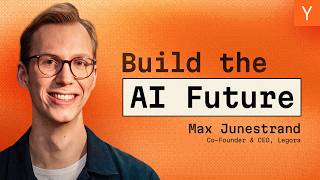
Max Junestrand: You Need The Willingness To Learn Faster Than Anyone Else
Max Junestrand, co-founder and CEO of Legora, shares the company's journey from a rejected Y Combinator application to a global legal tech leader, emphasizing the importance of perseverance, customer focus, and a strong company culture.

Going In Deep On Data | YC Paper Club
The YC Paper Club's "Data Edition" explores the critical role of data in AI development, highlighting how expert data is the bottleneck to AI progress and the shift from model-centric to data-centric approaches.