OverSimplified · Video summary
The American Civil War - OverSimplified (Part 1)
OverSimplified explains the causes, key events, and leaders of the American Civil War, emphasizing the slavery issue and political tensions.

 Watch on YouTube ↗
Key takeaways
- 🎯The slavery conflict was the root cause of the Civil War, not just states' rights or politics.01:58
- 🚀Recognize slavery’s central role in historical conflicts to understand current racial and political issues.01:58
- 💡The Missouri Compromise temporarily balanced slave and free states, but westward expansion reignited tensions.04:09
- 📝Use compromises and political reactions as lessons for managing divisive issues today.04:09
- 🔑Remember leadership qualities like Lincoln’s ability to stay composed during crises for effective decision-making.23:38
- 🌍Foreign powers like Britain considered intervening but were deterred when Lincoln framed the war as a fight to end slavery.27:02
Chapters
- 0:00🎯 Introduction and Sponsorship
- 0:56🎯 Early Life of Abraham Lincoln
- 1:44🎯 Lincoln’s Legal and Political Career
- 2:20🎯 Debates Over Slavery in the Early U.S.
- 3:08🎯 Growing North-South Divide
- 4:11🎯 Expansion and Tensions
- 6:32🎯 Rise of Abolitionism and Political Parties
- 7:00🎯 Violence and Conflict Escalation
- 9:43🎯 Lincoln’s Stance on Slavery and Election
- 12:07🎯 Secession and Formation of the Confederacy
- 14:40🎯 Inauguration and Beginning of Civil War
- 18:03🎯 Major Battles and Military Campaigns
- 23:10🎯 Lincoln’s Personal Tragedy and Leadership
- 27:02🎯 International and Diplomatic Challenges
- 28:14🎯 Key Battles of Antietam and Emancipation
The digest
High Level Overview
This summary traces the complex origins, rising tensions, and early battles of the American Civil War, centered around Abraham Lincoln’s ascent and the deeply contentious issue of slavery. It explores political compromises, cultural division between North and South, key events like “Bleeding Kansas,” and critical moments such as John Brown’s raid and the election of Lincoln. The video highlights how these forces culminated in secession, war’s outbreak, and Lincoln’s challenging leadership amid both military setbacks and transformative decisions like the Emancipation Proclamation. This briefing is essential for understanding the foundational political and social dynamics that defined the Civil War’s first phase.
Keep reading in The Digest
The full 7-minute article, 14 more sections, and every new episode from OverSimplified and the creators you follow.
- Structured Deep Dive
- Abraham Lincoln’s Early Life and Political Rise (00:56–02:03)
- Diverging Paths: North vs. South and the Problem of Slavery (02:03–04:09)
- Expansion and Rising Conflict Over Slavery (04:09–06:24)
- The Cultural and Political Warfronts: Literature, Parties, and Congressional Violence (06:24–08:03)
- Human Toll of Slavery and Abolitionist Movement (08:03–09:56)
- John Brown’s Raid and the 1860 Election (09:56–11:41)
- Secession and the Outbreak of War (11:41–14:41)
- Early War Struggles and Leadership Challenges (14:41–22:00)
- Key Northern Victories and Leadership Changes (22:00–29:41)
- Diplomatic Pressures and the Emancipation Proclamation (27:00–29:41)
- Key Frameworks and Mental Maps
- Practical Implications & Takeaways
- Action-Oriented Summary
More from OverSimplified

The Second Punic War - OverSimplified (Part 3)
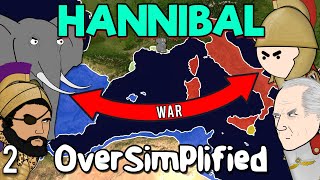
The Second Punic War saw Hannibal's brilliant tactics clash with Rome's strategic adaptations, culminating in Scipio's decisive victory at Zama that ended Carthage's independence.
The Second Punic War - OverSimplified (Part 2)
Hannibal's tactical genius led to devastating victories like Cannae, but Rome's resilience and strategic patience ultimately turned the tide against him. Key ideas: Fabian strategy, psychological warfare.

The Second Punic War - OverSimplified (Part 1)
OverSimplified details Hannibal's daring crossing of the Alps, his early campaigns in Spain, and the tensions leading to the Second Punic War with counterintuitive strategies and bold military moves.

The First Punic War - OverSimplified (Part 2)
The First Punic War showcased Roman determination, naval innovation, and Carthaginian mistakes, ending in Roman victory but sowing seeds for future conflicts.

The First Punic War - OverSimplified (Part 1)
The First Punic War was a pivotal conflict where Rome, initially a regional power, fought Carthage, mastering naval innovation like the Corvus to gain control of Sicily and challenge the Mediterranean supremacy.

The Pig War - OverSimplified
The Pig War nearly sparked a war over territorial dispute between the U.S. and Britain, but level-headed diplomacy avoided conflict and defined the border at the 49th parallel.