Sam Miller · Video summary
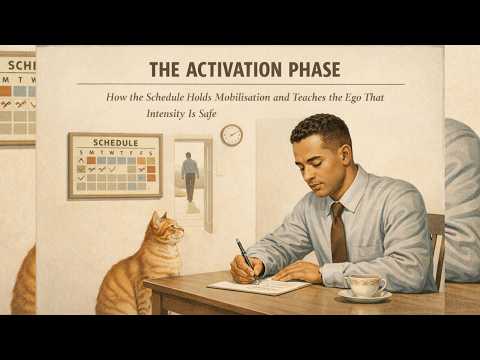
The Activation Phase. How The Schedule Holds Mobilisation And Teaches The Ego Intensity Is Safe
The Activation Phase involves mobilizing energy for healing, which feels dangerous but is safe within a structured schedule to retrain the ego.

 Watch on YouTube ↗
Key takeaways
- 🎯The Activation Phase is when energy returns to the system, initiating movement and action, but it often feels dangerous to the ego due to past trauma responses.01:03
- 💡Activation is not dysregulation; it's mobilization within a safe container (the schedule), allowing the nervous system to process stored charge and re-regulate.03:03
- 🚀Establish a structured schedule based on your capacity on your worst day to safely engage in the activation phase.03:06
- 📈The schedule acts as an external regulator, mirroring the nervous system's inner rhythm and providing a predictable structure that retrains the ego by demonstrating that intensity is safe.05:03
- 💪Healing is not forced; the schedule allows healing to occur by holding conditions for completion, processing stored material in titrated doses over time.05:39
- 🔍The intense feelings during activation are due to the return of stored sympathetic charge and surfacing repressed emotions, not necessarily the activity itself.06:01
Chapters
- 0:12🎯 Introduction to the Activation Phase
- 1:03💥 What Activation Feels Like
- 3:08⚠️ Activation as a Safe Mobilization
- 7:33🧠 Neuroscience Perspective
- 8:59🏗️ Role of the Schedule
- 13:56🔥 Micro Completions and Speed of Recovery
- 18:20🌊 Cycles and Completion
- 18:25📝 Lived Experience of a Schedule Day
- 20:29⚖️ Balancing Activation and Rest
- 21:43🧘♀️ Integration of Emotional Material
- 22:52🛑 Gate Framework and Rebuilding the Ego
- 26:26🌱 Internalization of the Rhythm
- 27:35🎯 Understanding and Using the Cycles
- 28:08✨ Conclusion: Safe Healing
The digest
High Level Overview
This analysis details the activation phase of nervous system re-regulation cycles, highlighting how carefully paced schedules facilitate the safe mobilization of energy and retrain the ego to redefine intense activation as non-threatening. This phase is critical for anyone recovering from trauma or chronic nervous system dysregulation. By understanding its dynamics and adhering to a structured schedule, individuals can foster healing through repeated, manageable activations paired with adequate rest and integration, ultimately restoring nervous system flexibility and self-regulation.
Keep reading in The Digest
The full 6-minute article, 16 more sections, and every new episode from Sam Miller and the creators you follow.
- Understanding the Activation Phase
- What is the Activation Phase?
- The Paradox of Activation
- Key Rhythms: Inner Nervous System and Outer Schedule
- Trauma Physiology and Activation's Disproportionate Impact
- Neuroscience Perspective: Changing the Meaning of Activation
- Why Without a Schedule Activation Becomes Chaotic
- The Ego’s Role and How the Schedule Re-Trains It
- The Emotional Landscape of Activation
- The Gates Framework and Activation Tolerance
- Cycle Compression, Increasing Capacity, and Recovery Trajectory
- Practical Lived Experience of an Activation Day
- Summary of Healing Principles in Activation Phase
- Key Framework: Nervous System Cycle and Schedule Alignment
- Practical Implications & Takeaways
- Action-Oriented Summary
More from Sam Miller

Drop Phase
The drop phase is a crucial, misunderstood part of healing, not a crash. It's the nervous system's process of integrating mobilization to achieve completion and restore capacity.

Flares, Setbacks, And Crashes. Making Space For Integration In The Schedule
Reframe symptoms not as failures, but as integration signals. A healing schedule is crucial to navigate flares (signs of progress) and prevent crashes (overwhelm).

The Fear Of Rejection And Abandonment
The fear of rejection stems from early abandonment, creating protective personas that prevent us from integrating exiled parts of ourselves, leading to physical and emotional symptoms.