Mudfossil University · Video summary
Scientists Mystified over LRDs (Little Red Dots) in the latest Webb telescope images from Space
New Webb telescope images reveal mysterious little red dots (LRDs), prompting scientific inquiry into their nature and energy signatures, potentially linked to dipolar particle interactions.
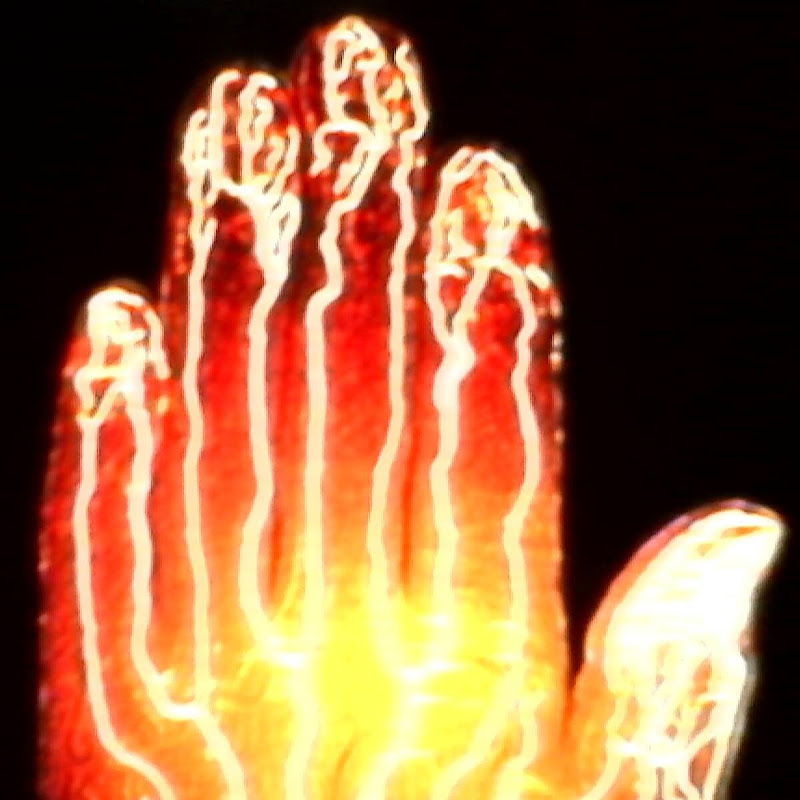
 Watch on YouTube ↗
Key takeaways
- 💡Observed celestial phenomena, including the mysterious LRDs and images of celestial bodies like the sun and Saturn, can be explained as dipolar interactions between particles, where one particle is highly energetic and the other is not.06:15
- 📈The 'push and shove' of interacting particle fields creates visible glow, with the intensity of the glow directly correlating to the force of the interaction; harder pushes result in brighter glows.07:11
- 🔍The Zeeman effect, observed as ripples or magnetic field lines, can be detected and visualized, offering a novel approach to understanding magnetic fields and particle interactions in space.07:20
- 🚀The concept of dipole electron flood theory suggests that all matter is constructed from a core particle (black) surrounded by other particles (white), with their separation and interaction creating energy, electricity, and phenomena like light.09:50
- 🎯The little red dots (LRDs) observed by the Webb telescope are likely infrared signals or infrared light hitting the sensor, suggesting they represent a specific energy range rather than an unknown phenomenon.13:03
- 📚The speed of light is not constant and can change depending on the medium it travels through, slowing down and speeding up, leading to observable effects like impact zones.14:04
Chapters
- 0:00💡 Initial Revelation on Heat Signature
- 2:02🔭 Introduction to Webb Telescope's Little Red Dots (LRDs)
- 2:30🌌 Mason's Enhanced Webb Images
- 3:13✨ Distinguishing Red Dots from Stars
- 5:31🧲 Visualizing Magnetic Fields and Energy
- 6:15⚛️ Dipolar Nature of Celestial Objects
- 6:48⚡ Matter vs. Energy Interpretation
- 7:20〰️ The Zeeman Effect and Camos Sensors
- 8:53🔬 Dipole Electron Flow Theory
- 9:34💥 Separation of Black and White Particles
- 11:57🔄 Particle Spin and Flipping
- 13:03📡 Mason's Infrared Explanation for LRDs
- 14:53☀️ Mason's Enhanced Sun Image
- 26:37🪐 Dipolar Structure of Saturn
- 28:19✨ Saturn's Rings and Energy Emissions
- 31:56💡 Photon Structure and Spin
- 32:59⚡ Accelerating Light and Energy Separation
- 33:54⚛️ Dipole Electron Flood Theory
- 39:14💥 Subatomic Nuclear Explosions
- 41:07🌟 High Luminosity and Particle Showers
- 41:44🌌 Higs Fields and Particle Reconnection
- 42:40✨ Photon Polarization and Spin Effects
- 47:40🔄 Photon Spin and Energy Gain
- 50:18⚛️ Proton Formation from Dipoles
- 50:43🕳️ Russian Black Hole Experiment
- 52:22💡 Final Theory on Heat and Energy
The digest
Webb Telescope Reveals Mysterious "Little Red Dots": A New Understanding of Cosmic Energy
This video presents a radical reinterpretation of recent Webb Telescope imagery, focusing on the discovery of "Little Red Dots" (LRDs). It proposes that these, along with other observed phenomena, are not mere curiosities but key indicators of fundamental cosmic processes. The content is aimed at individuals interested in physics, astronomy, and alternative scientific theories, offering a framework that challenges conventional understanding of matter, energy, and cosmic structures.
Keep reading in The Digest
The full 6-minute article, 18 more sections, and every new episode from Mudfossil University and the creators you follow.
- The Mystery of the Little Red Dots (LRDs)
- Mason's Enhanced Imagery: Unveiling Fields and Energy
- Dipolar Structures and "Push to Shove" Energy
- The Zeeman Effect and Cmos Sensors
- Redefining Particles: Dipole Electrons and Energy Carriers
- The Sun's Energy Distribution and Rotation
- The Nature of Light and its Interaction
- Mason's Interpretation of Webb's LRDs: Distant Infrared Signals
- Dipolar Structure of Celestial Bodies
- The "Push to Shove" Theory and Particle Interactions
- The Zeemann Effect and Cmos Sensors in Action
- A New Model for Matter and Energy
- Subatomic Nuclear Explosions and Particle Separation
- High Luminosity and CERN's Upgrades
- Photons as Dipolar Energetic Packets
- Creating Electricity from Particle Separation
- The Proton as a Complex Dipolar Structure
- Russian Experiments and Black Holes in Space
More from Mudfossil University

How Giant Creatures in the Great Flood infused with Silicates and Caused the Mudfossils also on Mars
The Great Flood, potentially caused by a Venus impact, boiled Earth's oceans, creating salinity from dissolved creature salts and infusing the planet with silicates that formed mudfossils.

Is Typhon the Same as the Leviathan .... I have details on that From Scripture and Rock
The video argues that ancient mythological creatures like Typhon and Leviathan may be interpreted as literal, colossal biological entities, with asteroid Bennu samples providing evidence of extraterrestrial organic matter resembling heart muscle.

Where Did Dragons and Sea Serpents and Dinosaurs come from (in all cultures) What Happened to Them
Ancient dragon and sea serpent myths likely stem from fossils of gigantic parasites that lived on massive creatures, now re-categorized as dinosaurs.

New Particle Discovered and Drastically Changes Physics
New CMOS detectors enable the LHC to see sub-proton particles, revealing a complex "particle zoo" and potential for free energy through particle separation.