Mike Benz · Video summary
Riots, Revolution & A World On Fire This Week
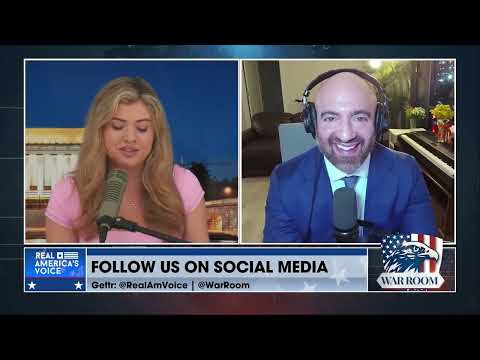
Mike Benz discusses the current unrest in Minneapolis, highlighting the impact of protests and the historical context of color revolutions.

 Watch on YouTube ↗
Key takeaways
- 🎯Minneapolis unrest is a deflated attempt to recreate George Floyd protests, with less intensity due to cold weather and weak narratives.00:10
- 💡The 3.5% rule in political science indicates that once 3.5% of a population protests nonviolently, it becomes an unstoppable force.02:41
- 📝Stay informed about the 3.5% rule and its implications for political movements in your area.02:43
- 🚀Engage in political discussions about the role of international funding in local protests to raise awareness.06:13
- 📊Monitor protests and their organizational strategies to evaluate their potential effectiveness.07:00
- ⚡The overlap of protests and funding sources suggests that protests may be supported by long-standing political networks.07:05
Chapters
- 0:00📊 Topline Assessment of Minneapolis Events
- 0:55🚔 Police Incident Overview
- 1:24📈 3.5% Rule in Protests
- 2:18🌍 Historical Context of Protests
- 3:27💰 Funding Sources for Movements
- 5:59🔥 Methods of Protest and Their Legality
- 8:02📰 Somali Immigrant Communities in the U.S.
- 9:44⚔️ Military and CIA Involvement
- 10:33🌐 Global Implications of U.S. Intervention
- 12:45💣 Future Protests and U.S. Policy
- 13:57🔍 Conclusion and Further Thoughts
The digest
This discussion provides a comprehensive analysis of ongoing protests and unrest in Minneapolis, the broader context of color revolutions, and the geopolitical implications involving refugee populations and regime change efforts in countries like Venezuela and Iran. It explains how these movements are strategically orchestrated, often funded through complex networks linked to U.S. interests, and explores the underlying mechanisms that drive social mobilization and its consequences locally and globally. The insights are valuable for policymakers, analysts, and observers seeking to understand the intersection of protest movements, intelligence operations, and foreign policy.
Minneapolis Protests: A "Suppressed" Reenactment of George Floyd Unrest
The Minneapolis riots are perceived as a cold-weather, lower-intensity version of the George Floyd protests, restrained partly due to the season and lack of a strong protected group identity fueling enthusiasm. These protests function like a "ready reserve" or training exercise for activists and organizers, keeping forces mobilized and primed for larger uprisings in warmer months, notably the summer and election seasons.
Key to understanding the protests is a critical incident wherein video evidence conclusively shows an attacker trying to run over an officer. This undermines simplified narratives prevalent in earlier protests, such as those around George Floyd, where key facts—like the victim's fentanyl overdose—were obscured for months to shape public opinion.
The strategic goal appears not just spontaneous protest but a sustained people-powered "color revolution"—an orchestrated campaign designed to apply pressure over time.
Keep reading in The Digest
The full 6-minute article, 5 more sections, and every new episode from Mike Benz and the creators you follow.
- The 3.5% Rule: Threshold for Unstoppable Protest Movements
- Color Revolutions: Professionalized, Funded, and Globalized Strategy
- Refugee Populations as Geopolitical Assets: The Somali Diaspora Example
- CIA, Drug Trade, and Covert War Economics
- Geopolitical Focus: Venezuela and Iran Regime Change Efforts
More from Mike Benz

Brazil's 1st Election After USAID
Brazil's recent election was an "earthquake," reflecting years of public rage at the ballot box. This outcome is linked to the closure of USAID and its controversial activities in Latin America.

USAID & The Rap Game (Part 2)
The CIA used rap music to topple the government of Senegal in 2012, funding a youth movement that led to violent riots and the ousting of the president. This operation was part of a broader strategy of using cultural diplomacy to achieve geopolitical objectives.

USAID & The Rap Game (Part 1)
This video explores the intricate relationship between the music industry and government intelligence agencies, revealing how soft power and cultural diplomacy are leveraged to influence global narratives and achieve strategic objectives.

Crazy New State Dept Censorship Files
Mike Benz exposes the State Department's Global Engagement Center (GEC) and its alleged involvement in domestic censorship and the manipulation of public discourse, particularly concerning "gendered disinformation."

USAID and Internews: A CIA Love Story
In this video, Mike Benz explores the controversial connections between Internews, a media nonprofit, and the CIA, revealing how it has been funded by U.S. government agencies to influence media narratives globally, particularly during regime changes and conflicts. Benz argues that Internews operates as a significant player in the censorship industrial complex, promoting U.S. geopolitical interests under the guise of independent journalism.

The Business Side of the Censorship Industry (Part 2)
In Part 2 of "The Business Side of the Censorship Industry," Mike Benz explores the economics of the counter disinformation industry, detailing its evolution from a niche market to a multi-billion dollar sector driven by corporate interests and government partnerships, while highlighting the roles of key players like NewsGuard and the Global Disinformation Index.