C++ by Saurabh Shukla Sir · Video summary
Private Constructor in C++ Hindi
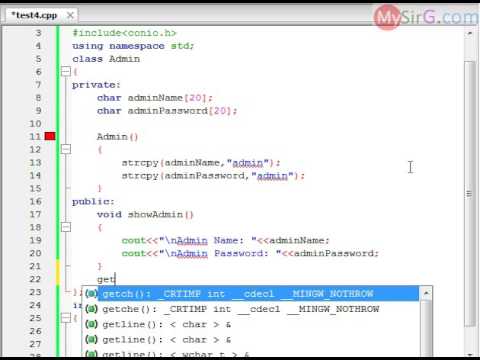
Learn how to use private constructors in C++ to enforce design patterns like the Singleton pattern, controlling object creation.

 Watch on YouTube ↗
Key takeaways
- 🔧Experiment with creating a private constructor in a sample class and observe the compile-time error when attempting to create an object outside the class.06:15
- 🎯A private constructor prevents object instantiation directly from outside the class, forcing object creation through controlled, internal class methods.06:44
- 💻Implement a static factory method (e.g., `get_instance()`) within a class that has a private constructor to control and facilitate object creation.08:03
- 🔑To enable object creation with a private constructor, you must use a static member function (like a factory method) within the class to instantiate the object.09:51
- 🚀Dynamic memory allocation using `new` within a static method allows an object created with a private constructor to persist beyond the method's scope, returning a pointer to it.11:33
- 💡A common use case for private constructors is implementing the Singleton pattern, ensuring that only one instance of a class exists throughout the application's lifetime.14:12
Chapters
- 0:00🎯 Introduction to Private Constructor in C++
- 0:20🎯 What is a Constructor?
- 1:04🎯 Constructor Overloading and Access Specifiers
- 1:28🎯 Creating a Class and a Public Constructor
- 4:40🎯 Object Creation and Constructor Call
- 6:15🎯 Changing Constructor to Private
- 7:18🎯 Implication of Private Constructor
- 7:49🎯 Creating Object Inside Member Function
- 9:50🎯 Static Member Functions and Static Members
- 13:30🎯 Accessing Object and Showing Data
- 14:22🎯 Singleton Pattern Implementation
- 16:35🎯 Returning Object through Pointer
- 18:41🎯 Preventing Multiple Instances
- 19:28🎯 Conclusion and Summary
The digest
High Level Overview
This presentation explains the concept of private constructors in C++, addressing common student queries about whether constructors can be private or must always be public. It also demonstrates the practical application of private constructors through coding examples, ultimately leading to the explanation of the Singleton design pattern. This explanation is relevant for C++ learners interested in class design, access control, and object instantiation management.
Keep reading in The Digest
The full 4-minute article, 8 more sections, and every new episode from C++ by Saurabh Shukla Sir and the creators you follow.
- What is a Constructor? (00:20 - 01:16)
- Typical Public Constructor Example (01:25 - 05:40)
- What Happens if the Constructor is Private? (06:15 - 07:13)
- Creating Objects Inside the Class via Static Functions (07:41 - 14:09)
- Implementing a Singleton Pattern (14:10 - 19:00)
- Summary of Key Concepts and Code Demonstrations
- Practical Implications & Takeaways
- Action-Oriented Summary