20/20 · Podcast summary
McStays Episode 6: Life or Death
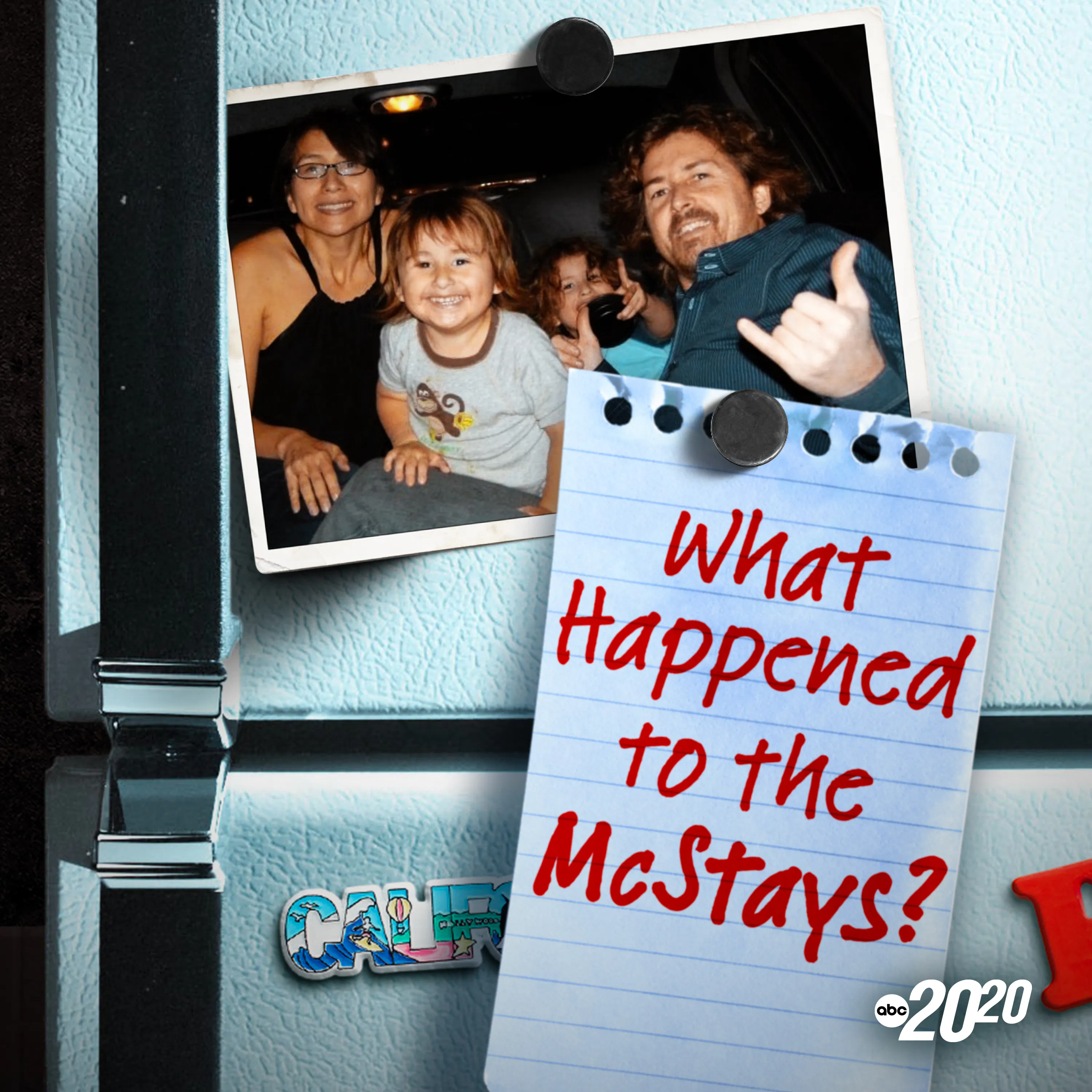
In this episode of "What Happened to the McStays?", the trial of Charles Merritt begins, with prosecutors and defense attorneys presenting their cases regarding the murders of the McStay family.

 Listen on the show ↗
Key takeaways
- ⚖️Joseph McStay's brother, Michael McStay, expressed confidence in the authorities' apprehension of Charles Merritt, believing justice would finally be served for his family.01:54
- 👨👩👧👦Prosecutor Brit Himes found the McStay murder case to be the most personal of his career, especially when confronted with evidence like Joseph Jr.'s car seat, which resonated with his own experience as a father.03:43
- 🩸The defense argued that the lack of blood at the McStay home, despite the alleged violent murders, was a significant point against the prosecution's theory that the killings occurred there.06:23
- 🔄Merritt's sister, Juanita Merritt, initially told police she hadn't seen her brother in five years, but at trial, she recanted, claiming she was heavily medicated during the initial interview and saw him often.11:55
- 🤝The defense suggested that Merritt's DNA found on the steering wheel of the McStay's SUV could be transferred DNA, possibly from a handshake with Joseph, rather than direct contact during the crime.13:52
- 💰The prosecution's primary motive for Merritt was greed, alleging he was embezzling money from Joseph's business and killed him after being discovered and fired.14:40
Chapters
- 1:43Introduction to the Trial
- 5:00Prosecution's Opening Arguments
- 8:35Defense's Counter-Arguments
- 10:12The House and Lack of Blood
- 13:18The Truck and Conflicting Evidence
- 15:44Cell Phone Records and Location Data
- 18:53Merritt's Sister's Testimony
- 22:10DNA Evidence and Transfer Theory
- 23:55Motive: Greed and Financial Disputes
- 26:42Merritt's Alibi and Kathy Jarvis's Testimony
- 33:35Alternative Suspect: Dan Kavanaugh
- 41:45Closing Arguments and Verdict
- 48:56Sentencing and Victim Impact Statements
- 50:44Merritt's Final Plea and Sentence
- 53:45Aftermath and Family Memories
The digest
In 2019, more than four years after his arrest, Charles Chase Merritt finally headed to trial, charged with killing the McStay family: Joseph, Summer, Gianni, and Joseph Jr. Merritt pleaded not guilty, and the trial commenced at San Bernardino Superior Court. The case had been a long and arduous journey for the victims' loved ones, taking over five years from the discovery of the McStay remains to the start of the trial.
Outside the courtroom, after a pre-trial hearing, Joseph McStay's brother, Michael McStay, spoke to local TV station KABC. Michael expressed his confidence that authorities had apprehended the correct individual, stating, "Finally somebody is going to have to take responsibility for what they did to my loving family." Joseph's mother, Susan Blake, was also present, wanting Merritt to see the pain the family had endured and to know they were seeking justice. With Merritt facing four charges of murder in the first degree, the death penalty was a possibility, meaning he was fighting for his life.
The Prosecution's Case: Circumstantial Evidence and Cell Phone Records
Prosecutor Brit Himes, a district attorney with the County of San Bernardino, described the McStay family murders as the most personal case he had ever worked on in his nearly 30 years as a prosecutor. The emotional toll was evident when he questioned a crime scene specialist, who displayed a picture of Joseph Jr.'s car seat from the family's Isuzu Trooper. Himes revealed that it was the same type of car seat he used for his own children, creating a profound personal connection.
Himes explained that the McStay murder case was particularly challenging due to several factors: the nearly four-year gap between the murders and the discovery of the bodies, the multiple jurisdictions involved, the enormous public interest that generated a huge volume of tips for law enforcement, and crucially, the lack of direct evidence against Merritt. Himes lamented the absence of an identifiable murder scene with physical evidence like blood, fingerprints, or DNA, or even an eyewitness. Instead, the prosecution relied heavily on circumstantial evidence—facts that didn't directly link the defendant to the crime but, when taken together, painted a picture of Merritt as the killer. Himes asserted that Merritt had the means, motive, and opportunity to commit the murders.
The prosecution's case hinged on several key pieces of circumstantial evidence. They argued that the presence of bath-related items, such as a distinct toddler-type bath towel with a hood and other bath materials, found at the grave site suggested that Summer had been bathing the boys around the time the family was killed. Regarding the absence of blood at the McStay home, prosecutors contended that Merritt had ample time to clean up the crime scene, attributing the lack of evidence to his control over the scene.
The centerpiece of the prosecution's case was Merritt's cell phone records. An expert witness testified that on February 6, 2010, Merritt's phone pinged a tower roughly a mile away from the grave site, just two days after the family disappeared. Prosecutors argued this placed Merritt near the grave site. However, the expert also clarified that cell phone data only provides a general location, not an exact one, and was not designed for precise location information.
Another crucial piece of evidence was Merritt's DNA found on the steering wheel of the McStay's Isuzu Trooper. The state argued this indicated Merritt drove the SUV down to the Mexico border. They also presented a motive: greed. Prosecutors alleged that Merritt, while claiming to be Joseph's best friend, was writing checks from the waterfall business and taking money, owing Joseph tens of thousands of dollars due to a gambling problem. They contended that Joseph discovered the checks and fired Merritt on February 4th, the day the family went missing. This, they argued, led Merritt to confront and kill the McStays at their Fallbrook home.
Keep reading in The Digest
The full 10-minute article, 3 more sections, and every new episode from 20/20 and the creators you follow.
- The Defense's Counter-Arguments: Confirmation Bias and Lack of Direct Evidence
- Alibis and Accusations: Conflicting Testimonies and Dismissed Leads
- The Verdict: Guilty and a Death Sentence
More from 20/20

Home Alone
Investigative reporter Ashley Holden unravels the decade-long quest for justice in the murder of Allison Feldman, highlighting forensic breakthroughs and legal battles.

After Show: The Salem Strangler
Detective Elaine Gill reflects on solving the decades-old murder of Claire Gravel in Salem using pioneering DNA technology.

The Salem Strangler
James Gravel recounts the 1986 murder of his sister Claire Gravel in Salem, Massachusetts, and the decades-long investigation that led to the conviction of John Kerry for her strangulation.

The After Show: "Come Home Safe"
ABC Legal Contributor and criminal defense attorney Brian Buckmire discusses his journey from public defender to media personality, the nuances of the justice system, and his book "Come Home Safe."

Mr & Mrs Murder
In a shocking turn of events, the murder of Mike Williams, which remained unsolved for 17 years, has led to the conviction of his wife, Denise Williams. This episode delves into the intricate details of the case, the legal proceedings, and the emotional toll it took on everyone involved.

True Crime Vault: Ruby Franke: From Momfluencer to Felon
Ruby Franke, a once-popular YouTube momfluencer, faces felony charges related to child abuse, sparking a national conversation about the dark side of online parenting and the legal system's response.