PakWheels.com · Video summary
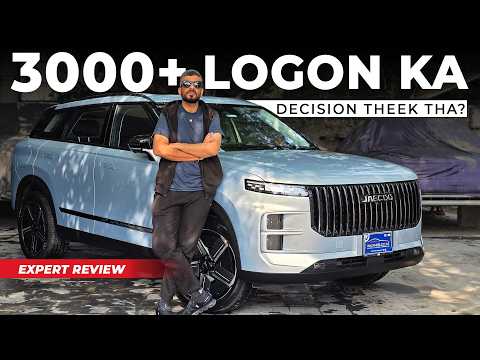
Jaecoo J7 Expert Review | Luxury Hai Ya Overpriced?
The Jaecoo J7 is a plug-in hybrid SUV from China, offering impressive fuel efficiency and advanced features, but with a rising price point and some quirky design choices.

 Watch on YouTube ↗
Key takeaways
- 🎯The initial attractive pricing of PKR 99,99,000 led to massive bookings, but the price has since increased to over PKR 1.05 crore (ex-factory), making its value proposition a key consideration.00:48
- 🚀Factor in the increased price point (over PKR 1.05 crore) when evaluating the Jaecoo J7's value against its features and competitors.01:52
- 💡The vehicle offers a claimed 1200 km range on a single tank and charge, achieved through a combination of a ~70 km electric-only range (NEDC 100 km) and its hybrid system.02:36
- 🚀The plug-in hybrid system allows for daily use as an electric car for commutes under 70 km if charged nightly, offering significant savings compared to a pure gasoline engine.05:00
- 🔍Key interior features include dual screens (14.8-inch infotainment, 10.25-inch cluster), heated/ventilated seats, ambient lighting, and an app for remote vehicle control.06:13
- 🔧Counterintuitive design elements include inverted window switches and a gear lever without backlighting, which can be confusing for drivers.07:20
Chapters
- 0:00🎯 Introduction and vehicle overview
- 0:39🎯 Pricing and booking response
- 1:21🎯 Manufacturer and origin details
- 2:04🎯 Vehicle specifications
- 2:42🎯 Exterior design and features
- 6:03🎯 Interior features and comfort
- 7:48🎯 Driving experience and driving aids
- 12:23🎯 Safety features and observations
- 16:00🎯 Handling, suspension, and ride quality
- 19:02🎯 Charging and battery range
- 20:44🎯 Fuel economy and cost analysis
- 24:12🎯 Market positioning and competition
- 25:16🎯 Pricing of parts and insurance
- 27:01🎯 Overall verdict
The digest
The Jaecoo J7, a plug-in hybrid mid-size SUV brought to Pakistan by the Nissad Group under Chery’s parentage, has created significant buzz due to its competitive pricing, advanced features, and hybrid powertrain. This review examines the vehicle’s design, performance, technology, fuel efficiency, and market positioning to determine whether it delivers true luxury or is overpriced. It serves as a detailed, expert brief for prospective Pakistani car buyers exploring electric and hybrid vehicle options in the sub-1.1 crore PKR price segment.
Introduction and Market Launch
The Jaecoo J7 generated massive interest when its booking opened on October 22, 2022, quickly surpassing thousands of orders due to a strategic introductory price of ₹99,99,000 and attractive bundled offers. The first locally assembled (CKD) unit rolled out by early December, affirming Nissad Group’s commitment, who previously introduced Hyundai in Pakistan. By the time of this review, the ex-factory price had risen to about ₹1.05 crore, roughly ₹1.07 crore after taxes.
Originally introduced in China and seen by the reviewer at the April Jingai Auto Show, the J7 comes from a global hybrid platform under Chery, combining modern hybrid tech with a mid-size SUV form factor designed for urban and semi-urban Pakistani conditions.
Keep reading in The Digest
The full 8-minute article, 13 more sections, and every new episode from PakWheels.com and the creators you follow.
- Exterior Design and Features
- Practical Cargo Space
- Powertrain and Driving Modes
- Interior and Technology
- Driver Assistance and Safety
- Driving Experience and Handling
- Fuel Efficiency and Running Costs
- Market Position, Warranty, and After-Sales
- Build Quality and Localization Concerns
- Summary and Verdict
- Key Framework: Evaluating Plug-in Hybrid Vehicle Efficiency
- Practical Implications & Takeaways
- Actionable Recommendations
More from PakWheels.com

Fastest AMG - Sheikh Waqas Ka Garage Tour - Pakistan
A deep dive into Sheikh Waqas's car collection, showcasing high-performance Mercedes-AMG conversions and electric vehicles with a focus on customization and performance tuning.

Nora E30 First Look Review | Ye to EV Ki Boss Hai
The Nora E30 is a new EV category in Pakistan, offering affordable urban transport with optional range extenders and a 5-year battery warranty.

Ford F-250 Super Duty Owner Review | Gari Ha Ya Monster?
The Ford F-250 Super Duty is a massive truck with incredible towing capacity and a powerful 6.7L diesel engine, designed for commercial use yet offering a luxurious interior.

Audi A6 EV First Look Review | A New Electric Chapter Begins
The Audi A6 Sportback e-tron offers a premium EV experience with advanced tech, a spacious interior, and competitive pricing, marking a new electric chapter for Audi in Pakistan.

Ferrari 296 GTB Drive Review | Hybrid Ferrari worth it hai?
Ferrari 296 GTB's hybrid performance and features are thoroughly reviewed.