David Perell · Video summary
How to Write Vividly Well — Michael Connelly
Crime novelist Michael Connelly shares high-leverage writing techniques, focusing on telling details, character depth, and maintaining narrative momentum through meticulous revision.

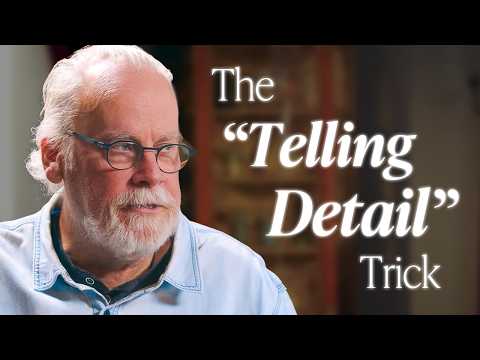 Watch on YouTube ↗
Key takeaways
- 🎯Focus on telling details – the fewest possible elements that create the most vivid picture and maintain narrative momentum, rather than overwhelming the reader with excessive description.03:47
- 🚀Identify and use 'telling details': select the single most impactful detail over multiple less significant ones to convey character or situation.03:47
- 📚The process of rewriting is crucial, not just for refining details but for deeper thinking, allowing writers to strip down unnecessary elements or expand on emerging ideas.05:05
- 📝Practice 'always be writing': dedicate consistent time daily, even if brief, to maintain momentum and keep ideas flowing.06:00
- ✍️Maintain writing momentum by always being available to write, integrating research and interviews strategically (e.g., during meals) to avoid disrupting the writing flow.09:30
- 💡Character is paramount; plot, setting, and all other elements should serve to reveal and develop the central character's motivations and inner world.11:10
Chapters
- 0:00🎯 Introduction to Michael Connelly
- 0:20🎯 Writing vivid characters and settings
- 2:17🎯 The importance of details and momentum
- 5:05🎯 Rewriting and refining details
- 6:03🎯 Writing process: daily habits and staying in the story
- 7:42🎯 Balancing truth and fiction in crime writing
- 16:52🎯 Lessons from classic authors and their influence
- 18:40🎯 Creating and developing characters
- 24:07🎯 Using conflict to reveal character
- 28:02🎯 Character and setting as integral to story
- 28:02🎯 The role of place in storytelling
- 28:02🎯 Inspiration and city as character
- 31:52🎯 Story momentum and triggering ideas
- 35:53🎯 Character voices through names and details
- 41:03🎯 The importance of dialogue and conflict
- 47:20🎯 Themes of good, evil, and moral darkness
- 52:32🎯 The challenge of balancing exposition and plot
- 57:28🎯 Adapting storytelling across media
- 57:28🎯 Combining storytelling with television and film
- 1:11:35🎯 Conclusion and reflections on the craft
The digest
High Level Overview
Michael Connelly, a prolific crime novelist known for his Harry Bosch and Lincoln Lawyer series, shares his refined approach to writing vivid characters, settings, and stories. With over a hundred million books sold and multiple TV adaptations under his belt, Connelly discusses how he breathes life into fiction through careful observation, a focus on momentum, and a keen understanding of character. This detailed exploration is essential for writers, storytellers, and creatives seeking to craft immersive narratives that resonate deeply with readers while maintaining narrative drive.
Keep reading in The Digest
The full 7-minute article, 21 more sections, and every new episode from David Perell and the creators you follow.
- Structured Deep Dive
- Immersing in Real Detail to Enliven Fiction (00:50–04:50)
- Writing and Rewriting: The Craft of Refinement (05:00–07:30)
- Truth and Authenticity in Fiction (08:00–10:00)
- Character as the Core of Storytelling (10:45–13:00)
- The City as a Living Character: Los Angeles (13:00–17:00)
- Distinctive Voices and Dialogue as Character (20:50–23:15; 40:45–44:20)
- Conflict as a Narrative Engine (24:00–28:00; 44:20–47:10)
- Heroes, Villains, and Moral Complexity (47:15–52:00)
- Entry Points and Story Momentum (31:44–34:00; 53:55–56:50)
- Writing Schedules and Workflow (09:30–11:10)
- Writing for TV vs. Books (57:20–1:00:50)
- The Influence of Journalism and Brevity (41:00–43:30; 08:00–09:00)
- Naming Characters with Purpose (35:40–38:50)
- Reader Engagement and Changing Media Consumption (1:09:00–1:11:30)
- Key Frameworks and Mental Models
- Telling Detail Principle
- Kurt Vonnegut’s Conflict Rule
- Rewriting as a Continuous Process
- Practical Implications & Takeaways
- Action-Oriented Summary
More from David Perell

How to Write Incredible Stories (Wright Thompson Interview)
Wright Thompson reveals the architecture of storytelling is more crucial than words, emphasizing deep reporting, place, and interiority to uncover universal truths.

How to Write Unapologetically Well — Tom Junod
Tom Junod discusses how to write unapologetically, emphasizing the importance of honesty and tackling taboo topics in writing.

How to Write Absurdly Well — Adrian Tchaikovsky
Adrian Tchaikovsky shares his approach to writing fantasy and science fiction, emphasizing world-building and character development.

The Key to Truly Beautiful Writing — Elif Shafak
Elif Shafak emphasizes the importance of infusing reality with magic in writing, showcasing the beauty of everyday experiences.

How to Write Something Truly Profound — Henry Shukman
Henry Shukman explores how writing transforms the ordinary into the profound, urging us to embrace vulnerability.

14 Techniques To Make Your Writing Memorable — Ward Farnsworth
Ward Farnsworth discusses 14 techniques to enhance your writing, emphasizing the use of Saxon words for memorability.