Cal Newport · Video summary
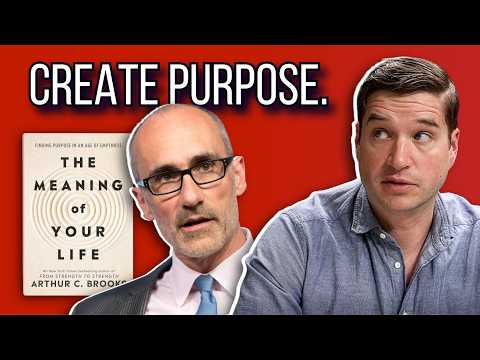
How to Find Meaning in a Distracted World (w/ Arthur Brooks) | Cal Newport
In this episode, Cal Newport discusses with Arthur Brooks the relationship between technology and happiness, exploring whether smartphones exacerbate our misery or if they are a coping mechanism for deeper issues of emptiness in modern life. They emphasize the importance of rediscovering meaning and purpose in an increasingly distracted world.

 Watch on YouTube ↗
Key takeaways
- The relationship between technology and happiness is complex; smartphones may not be the root cause of our misery but rather a coping mechanism for deeper issues of emptiness in modern life.
- Depression rates on college campuses have tripled and generalized anxiety has doubled, indicating a significant increase in mental health issues among young people since 2008.
- Arthur Brooks emphasizes that we have entered an age of emptiness since the 1990s, worsened by new technologies like smartphones and social media, which distract us from finding meaning.
- To create a deep life in a distracted world, it's essential to address not just our technology use but also the fundamental problems of meaning and purpose that underlie our current state of unhappiness.
- The increase in loneliness and disconnection, particularly among the youth, suggests that societal structures have failed to foster relationships and emotional well-being.
- Read Arthur Brooks' new book, 'The Meaning of Your Life: Finding Purpose in an Age of Emptiness,' to explore strategies for rediscovering purpose in your life.
Chapters
- 0:00🤔 Technology and Happiness Conundrum
- 0:34📚 Introduction of Arthur Brooks
- 0:41🔍 Returning to Academia
- 1:40😞 Rise in Depression and Anxiety
- 2:34📈 Psychogenic Epidemic
- 3:44🔄 Reassessing Common Explanations
- 4:54💡 Finding Solutions
The digest
Keep reading in The Digest
The full 1-minute article, and every new episode from Cal Newport and the creators you follow.
Read the full digest — freeMore from Cal Newport

Mathematicians Just Proved How to Prevent AI Brain Rot
A new paper by applied mathematicians models the spread of large language models (LLMs) through culture and their impact on human thought, identifying three key interventions to prevent over-reliance on the technology.

Feeling Fried? A Single Sheet of Paper Can Save You
Cal Newport discusses how to escape the feeling of being overwhelmed and unproductive, a state he calls "flatness," by implementing a simple two-part strategy that fits on a single sheet of paper.

An Insider's Guide to AI Doom
The debate around AI's potential harms has become increasingly complex. This guide clarifies the three main factions involved: the 'Doomists,' the 'Accelerators,' and the 'Centrists,' explaining their beliefs, origins, and relationships.

A Dramatic Solution for Brain Rot
Cal Newport discusses the Gen Z phenomenon of "brain rot" content, exploring its origins in social media's attention economy and proposing a solution inspired by the movie "The Truman Show."

The AI Resistance is Forming
Cal Newport and Brad Stulberg discuss the growing influence of AI on human cognition and productivity, arguing for a "pro-human resistance movement" to safeguard individual well-being and the pursuit of excellence.

The Real Story Behind GPT-6’s “Stealth Thinking”
OpenAI's latest large language model, GPT-6 Astra, has sparked controversy due to its use of new techniques that make its reasoning harder for humans to monitor. This report delves into the technical aspects of these changes, their potential benefits and drawbacks, and the broader implications for AI development and safety.