SaaStr AI · Video summary
How MangoMint Increased Win Rates with an AI-Powered Stack
MangoMint boosted win rates by 7% through an AI-powered operational stack that provides complete visibility and streamlines workflows.

 Watch on YouTube ↗
Key takeaways
- 🎯AI exposes an organization's strengths and weaknesses; it doesn't fix underlying issues if visibility and discipline are lacking.02:42
- 💡The 'Red Queen Effect' highlights the need to run twice as fast in the current environment to simply maintain position.07:13
- 🚀The path to rigor and efficiency is through subtraction and ruthless de-bloating of tools and processes.07:33
- 📈An effective operational model has three layers: Clarity (playbooks, definitions), Cadence (rituals, reviews), and Co-pilot (AI, automation).09:55
- 🔍Centralizing information in a single source of truth, like Notion, is crucial for accessing playbooks, tasks, and decisions.11:09
- 🔧Centralize key organizational information and playbooks into a single source of truth like Notion.11:09
Chapters
- 0:11🚀 Introduction and the Need for Rigor
- 2:03🎤 Speaker Introduction and Company Overview
- 2:40💡 The Role of AI in Exposing Gaps
- 3:25🏠 Challenges of Remote and Hybrid Work
- 5:18🤖 The Problem with an AI 'Kitchen Sink' Approach
- 6:52🐇 The Red Queen Effect and Ruthless Cutting
- 8:41🏗️ The AI Rigor Stack: Three Layers
- 11:12📑 Clarity Layer: Playbooks in Notion
- 13:53🗓️ Cadence Layer: Rituals and Updates
- 14:57📢 Decision Change Log
- 16:46📊 The Total Stack: Data and Analytics
- 18:28⚙️ Automation Layer and System Integration
- 22:02📍 Where the Team Works
- 23:04📝 Rigor in Slack Usage
- 24:24🎯 Obsession with Discipline and Leverage
- 25:31🔍 AI Rigor Audit and Key Questions
- 26:51💬 Addressing Responsiveness in Remote Teams
- 27:55✅ Enforcing Expectations and Change Management
The digest
This presentation outlines how MangoMint, a vertical SaaS provider for salons and spas, significantly improved its sales win rates by implementing a rigorous, AI-powered operating system. Faced with the challenges of a rapidly evolving market and the complexities of remote and hybrid work environments, the company focused on creating clarity, cadence, and AI-driven co-piloting within its revenue organization. The core argument is that AI, when strategically integrated into a disciplined framework, can provide the necessary visibility and efficiency to drive substantial business growth, particularly in a dispersed workforce. This approach is relevant for SaaS leaders, sales operations professionals, and anyone seeking to enhance operational rigor and performance in a technologically advanced business landscape.
The Problem: Visibility Gaps in a Fragmented Digital Environment
The current business landscape, especially for remote and hybrid organizations, suffers from a significant visibility gap. This gap is exacerbated by the proliferation of tools, leading to fragmented tasks, scattered knowledge, and decisions made in a vacuum rather than through documented processes.
- AI Exposes Weaknesses: AI's primary function is to reveal an organization's strengths and weaknesses. If revenue is growing but underlying operational inefficiencies exist, AI will highlight them.
- The "Alice in Wonderland" Effect: The metaphor of running twice as fast to stay in the same place, or the Red Queen effect, describes the feeling of being overwhelmed by the pace of change. Many companies are expending significant effort without making proportional progress.
- Fragmentation of Tools and Knowledge: Meetings occur across various platforms, decisions are made informally, and tasks are spread across different applications. This makes it difficult to track progress, capture knowledge, and ensure accountability.
- Remote Work Challenges: The shift to remote and hybrid work has amplified these issues, as the organic, in-person communication and oversight present in physical offices are diminished. This requires a more deliberate approach to building organizational rigor.
Keep reading in The Digest
The full 8-minute article, 11 more sections, and every new episode from SaaStr AI and the creators you follow.
- MangoMint's Solution: The AI Rigor Stack and Three-Layered Operating Model
- The Three Layers of the Operating Model:
- Implementing the AI Rigor Stack: Tools and Processes
- Core Tools and Their Roles:
- Key Processes and Principles:
- Key Frameworks, Models, or Mental Maps
- The AI Rigor Stack Operating Model (3 Layers) 🏗️
- The "Subtraction" Philosophy ✂️
- The "AI Rigor Audit" 🔍
- Practical Implications & Takeaways
- Action-Oriented Summary
More from SaaStr AI

How We Vibe Coded Our AI VP of Customer Success "Qbee" with Jason + Amelia
Building AI agents like 'Qbee' can dramatically reduce human hours and increase customer engagement, offering a more flexible and scalable alternative to off-the-shelf software.

How AI Is Rewiring Sales: Quota, Retention & Follow-Up with Agentforce, Momentum, Mangomint + SaaStr
AI is rewiring sales, moving beyond simple automation to enhance revenue growth, quota attainment, and customer retention through smarter tools and processes.

10 Things to Know Before You Deploy Your First AI SDR
Deploying your first AI SDR requires a proven human playbook, ruthless segmentation, and consistent effort, not just a tool. Focus on cloning your best performers for scalable success.

SaaStr AI Live: 10 Things to Know Before Rolling Out Your First AI SDR
Deploying your first AI SDR requires a proven human playbook, ruthless segmentation, and consistent monitoring for optimal results.

The Top 5 Issues Managing Multiple AI Agents in Production
Managing multiple AI agents requires a dedicated "chief agent officer" and robust processes to avoid context switching tax, blackout periods, and succession crises.
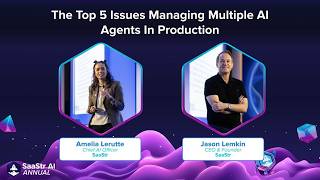
SaaStr AI Live: The Top 5 Issues Managing Multiple AI Agents In Production
Managing multiple AI agents in production presents challenges like context switching, the cost of onboarding, succession planning, and security complexities.