Predictive History · Video summary
Great Books #11: Dante's Revolution
In this lecture, Predictive History explores Dante's Divine Comedy, emphasizing how Dante challenges the prevailing views of human nature established by Virgil, advocating for the primacy of love and individual intuition over blind obedience to authority, ultimately laying the groundwork for modern thought. The discussion highlights the transformative journey through purgatory, where souls cleanse themselves of sins to reconnect with the divine.

 Watch on YouTube ↗
Key takeaways
- Dante's Divine Comedy is considered the most influential work of literature in European history, laying the groundwork for the Protestant Reformation, the Enlightenment, and modern thought.
- Dante emphasizes the primacy of love and individual intuition over blind obedience to authority, challenging the views of Virgil and the Catholic Church.
- In Purgatory, souls cleanse themselves of sins represented by the seven deadly sins, climbing terraces that correspond to each sin, ultimately aiming to reconnect with the divine.
- Dante argues that human nature is fundamentally good, contrasting with Virgil's view of humans as inherently sinful, thus promoting the idea of encouraging individual intuition.
- Dante's philosophy posits that the divine spark within each person connects them to God, allowing for creativity and personal truth without the need for institutional control.
- Read Dante's Divine Comedy to explore the transformative journey through Purgatory and understand its implications on modern thought.
Chapters
- 0:01📚 Introduction to Divine Comedy
- 0:55🤔 Dante's Response to Virgil
- 2:00⚖️ Original Sin and Human Nature
- 5:00💡 Dante's Assertion of Individual Intuition
- 5:54🗺️ Structure of the Divine Comedy
- 7:35🌄 Entering Purgatory
- 8:45🧗♂️ Climbing the Terraces
- 9:52👼 Role of Virgil and Beatrice
- 10:00💖 The Nature of Love
- 13:55🔄 Free Will and Love
- 17:15🌌 The Spiritual vs. Material World
- 20:30⏳ The Will to Ascend
- 22:10👥 Encountering Statius
- 23:20🤝 Virgil's Influence
- 23:45🔍 Conclusion of Lecture
The digest
High Level Overview This analysis explores Dante Alighieri’s Divine Comedy as a revolutionary literary work that reshaped European intellectual history by challenging the prevailing Augustinian and Virgilian views on human nature, love, and salvation. The lecture elucidates how Dante’s optimistic affirmation of individual intuition and love planted the seeds for the Renaissance, Reformation, Enlightenment, and modernity. It is essential for those interested in philosophy, theology, literature, and cultural history to understand the fundamental debate Dante engaged with—the nature of humanity itself.
# Structured Deep Dive
The Intellectual Context: Virgil and Augustine’s Influence (00:01–04:25)
For about a millennium, Virgil’s Aeneid and Augustine’s theological works formed the dominant framework of European thought. Augustine’s concepts, especially original sin, posited that human nature is fundamentally sinful and corrupt. According to Augustine, Adam and Eve’s disobedience—eating from the Tree of Knowledge—was driven by pride, the root human sin, causing estrangement from God. Humans possess a divine spark (God’s breath) but are trapped in bodies of dust that incline them towards the seven deadly sins (lust, pride, gluttony, sloth, etc.). The only path to redemption lies in obedience and piety under the guidance of the Catholic Church, which serves as the shepherd leading souls to salvation. This view promotes distrust of human intuition and freedom, emphasizing control and hierarchy to restrain the inherently sinful nature of humanity.
Keep reading in The Digest
The full 7-minute article, 14 more sections, and every new episode from Predictive History and the creators you follow.
- Dante’s Revolutionary Response: Assertion of Individual Intuition and Love (04:25–06:15)
- The Fundamental Debate: Is Human Nature Good or Bad? (06:15–06:50)
- The Structure and Symbolism of Purgatory (06:50–09:00)
- The Shared Spiritual Cosmology of Dante and Virgil (09:00–14:40)
- The Duality of Soul and Body and the Nature of Love (14:40–26:00)
- Free Will Defined as the Power to Control Love (26:00–29:30)
- The Ascent of Souls on Purgatory’s Mountain and the Role of the Will (29:30–35:10)
- Paradoxes in the Divine Comedy: The Case of Statius (35:10–52:00)
- Dante’s Emotional Attachment to Beatrice and Virgil’s Departure (52:00–58:30)
- The Clash of Two Models of Love and Human Nature (58:30–1:01:05)
- 1. The Two Views of Human Nature
- 2. The Seven Terraces of Purgatory (Inverse of Inferno’s Sins)
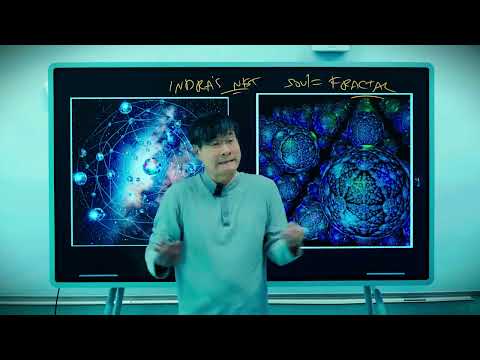
- 3. Indra’s Net: The Fractal Reflection of Souls
- 4. Love as Neutral Force and Free Will as Control
More from Predictive History

Global Meet-Up #7 (Toronto): The Rupture
Mark Carney's term "the rupture" describes a world where the old order is dying and a new one is emerging. This lecture explains current global crises through a framework of elite power struggles.

Global Meet-Up #6 (Montreal): The Supremacy of Sin
The Global Meet-Up #6 in Montreal explores the nature of evil and sin, delving into the psychology of the elite and the historical roots of capitalism and Sabatine Frankism.

Global Meet-Up #2 (Los Angeles): The "End of the World" US Tour
In a thought-provoking lecture, a former high school teacher from Beijing shares his unique perspective on the current state of the global economy and the decline of American hegemony, drawing parallels to historical empires and offering insights into the future.

Predictive History Founding Members #1
In this video, Predictive History discusses his approach to news analysis and research, emphasizing his reliance on platforms like Twitter and YouTube rather than mainstream media. He explores various current events, including protests in Albania and U.S.-Israel military relations, while highlighting the importance of understanding the underlying motivations and funding behind news stories.

Great Books #13: Gay Talese's Sparks of Light
In this episode of Great Books, Predictive History explores Gay Talese's influential work, Thy Neighbor's Wife, highlighting its profound examination of human sexuality and the quest for spiritual liberation. The discussion emphasizes how Talese's unique approach to literary journalism reveals deep truths about our nature and the importance of creating sparks of light in our lives.

Game Theory #29: Final Examination
In this final examination video, Predictive History reflects on his teaching journey, expressing gratitude to his students and community while emphasizing the importance of creativity, resilience, and imagination in navigating future societal challenges. He discusses the shifting global landscape and encourages individuals to focus on building connections and adapting to change rather than succumbing to fear.