OpenAI · Video summary
From Single Player to Multiplayer with Codex | DevDay 2026
Jason from OpenAI's developer experience team discusses the evolution from individual AI use to collaborative, multiplayer AI systems, highlighting new tools and strategies for team-wide productivity.

 Watch on YouTube ↗
Key takeaways
- 🚧Early AI adoption often leads to individuals becoming bottlenecks, micromanaging tasks despite increased personal productivity.00:46
- 🤝Multiplayer AI is about building systems where work is automatically picked up and advanced by the team and other AI agents, not just shared chat.01:55
- 📸App shots capture full application context (metadata, URLs, content) for ChatGPT, allowing AI to initiate tasks from where the user is.05:43
- ☁️Persistent and proactive 'dots' run in the cloud, soaking up context from various sources and can even control local computers with permission.07:06
- 🗣️Multi-directional voice conversations in meetings allow AI to transcribe, pick up notes, and act on messy, rambling prompts, freeing humans from note-taking.10:07
- 🏷️Tagging 'dots' in Slack or Teams allows for seamless delegation and follow-up, turning team conversations into actionable prompts for AI agents.13:13
Chapters
- 0:29Introduction to Multiplayer AI
- 0:39Gathering Context: App Shots and Proactive Dots
- 0:49The Evolution of AI Use: From Individual to Team
- 1:49Embodied Agents and Collaborative Voice
- 2:18Organizing Work with Spaces and Automations
- 2:52Sharing Results and Scaling with Plugins
- 3:18Real-World Applications and Future Vision
The digest
The landscape of artificial intelligence is rapidly evolving, moving beyond individual productivity enhancements to foster collaborative, team-centric workflows. Jason, from OpenAI's developer experience team, shared insights at DevDay 2026 on how new tools and methodologies are transforming the way teams interact with AI, shifting from a "super-powered individual contributor" model to a "multiplayer" approach.
The Bottleneck of Individual Productivity
Initially, the focus of AI tools was on what an individual could achieve. Users leveraged AI with access to their computers, files, browsers, and applications to become incredibly productive. However, this often led to a new bottleneck: the individual themselves. As productivity soared, many found themselves becoming the "glue" for various systems, micromanaging tasks, and ultimately becoming a chokepoint for their teams. The challenge became not just what AI could do for one person, but how to scale these advancements across an entire team.
Keep reading in The Digest
The full 3-minute article, 5 more sections, and every new episode from OpenAI and the creators you follow.
- Defining Multiplayer AI
- Gathering Context: From App Shots to Proactive Dots
- Collaborative Voice and Embodied Agents
- Organizing Work with Spaces and Page Automations
- Sharing Results and Scaling with Plugins
More from OpenAI
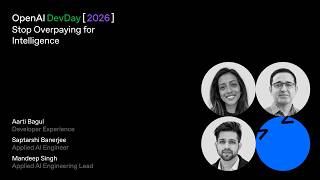
Stop Overpaying for Intelligence | DevDay 2026
OpenAI's AI deployment engineering team shares strategies for optimizing AI costs, focusing on shifting from a cost-per-token to a cost-per-task mindset and leveraging various technical levers.

ClawLabs: Building Open Source Together | DevDay 2026
ClawLabs demonstrates how open-source development is evolving with AI agents, showcasing collaborative workflows and the new OpenClaw Enterprise platform for secure, scalable agent deployments.

Builders Unscripted: Ep. 4 - Pietro Schirano
In this episode of Builders Unscripted, Pietro Schirano discusses his multifaceted approach to creativity and innovation, highlighting how advancements in AI—particularly with models like GPT 5.5—enable him to explore new possibilities in design, music, and technology. He emphasizes the democratization of tools that allow anyone to become a builder, fostering a collaborative environment between humans and AI.

OpenAI's CFO Presents the Future of Finance with University of California’s Chief Investment Officer
In this video, OpenAI's CFO Sarah Frier discusses the transformative impact of AI on the finance industry, emphasizing the importance of curiosity, adaptability, and kindness for future professionals. She highlights how AI tools are revolutionizing finance tasks, enabling teams to work more efficiently while fostering a culture of innovation and learning.

Episode 15 - Inside the Model Spec
The model spec is OpenAI's public document outlining desired AI behavior, balancing user empowerment with societal protection through a hierarchical chain of command and iterative refinement.

Building AI for better healthcare — the OpenAI Podcast Ep. 14
OpenAI's Karan Singhal and Dr. Nate Gross discuss AI's transformative potential in healthcare, focusing on patient empowerment, clinician support, and system efficiency.