Goatis · Video summary
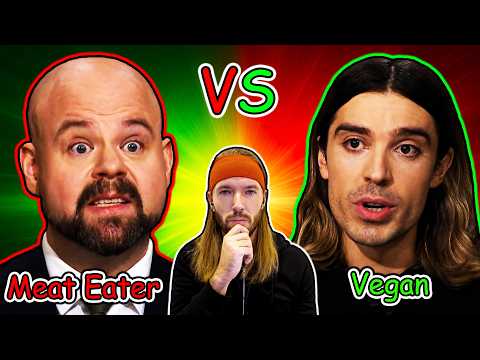
Earthling Ed vs. Meat Eaters - Who Is in the Wrong? @ed.winters
Earthling Ed debates meat-eaters, emphasizing natural instincts, ethical flaws in meat consumption, and the fallacy of morality in animal killing, urging a return to sensory reality.

 Watch on YouTube ↗
Key takeaways
- 🎯Recognizing optics and presentation can improve persuasion in advocating for veganism.00:17
- 🔍The similarity between natural animal kill and human slaughter exposes the arbitrariness of ethical standards.07:01
- 🚀Use scientific and sensory evidence to confront the illusion of morality behind meat-eating.23:00
- 💡Humans are predators with innate taste and sensory cues encouraging meat consumption, challenging moral justifications.23:02
- 📈Delegitimizing moral ideas by framing them as cultural impositions reveals their artificial nature.23:16
- ⚡Challenging moral illusions encourages focusing on direct sensory experience rather than abstract ideas.23:16
Chapters
- 0:00🎯 Introduction and Context
- 0:21🎯 Optics and Perception of Vegans
- 1:21🎯 Denial and Human Nature
- 1:34🎯 Animal Killing Methods and Ethics
- 3:41🎯 Questioning the Ethics of Gas Chambers
- 12:05🎯 Strength, Weakness, and Moral Character
- 13:06🎯 Animal Welfare and Industry Practices
- 16:19🎯 Natural Instincts and Eating Animals
- 17:12🎯 Cultural and Political Influences on Meat Consumption
- 22:12🎯 Morality, Morals, and Ideas
- 23:06🎯 Conclusion: Reality vs. Ideas
The digest
High-Level Overview
This summary covers a televised debate featuring Earthling Ed, a prominent vegan advocate, confronting meat eaters and policymakers on Sweden’s biggest talk show. The discussion explores the ethical, cultural, and practical dimensions of veganism and meat consumption. The debate probes topics such as the treatment of farm animals, the morality of killing animals for food, societal norms, and evolving public attitudes toward animal products. It illustrates the tension between vegan ethical arguments and the counterarguments grounded in natural human behavior, culture, and political influences. This content is valuable for professionals involved in food policy, animal welfare, nutrition, or cultural studies who seek a nuanced view of the ongoing ethical debate around meat eating.
Keep reading in The Digest
The full 5-minute article, 14 more sections, and every new episode from Goatis and the creators you follow.
- Structured Deep Dive
- Veganism’s Optics and Messaging Challenges (0:20–1:10)
- Willful Ignorance and Ethical Concerns in Animal Farming (1:10–3:40)
- Ethical Dimensions: Killing for Taste vs. Necessity (4:00–9:00)
- Cultural and Political Context of Meat Consumption (9:30–17:00)
- Science, Nutrition, and Policy Contradictions (17:00–19:30)
- The Role of Ethics, Morality, and Ideas in Food Choices (20:00–23:20)
- Key Frameworks and Models
- 1. Optics Problem in Vegan Advocacy
- 2. Distinction Between "Want" and "Need" in Dietary Choices
- 3. Cultural and Political Influence on Food Consumption
- 4. Science Versus Political Interpretation of Dietary Guidelines
- Practical Implications & Takeaways
- Action-Oriented Summary
More from Goatis

Noah Anderson: The Chronic Stress Life of a Triathlete @noahanderson14
This video critiques an Iron Man triathlete's diet and lifestyle, arguing that extreme training and unnatural foods lead to chronic stress, injury, and a shortened lifespan, advocating for a return to natural eating.

Quit TikTok If You Want to Be Healthy
This video debunks common misinformation on platforms like TikTok, highlighting the dangers of processed foods and advocating for a return to natural, whole foods for improved health and energy.

Don’t Let TikTok Guide You
The video critiques modern trends like "looks maxing" and "what I eat in a day" videos, arguing that they often promote unnatural behaviors and misinformation over natural, intuitive living.

Cliffe Knechtle's Blind Faith vs. Common Sense @Bible_Alive
This video debates the basis of religious faith, distinguishing between blind belief and empirically verifiable truth, and questioning the reliability of ancient texts versus personal experience.

Alex Honnold Is Severely Depressed @danchurchillcooks
Learn how Alex Honnold masters fear through repeated exposure and acceptance of consequences, a mindset applicable to high-pressure situations.

Roots in the Wild Is Faking Natural Living @Roots-In-The-Wild
This video critiques the "natural living" aesthetic on YouTube, arguing it often masks an unnatural, fantasy-based existence disconnected from true wild living.