Coleman Hughes · Video summary
Civil Rights Legend Has a Message for Today's Activists
Civil Rights leaders emphasize nonviolence as the only path to survival, highlighting the importance of strategic preparation and moral authority over emotional reactions.

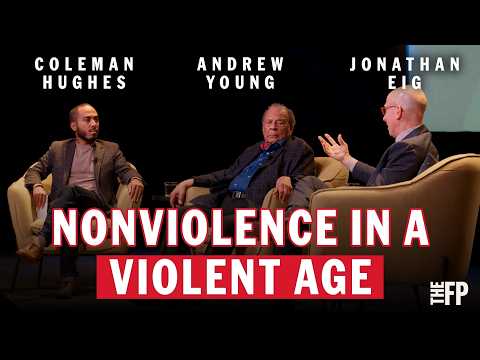 Watch on YouTube ↗
Key takeaways
- 🎯Nonviolence is presented not as a failure of nerve, but as the only constructive path for humanity, as violence destroys while nonviolence builds.02:28
- 💡The core principle of nonviolence is to 'get smart, not mad', using the mind as the most powerful weapon to navigate conflict and avoid descending to an opponent's level.06:46
- 🔧Apply the principle of 'get smart, not mad' in conflict resolution, focusing on rational thought over emotional reactions to de-escalate situations.06:46
- 📈Effective nonviolent movements require extensive preparation and education (e.g., studying Gandhi, viewing films) before public demonstration, a stark contrast to unprepared modern protests.10:30
- 🚀Prioritize strategic preparation and education before engaging in activism, studying the principles and historical examples of nonviolence.10:30
- 🔍The civil rights movement succeeded through strategic engagement and coalition-building, even with perceived enemies, demonstrating a willingness to work across divides for common goals (e.g., Atlanta's mass transit referendum).22:36
Chapters
- 0:02✨ Introduction and the State of Non-Violence
- 2:28🕊️ Andrew Young on Hope for Non-Violence
- 4:35🏠 The Philosophy of Non-Violence in Practice
- 6:42🧠 Mind as a Weapon and Jesse Owens' Example
- 9:10🚶 Observing 2020 Protests and Civil Rights Training
- 10:46📚 The Importance of Preparation and Study
- 12:29🥊 Lessons from Boxing and Sports on Non-Violence
- 14:12🤝 Comparing Civil Rights Tactics with Modern Activism
- 16:31🏢 Building Coalitions in Birmingham and Atlanta
- 18:51🤝 Atlanta's Approach: Building Bridges
- 23:18📖 Jonathan Eig on Humanizing Dr. King
- 24:16✊🏾 King's Radicalism and Non-Violent Strategy
- 24:24🗣️ Montgomery Bus Boycott: King's Emergence
- 29:03🔫 King's Evolution on Non-Violence
- 30:35🇺🇸 Jimmy Carter and Non-Violence in Presidency
- 33:00🤝 The Role of Malcolm X and Non-Violence
- 35:03🕊️ Non-Violence vs. Violence: A Strategic Choice
- 37:36✝️ Christianity's Role in Modern Movements
- 46:22🌍 Global Politics and Self-Interest
- 47:16💡 Historical US Intervention and Trust
- 51:48🕊️ Atlanta's Role in Peace and the Olympics
- 54:42❤️ Humanizing Heroes and FBI Surveillance
- 59:21⚖️ Protest and Response to Injustice
- 1:00:36📜 Non-Violence Amidst Legal Restrictions
- 1:02:28🤝 Engaging with Law Enforcement and Community
- 1:05:15🤔 The Difference Between Past and Present Protests
The digest
Civil Rights Leaders Discuss the Enduring Relevance and Practice of Nonviolence
This discussion features Civil Rights icon Andrew Young and scholar Jonathan Eig, moderated by Coleman Hughes, exploring the principles and practice of nonviolence in the context of the Civil Rights Movement and its relevance to contemporary activism. The conversation highlights the strategic, philosophical, and spiritual underpinnings of nonviolence, contrasting them with the perceived shortcomings of modern protest movements and addressing the complexities of applying these principles in a rapidly changing world. It serves as an educational and reflective dialogue for anyone interested in the history of social justice movements and the enduring power of peaceful resistance.
Keep reading in The Digest
The full 8-minute article, 9 more sections, and every new episode from Coleman Hughes and the creators you follow.
- The Peril and Promise of Nonviolence Today
- Core Principles and Personal Philosophy of Nonviolence
- The Crucial Role of Preparation in Activism
- The Strategic Nuances of Nonviolent Tactics
- The Evolving Landscape of Activism and Faith
- The Humanization of Heroes and the Role of Flaws
- Key Frameworks, Models, or Mental Maps
- Practical Implications & Takeaways
- Action-Oriented Summary
More from Coleman Hughes

Glenn Greenwald vs. Coleman Hughes Debate: Does Israel Control U.S. Foreign Policy?
Debate on the power of the Israel lobby and its influence on US foreign policy, free speech, and media narratives.

Sam Harris on Iran, Tucker Carlson’s Conspiracies, Antisemitism & the Future of Civilization
Sam Harris and Coleman Hughes discuss the complexities of geopolitical threats, the spread of misinformation, and the ethical considerations in modern society, highlighting the need for critical thinking.

Is Regime Change Possible? Niall Ferguson vs. Richard Haass
Experts debate the strategic value and risks of a war with Iran, emphasizing economic impacts, geopolitical implications, and the unpredictability of unintended consequences.

He Wanted to Teach Western Civilization. So He Quit Harvard.
James Henkins explains why he left Harvard to teach Western Civilization, emphasizing its value in fostering civilized conduct, critical thinking, and understanding diverse perspectives. He argues for studying history to grasp the origins and value of Western ideals like democracy and rule of law.

Why Liberal Religion Is Losing Ground
Rabbi David Wolpe discusses the decline of liberal religion, the unique nature of Judaism, the rise of secular religions like DEI, and the evolving landscape of anti-semitism.